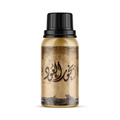
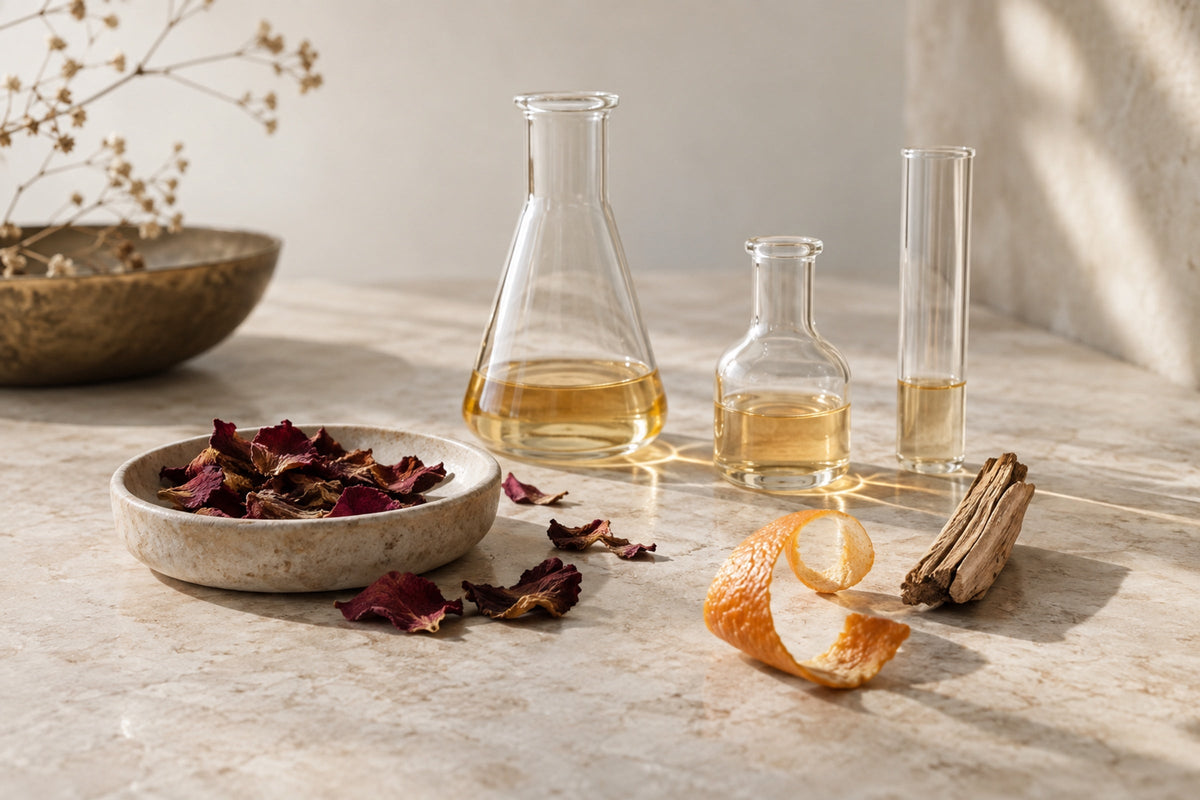
In short: A perfume is fragrance materials, natural or synthetic, dissolved in a carrier such as alcohol or oil. They are extracted from plants by distillation, by pressing citrus peel, with solvents or with carbon dioxide, and each method leaves its mark on the composition, to the point that distilled rose oil differs from rose absolute obtained with solvents. A perfume is described as a pyramid of top, middle and base notes that appear one after another. This is a simplification, because ingredients affect one another and are affected by the skin. A note names a scent character, and does not by itself indicate where the material came from: a musk or amber note may come from synthetic materials that have taken the place of the animal ones in the industry. The International Fragrance Association (IFRA) sets standards that ban some materials or limit their amounts.
Table of contents
- What is perfume made of?
- What is the difference between natural and synthetic materials?
- Natural materials
- Synthetic materials
- Are natural materials less likely to cause allergy?
- How is scent extracted from plants?
- Steam distillation
- Cold pressing of citrus peel
- Solvent extraction: concrete and absolute
- Carbon dioxide extraction
- The method changes the scent: the example of rose
- Comparing extraction methods
- What is the note pyramid, and what are its limits?
- Top, middle and base notes
- Why is the pyramid not enough?
- Fixatives: what makes a scent last longer?
- The carrier: alcohol-based perfume or perfume oil
- What is the role of the International Fragrance Association (IFRA)?
- Precious fragrance materials and what replaces some of them
- Ambergris
- Musk
- Civet
- Castoreum
- Orris butter
- Sandalwood
- Oud
- How do you read the notes in a perfume description?
- Read also
- References
You turn a perfume box over in your hand. On the front are words you know: rose, oud, musk. On the back of many packs is another list, with the word parfum and chemical names that look nothing like anything on the front. The two lists answer two different questions: the first describes what you will smell, and the second states what is in the bottle.
What is perfume made of?
A perfume is a mixture of fragrance materials in a carrier that dissolves them. The carrier is a solvent such as water and ethanol, the alcohol used in perfumes. The structure of a perfume is described as top, middle and base notes [1].
A fragrance material may be an essential oil from a plant, a solvent extract, or a single synthetic molecule, and many perfumes combine more than one type.
What is the difference between natural and synthetic materials?
The difference lies in where a material comes from and how it is obtained. Natural materials are taken from a plant, an animal or a microorganism by methods such as distillation and extraction [2]. Synthetic materials are made by chemists; they may be identical to a molecule found in nature, or have no counterpart in it [3]. The source alone does not show whether a material is safe.
Natural materials
The international standard ISO 9235 defines a natural raw material as a material of plant, animal or microbiological origin, obtained by physical, enzymatic or microbiological processes, or by traditional preparation processes, such as extraction, distillation and fermentation [2]. Examples include flowers, peels, woods, roots and resins.
Synthetic materials
Synthetic materials entered perfumery in the late nineteenth century. Among the first were vanillin in 1874, then nitro musk in 1888, which was used as a fixative, and the ionones in 1893, which recreated the scent of violet [3]. Some of these are identical to a molecule found in a natural material, and alpha-irone, in 1943, is considered one of the last major natural ingredients to be synthesized on a commercial scale; after it, chemists turned to molecules with no counterpart in nature [3].
Synthetics have not replaced natural materials, which remain part of the perfumer’s toolkit [3]. In 2014, what is considered the first fragrance ingredient produced by biotechnology was launched, and others followed [3].

Are natural materials less likely to cause allergy?
A natural source does not mean that a material is free of allergens, and some essential oils cause allergy, such as ylang-ylang oil [4].
How is scent extracted from plants?
Scent is extracted from plants by distillation, by pressing citrus peel, with solvents or with carbon dioxide, and not every product of these methods is called an essential oil. In ISO 9235, an essential oil is what is obtained from plant material by one of three methods: steam distillation, mechanical processing of the peel of citrus fruits, or dry distillation [2]. What is obtained with solvents the standard calls an extract, not an essential oil.
Steam distillation
Steam distillation is the most common method of obtaining essential oils [5]. Steam passes through the plant material and carries its volatile substances with it; it then condenses, and the oil separates from the water. The water left once the oil is separated is what the standard calls “aromatic water”, or hydrolate [2].
Distillation has a second form, hydrodistillation, and the difference lies in where the plant material sits: in steam distillation it is placed above the boiling water so that only the steam passes through it, while in hydrodistillation it is heated together with the water in the same vessel; in both, the vapour is then condensed [30]. These are the two methods commonly used in industry to extract oud oil from the wood of Aquilaria malaccensis [31].
Distillation has its limits. Some flowers yield very little oil this way, such as narcissus, whose yield is only about 0.05%, and heat may damage some volatile substances [6]. Dry distillation is a third kind, used for wood, bark, roots and gums, without water or steam [2].
Cold pressing of citrus peel
Cold pressing is the method most used for citrus peels, such as orange, lemon and bergamot [5]; it is a mechanical processing of the fruit’s peel at room temperature [2].
Some pressed citrus oils contain compounds called furocoumarins, which can cause a phototoxic reaction on skin exposed to the sun. That is why IFRA standards restrict their level in products applied to sun-exposed skin [7].
Solvent extraction: concrete and absolute
Fresh plant material is treated with a solvent that takes up its aromatic substances, and all or part of the solvent is then removed, leaving a wax-containing extract called a concrete [2]. To get the waxes out, the concrete is dissolved in ethanol and the solution is usually chilled and filtered; once the ethanol is distilled off, what remains is the absolute [2].
Some volatile substances may be lost when the solvent is evaporated [6]. When the plant material is dry, its solvent extract is called a resinoid; one example given in the standard is benzoin [2].
In an old method called enfleurage, the scent of flowers is transferred to a fat [5]: the flowers are left for a few days on cold animal fat, then removed and replaced with fresh ones, and this is repeated several times [30]. The resulting scented fat is called a “pomade” [2]. It is then mixed with alcohol, which dissolves the aromatic substances, the fat is separated off, and evaporating the alcohol leaves an absolute [30]. The method was used for flowers that are very sensitive to heat, such as jasmine, and it had a variant using hot fat; both were later abandoned because of their cost and replaced by solvent extraction [30].
Carbon dioxide extraction
Here carbon dioxide is used under pressure in a state called “supercritical”, in which it acts as a solvent, and the extract is then separated by lowering the pressure [2]. Among its advantages are that carbon dioxide is non-toxic, non-flammable and inexpensive, and that extraction takes place at a low temperature, so the materials are not damaged by heat. Its drawback is that the extract carries non-volatile substances with it, such as waxes [6]. The method is also used for sandalwood, alongside distillation [8].
The method changes the scent: the example of rose
The extraction method can draw two different scents from the same flower, and rose is an example. Rose oil is obtained by distilling the petals with steam or water. Rose absolute is obtained in two stages: first rose concrete, with hexane, then the part of it that dissolves in alcohol [9].
The difference in composition is large. Phenylethyl alcohol, one of the substances behind the scent of rose, makes up 0.88 to 2.2% of rose oil and 50 to 79% of the absolute. Citronellol and geraniol go the other way: 26 to 62% of the oil, and 6.5 to 33% of the absolute [9]. The reason is that phenylethyl alcohol dissolves in water, and rose oil is obtained with water or steam [9].

Some methods extract no material at all. In headspace analysis, the air around the living plant is collected and analyzed, and its scent is then reconstructed [3].
Comparing extraction methods
| Method | Raw material | Product | What distinguishes it |
|---|---|---|---|
| Steam distillation | Flowers, leaves, woods and roots | Essential oil | The most common method; heat may damage some substances |
| Hydrodistillation | Flowers and woods, such as rose and oud | Essential oil | The material is heated with the water, not above it |
| Cold pressing | Citrus peel | Essential oil | No heat; some of its oils contain furocoumarins |
| Dry distillation | Wood, bark, roots and gums | Essential oil | No water or steam |
| Solvents | Fresh flowers, or dry materials | Concrete then absolute, or resinoid | No distillation heat, but the solvent and waxes must be removed, and some volatile substances may be lost |
| Enfleurage | Very heat-sensitive flowers, such as jasmine | Pomade then absolute | The scent is transferred to fat; abandoned because of its cost |
| Carbon dioxide | Various plant materials | Carbon dioxide extract | Low temperature, but the extract carries non-volatile substances |
Sources: [2] [5] [6] [7] [9] [30] [31].
What is the note pyramid, and what are its limits?
The note pyramid is a way of describing a perfume as three layers that come through one after another as part of it evaporates. It accounts for how a scent changes over time, yet it is a simplification with limits of its own [1].
Top, middle and base notes
Top notes, such as citrus and green notes, evaporate first and last about 15 to 30 minutes on the skin. Next come the middle notes, such as florals and spices, at about three to four hours. Then the base notes, such as musk and amber, which last more than four hours and give the perfume its longevity [1]. These are durations accepted by convention in the trade, not measurements of any particular perfume.
Why is the pyramid not enough?
The pyramid’s flaw is that it treats each material as if it were alone in the bottle, whereas materials brought together affect one another, so much so that a base note may not come through at all if something beside it overpowers it. This shows in the Perfumery Ternary Diagram, a chart used to predict the dominant scent of a mixture from the proportions of its materials: in one of its examples a base material called Tonalide was put in place of vanillin, and its scent did not dominate at any proportion of the mixture; the scent of ethanol dominated [1].
The skin then has its say, for one perfume may smell different from one person to another. The skin property that matters most here appears to be its hydration, judging by measurements of perfume evaporating on the skin of a small number of volunteers [10].

Fixatives: what makes a scent last longer?
In perfumery, a fixative is a material used to make a scent last longer; one of the best-known is patchouli, a long-lasting base note [11]. Civet secretion was for centuries one of the fixatives of perfumery [12].
The carrier can also make a scent last longer. Dipropylene glycol, a carrier used in cosmetics, retains fragrance materials, which lowers the intensity of their scent but may make it noticeable for longer [1].
The carrier: alcohol-based perfume or perfume oil
In an alcohol-based perfume, the fragrance materials are dissolved in ethanol, and water may be added [1]; in a perfume oil, they are dissolved in an oil. The carrier is not neutral: the scent of a mixture is likely to be affected by the carrier it is in, and the release of materials from a perfume is affected by their interaction with ethanol and by the vapor pressure of each material [1].
What is the role of the International Fragrance Association (IFRA)?
The International Fragrance Association (IFRA) is the body that sets the industry’s standards for fragrance materials. It brings together fragrance companies and national associations, so it is a set of rules the industry makes for itself and follows voluntarily [13].
Its standards are of three types: banning a material, restricting its amount to a maximum level, or setting specifications for its purity or source [14]. They are based on safety assessments prepared by the Research Institute for Fragrance Materials (RIFM) and approved by an independent expert panel, and they are binding on the association’s members [14].
One example of a ban is musk ambrette, a nitro musk, which the standards prohibit because of photosensitization and neurotoxicity [15]. One example of a restriction is the limits on furocoumarins in citrus oils [7].
Even with these standards, a particular perfume may not suit you. Try any new perfume on a small area of skin first, and stop using it if redness or itching appears. This trial does not replace a diagnosis, and even a patch test at a doctor’s may not detect every allergy [16].
Precious fragrance materials and what replaces some of them
Some old perfume materials come from strange sources, most of them animal. What limits their use today is their rarity, restrictions on their trade, or the availability of synthetic substitutes.
Ambergris
Ambergris is a material that forms in the rectum of the sperm whale, not in its glands [17].
Because the sperm whale is an endangered species, synthetic materials have replaced natural ambergris in the perfume industry [18]. They include Ambrox, a synthetic ambergris with a soft, dry scent that appeared in the mid-twentieth century [3]. This “synthetic” may itself start from a plant: the starting material the industry uses most to prepare it is sclareol, a compound extracted from clary sage (Salvia sclarea) [18].
Musk
Animal musk is a secretion that collects in a gland of the male musk deer [19]. Obtaining it once meant killing the deer, so their numbers fell sharply, and international trade in it is restricted under the Convention on International Trade in Endangered Species of Wild Fauna and Flora (CITES) [19] [20]. Today the deer are raised on farms in China, which are the only legal way to obtain natural musk there [19].
The chemist Leopold Ružička discovered that the odor molecules of musk and civet are large rings, meaning that each molecule contains a wide ring of atoms [3]. These molecules were hard to make on a large scale, and musk pods are scarce, which contributed to the rise of synthetic musk; its classes include macrocyclic, nitro and polycyclic musks [21].
Civet
Civet is the secretion of a gland in the perineal region of the African civet, and synthetic substitutes have been available for decades [12]. Even so, in Ethiopia, according to an estimate published in 2005, licensed farmers catch civets from the wild and keep thousands of them to produce civet [12].
When farms in western Ethiopia were examined, the civets were found in small wooden cages, with the secretion squeezed from the gland again and again. Catching the animals, confining them, restraining them and squeezing their glands cause them stress and injuries, including fractures, bruises and eye injuries [22].
Globally, according to a 2015 assessment, the species is classified as Least Concern, and it is listed in Appendix III of CITES [12].
Castoreum
Castoreum is a material from the beaver; its extract is prepared with hot alcohol from the animal’s dried, crushed scent sacs. It has been widely used in perfumes [23].
Orris butter
Orris is obtained from the rhizomes of the iris plant, that is, its underground stems, not from its flower. The most important substances in its scent are compounds called irones. They are not found in fresh rhizomes; they are thought to form during storage and aging, and to take about two to five years to reach their highest level [24].
The dried rhizomes are then ground and steam-distilled, and the product is called “orris butter” [2] [25]. The yield is only 0.2 to 0.3% of their weight, and most of it is fatty acids, so it is solid at room temperature [25].
Sandalwood
Sandalwood oil is obtained from trees of the genus Santalum, such as white sandalwood (S. album), mainly from the heartwood of the mature tree by steam distillation, though it may also be obtained with solvents or with carbon dioxide [8].
The survival of its natural sources is not assured, because of overexploitation, the long time the tree takes to mature, and climate change [8]. Chemists have therefore developed substitutes, among them Sandalore, in 1976, a synthetic molecule with the scent of sandalwood, and later a biotechnology material launched in 2020 [3].
Oud
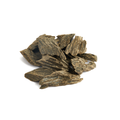
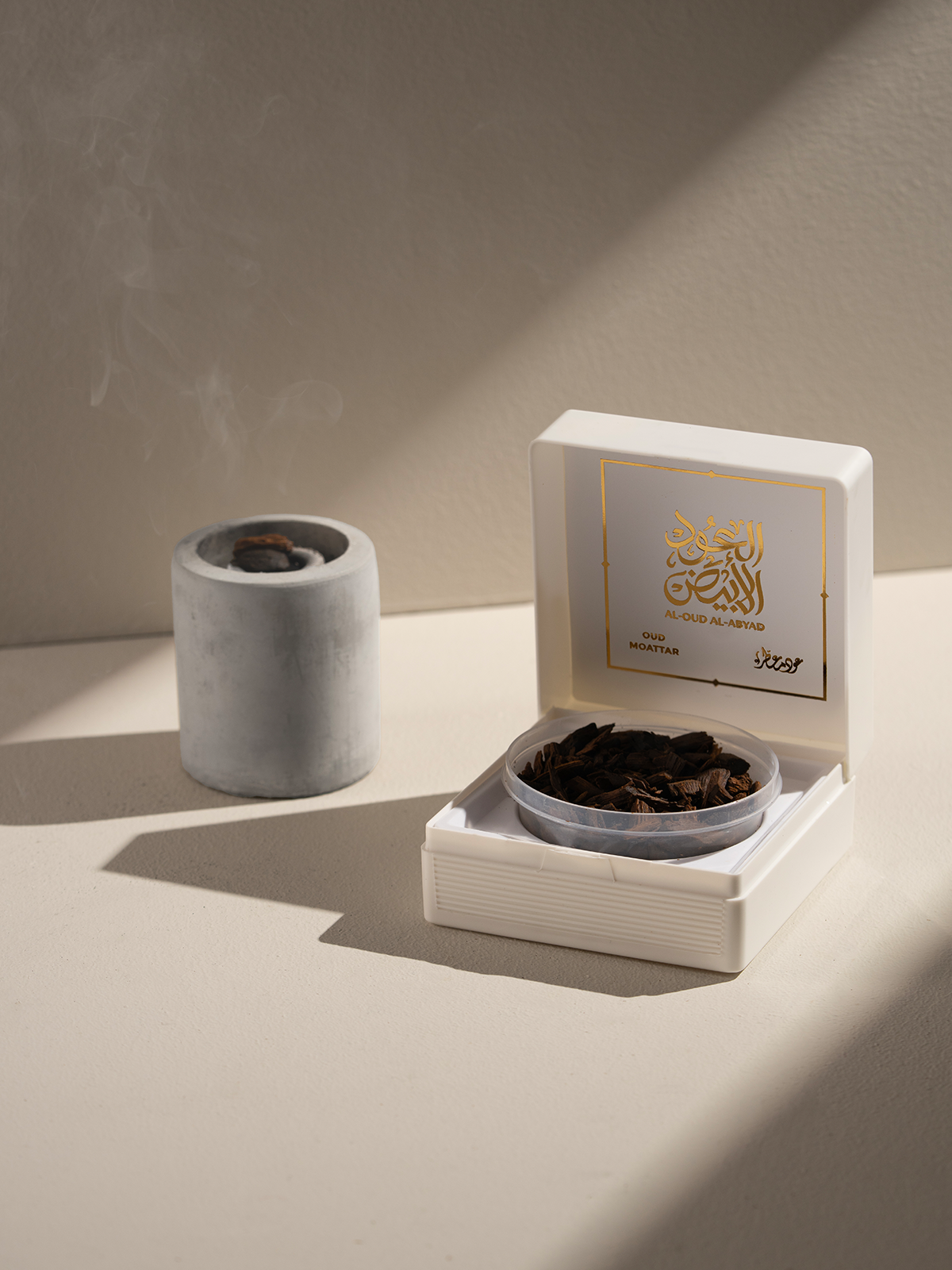
Oud (agarwood) is an aromatic wood from trees of the genera Aquilaria and Gyrinops. It forms when the tree is wounded and put under stress, such as infection by insects or fungi, and secretes an aromatic resin that protects it. That is why not every tree contains it [26]. All trees of both genera are listed in Appendix II of CITES [27].
“Enhanced oud” is a trade description for which we found no standard definition in a scientific or regulatory reference, so ask the seller what they mean by it, what the product contains and how it was processed.
How do you read the notes in a perfume description?
A note is the name of a scent character, and does not on its own indicate the origin of the material. A “musk” note may come from synthetic musk, and an “amber” note may mean a scent blend of vanilla, resins and balsams that has nothing to do with the whale [28].
So we advise reading the notes as a guide to the perfume’s overall character, and trying it on your own skin before judging it, because the scent changes over time and with the skin. If you have a known allergy to a particular substance, ask for the ingredient list, and see our guide Harms of Perfume and Bakhoor.
Even the ingredient list does not name every fragrance material. Under the European cosmetics regulation, fragrance materials are grouped under a single word, parfum or aroma, and certain allergens are then named individually if their concentration exceeds a set limit [29]. So the word parfum on the back of the box covers the materials that make up the notes written on the front, without naming them one by one.
Read also
- Oriental Ingredients in Perfume: Oud, Amber, Saffron, Frankincense and Rose
- Musk in Perfumery: Animal, Synthetic and Its Types
- The History of Perfume: From the Incense Route to Synthetic Materials
- Harms of Perfume and Bakhoor: What the Evidence Says on Allergy and Smoke
- The Effect of Perfume on Mood: What Research on Smell Says
- Summer Fragrance Notes: How to Choose and Wear Perfume in the Heat
- Autumn Fragrance Notes: How to Choose Your Perfume in Saudi Weather
References
- Rodrigues AE, Nogueira I, Faria RPV. Perfume and Flavor Engineering: A Chemical Engineering Perspective. Molecules. 2021;26(11):3095. PMC8196857. Accessed 28 September 2026.
- ISO 9235:2021. Aromatic natural raw materials — Vocabulary. 3rd ed. Geneva: International Organization for Standardization; 2021. iso.org. Accessed 28 September 2026.
- David ORP, Doro F. Industrial Fragrance Chemistry: A Brief Historical Perspective. European Journal of Organic Chemistry. 2023;26(44):e202300900. doi:10.1002/ejoc.202300900. Accessed 28 September 2026.
- Sukakul T, Bruze M, Svedman C. Fragrance Contact Allergy – A Review Focusing on Patch Testing. Acta Dermato-Venereologica. 2024;104:adv40332. PMC11334351. Accessed 27 September 2026.
- Sharmeen JB, Mahomoodally FM, Zengin G, Maggi F. Essential Oils as Natural Sources of Fragrance Compounds for Cosmetics and Cosmeceuticals. Molecules. 2021;26(3):666. doi:10.3390/molecules26030666. PMC7865210. Accessed 28 September 2026.
- Baranauskienė R, Venskutonis PR. Supercritical CO2 Extraction of Narcissus poeticus L. Flowers for the Isolation of Volatile Fragrance Compounds. Molecules. 2022;27(2):353. doi:10.3390/molecules27020353. PMC8782035. Accessed 28 September 2026.
- IFRA. IFRA Standard: Citrus oils and other furocoumarins containing essential oils. Amendment 49. 2020. Standard document. Accessed 27 September 2026.
- Yan X, David SD, Du G, Li W, Liang D, Nie S, et al. Biological Properties of Sandalwood Oil and Microbial Synthesis of Its Major Sesquiterpenoids. Biomolecules. 2024;14(8):971. doi:10.3390/biom14080971. PMC11352278. Accessed 28 September 2026.
- Hupp AM. Determination of Rose Alcohol Composition in Extracts and Flowers via Headspace Solid-Phase Microextraction and GC-MS. ACS Measurement Science Au. 2025;5(6):932–941. doi:10.1021/acsmeasuresciau.5c00112. PMC12715635. Accessed 28 September 2026.
- Hadjiefstathiou E, Savary G, Malhiac C, Terescenco D, Picard C. Exploring the impact of fragrance molecular and skin properties on the evaporation profile of fragrances. International Journal of Cosmetic Science. 2025;47(6):981–995. doi:10.1111/ics.13085. PMC12666731. Accessed 27 September 2026.
- Swamy MK, Sinniah UR. A Comprehensive Review on the Phytochemical Constituents and Pharmacological Activities of Pogostemon cablin Benth. Molecules. 2015;20(5):8521–8547. PMC6272783. Accessed 27 September 2026.
- Swanepoel LH, Camacho G, Power RJ, Amiard P, Do Linh San E. A conservation assessment of Civettictis civetta. In: Child MF, Roxburgh L, Do Linh San E, Raimondo D, Davies-Mostert HT, editors. The Red List of Mammals of South Africa, Swaziland and Lesotho. South African National Biodiversity Institute and Endangered Wildlife Trust; 2016. ewt.org. Accessed 28 September 2026.
- International Fragrance Association (IFRA). About IFRA. ifrafragrance.org/about-ifra. Accessed 27 September 2026.
- IFRA. IFRA Standards. International Fragrance Association. ifrafragrance.org. Accessed 27 September 2026.
- IFRA. IFRA Standard: Musk ambrette. Amendment 40; 2006. ifrafragrance.org. Accessed 27 September 2026.
- Sukakul T, Svedman C. What is New in Contact Allergy To Cosmetics for Physicians, Cosmetologists, and Cosmetic Users? Current Allergy and Asthma Reports. 2025;25(1):48. PMC12552389. Accessed 27 September 2026.
- Clarke R. The origin of ambergris. Latin American Journal of Aquatic Mammals. 2006;5(1):7–21. doi:10.5597/lajam00087. Accessed 27 September 2026.
- Ncube EN, Steenkamp L, Dubery IA. Ambrafuran (Ambrox™) Synthesis from Natural Plant Product Precursors. Molecules. 2020;25(17):3851. PMC7504449. Accessed 28 September 2026.
- Liu K, Xie L, Deng M, Zhang X, Luo J, Li X. Zoology, chemical composition, pharmacology, quality control and future perspective of Musk (Moschus): a review. Chinese Medicine. 2021;16:46. PMC8214773. Accessed 27 September 2026.
- UNEP-WCMC, CITES Secretariat. Species+: Moschus spp. (Moschidae), CITES listings. speciesplus.net (Moschus). Accessed 28 September 2026.
- Ahmed L, Zhang Y, Block E, Buehl M, Corr MJ, Cormanich RA, et al. Molecular mechanism of activation of human musk receptors OR5AN1 and OR1A1 by (R)-muscone and diverse other musk-smelling compounds. Proceedings of the National Academy of Sciences. 2018;115(17):E3950–E3958. doi:10.1073/pnas.1713026115. PMC5924878. Accessed 27 September 2026.
- Tolosa T, Regassa F. The husbandry, welfare and health of captive African civets (Vivera civetica) in western Ethiopia. Animal Welfare. 2007;16(1):15–19. doi:10.1017/s0962728600030888. Accessed 28 September 2026.
- Burdock GA. Safety assessment of castoreum extract as a food ingredient. International Journal of Toxicology. 2007;26(1):51–55. doi:10.1080/10915810601120145. Accessed 28 September 2026.
- Friščić M, Maleš Ž, Maleš I, Duka I, Radonić A, Mitić B, et al. Gas Chromatography–Mass Spectrometry Analysis of Volatile Organic Compounds from Three Endemic Iris Taxa: Headspace Solid-Phase Microextraction vs. Hydrodistillation. Molecules. 2024;29(17):4107. doi:10.3390/molecules29174107. PMC11397506. Accessed 28 September 2026.
- Crișan I. The Genus Iris Tourn. ex L.: Updates on Botany, Cultivation, Novel Niches and Impactful Applications. Plants. 2025;14(18):2870. doi:10.3390/plants14182870. PMC12473546. Accessed 28 September 2026.
- Shivanand P, Arbie NF, Krishnamoorthy S, Ahmad N. Agarwood—The Fragrant Molecules of a Wounded Tree. Molecules. 2022;27(11):3386. PMC9181942. Accessed 27 September 2026.
- UNEP-WCMC, CITES Secretariat. Species+: Aquilaria and Gyrinops, CITES listing history. speciesplus.net (Aquilaria), speciesplus.net (Gyrinops), speciesplus.net (Aquilaria malaccensis). Accessed 28 September 2026. Also: IUCN/TRAFFIC. Analyses of the Proposals to Amend the CITES Appendices at CoP17: CoP17 Prop. 60, Amendment of the listings of Aquilaria spp. and Gyrinops spp. in Appendix II. 2016. trafficj.org. Accessed 28 September 2026.
- Ilolahia C. From Oriental, to Amber: Why it was time to rename the Oriental fragrance families. Retail Beauty. Spring 2021:68–69. Fragrances of the World. Archived copy on the Internet Archive. Accessed 16 October 2026.
- Commission Regulation (EU) 2023/1545 of 26 July 2023 amending Regulation (EC) No 1223/2009 of the European Parliament and of the Council as regards labelling of fragrance allergens in cosmetic products. Official Journal of the European Union. L 188, 27.7.2023. eur-lex.europa.eu. Accessed 3 October 2026.
- Kliszcz A, Danel A, Puła J, Barabasz-Krasny B, Możdżeń K. Fleeting Beauty—The World of Plant Fragrances and Their Application. Molecules. 2021;26(9):2473. doi:10.3390/molecules26092473. PMC8122868. Accessed 11 October 2026.
- Samadi M, Zainal Abidin Z, Yoshida H, Yunus R, Awang Biak DR. Towards Higher Oil Yield and Quality of Essential Oil Extracted from Aquilaria malaccensis Wood via the Subcritical Technique. Molecules. 2020;25(17):3872. doi:10.3390/molecules25173872. PMC7503260. Accessed 11 October 2026.
Prepared and edited by: Sedr Al-Khaleej Perfumes team
Last reviewed: 16 October 2026
Was this article helpful?
Leave a comment
Comments are reviewed before they appear. Your email address won’t be shown.