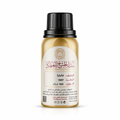
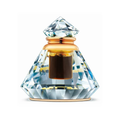
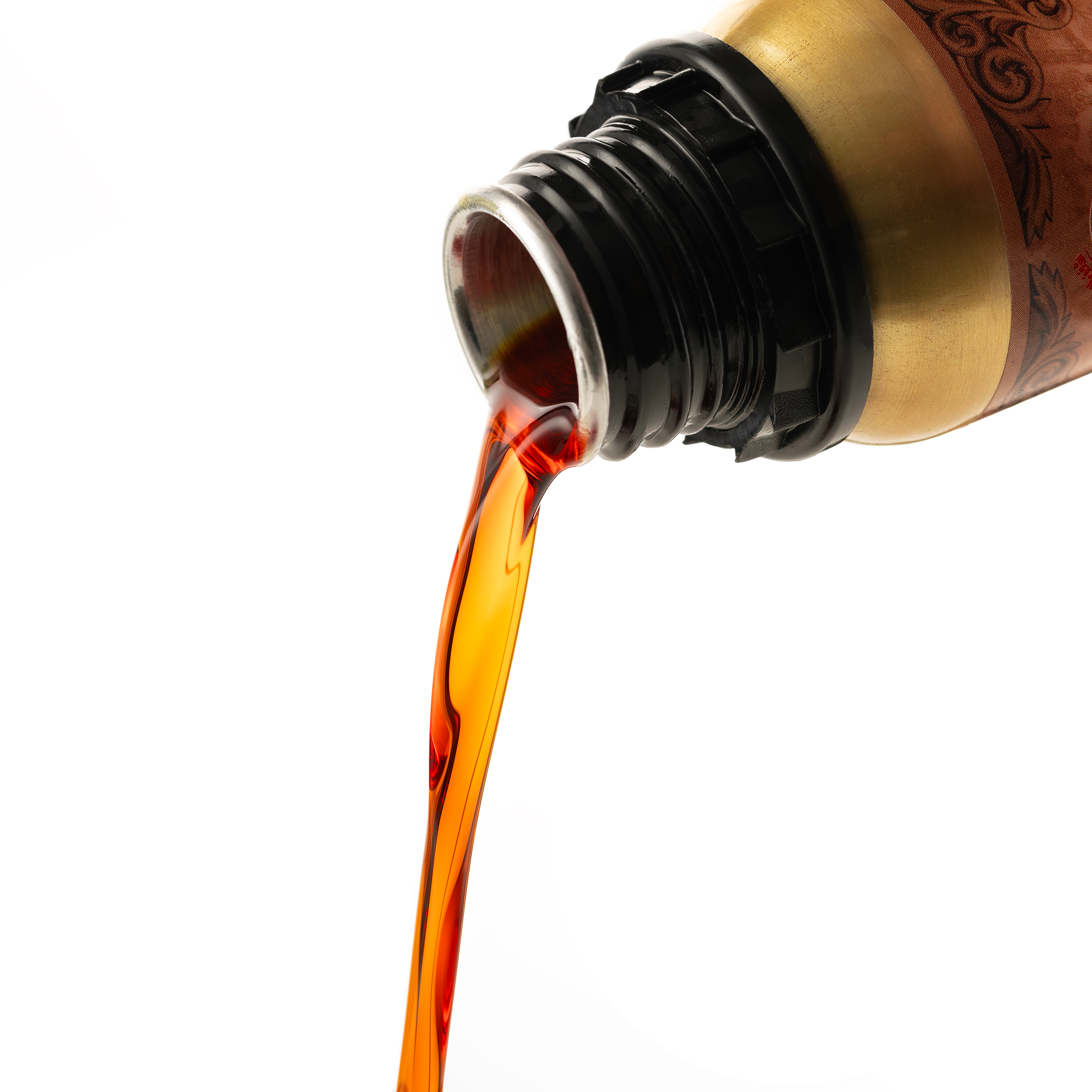
In short: A perfume oil is a fragrance blend dissolved in oil rather than alcohol, so it is neither an essential oil, which is extracted from a single plant, nor oud oil. The oil that dissolves it is most often jojoba or fractionated coconut oil, and its concentration is usually around 20%. It is estimated to last longer on the skin than an alcohol-based perfume, though that varies from one perfume to another. Because it usually goes on neat, and its fragrance materials can cause allergy like those of any perfume, read the label and try it on a small area before you make it a habit.
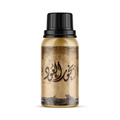
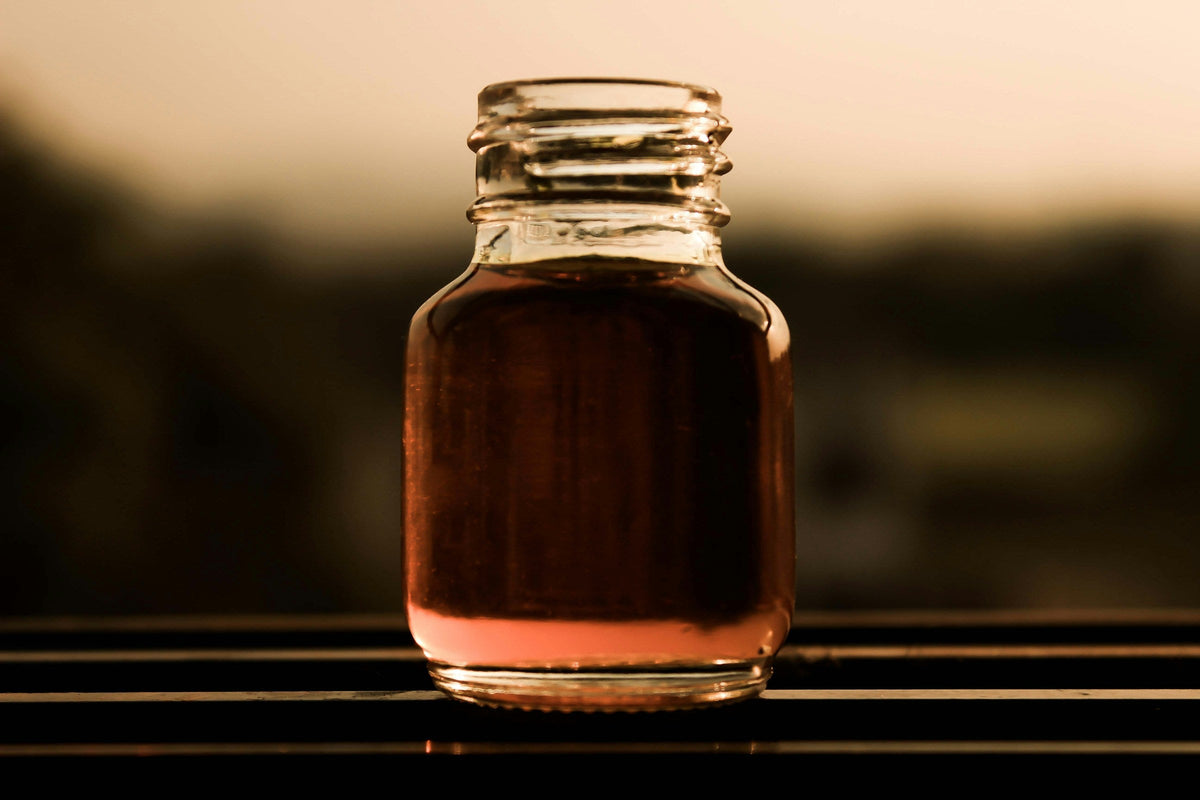
A small bottle with a thin glass rod in its cap. You draw out the rod and a drop clings to it; you wipe it on the wrist or behind the ear, then put the bottle back in its box. This is how perfume oil is used in many homes, with no spray and no mist.
Table of contents
- What is perfume oil?
- Perfume oil and essential oil
- Perfume oil and oud oil
- What is perfume oil made of, and how concentrated is it?
- Does perfume oil last longer?
- Perfume oil on the skin
- What IFRA says
- Allergens and the label
- How do you try it before making it a habit?
- How do you use and store it?
- Read also
- References
What is perfume oil?
Perfume oil is a concentrated fragrance in oil form, free of the ethanol used to make colognes and eaux de toilette. IFRA, the International Fragrance Association, calls it attar, a word taken from the Arabic ʿiṭr, meaning perfume [1].
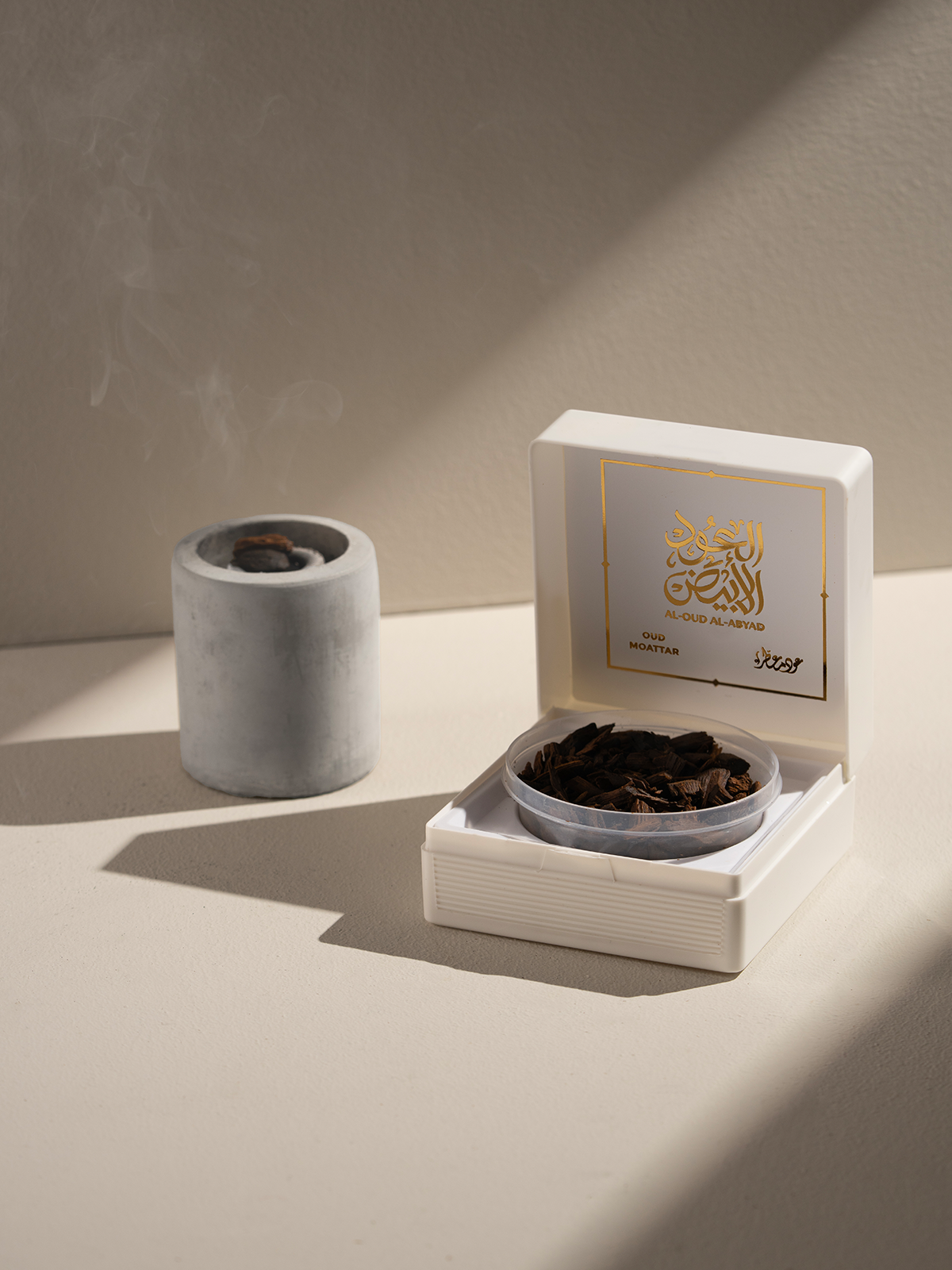
Arabian perfume oils bring together, in oil, materials such as oud, saffron, musk, amber and sandalwood [3]. One of them is mukhallat, a blend of oud, amber, sandalwood and other materials [3]; how it is blended is in the guide to blending perfume oils.
People often confuse it with two other things that are also called oil: essential oil and oud oil.
Perfume oil and essential oil
A perfume oil is a blend of many fragrance materials, natural or synthetic, dissolved in a carrier oil. An essential oil, by contrast, is extracted from a single plant, such as orange peel oil or lavender oil. Much of what is sold in shops as "aromatic oil" is perfume oil, not essential oil, and the name on the pack does not tell them apart, so read the label.
Perfume oil and oud oil
Oud oil is a single material extracted from agarwood [3], and it may be one ingredient of a perfume oil. Makers of perfume oils and mukhallats blend grades of oud oil and oud powder, usually adding other materials to them [3].

What is perfume oil made of, and how concentrated is it?
It consists of a fragrance concentrate dissolved in a carrier oil, and the concentrate usually makes up around 20% [2]. Each maker has its own proportion, so the proportion in a particular perfume can only be known from its maker. On the scale of concentration grades for alcohol-based perfume, this proportion is higher than eau de parfum (10–15%), while extrait de parfum reaches 40% [2].
The carrier oil dissolves the concentrate without masking or changing its scent; almost any neutral oil will do, and the most widely used are jojoba and fractionated coconut oil [2]. Oud oil, on the other hand, is a fragrance material in the blend [3], not a carrier oil.
Does perfume oil last longer?
It is estimated to last longer: between 6 and 15 hours for perfume oils, against about 3 hours for alcohol-based ones [2]. This is a general estimate for which we found no measurement on the skin, so it is not a promise for any particular perfume; how long a perfume lasts depends on its materials before its solvent, and then on the skin, the weather and the amount applied.
It also differs in how it first comes across. Alcohol evaporates quickly, and perfume oil usually lacks top notes, the light, fresh scents you smell as soon as a perfume is applied, so its scent seems heavier [2]. That is why it stays close to the skin, and body heat releases its scent slowly [2].
Perfume oil on the skin
Perfume oil is usually put on the skin neat, and its materials can cause allergy, like those of any perfume. Being free of alcohol does not make it suitable for every skin.
Ethanol can dry the skin, and in some people can cause irritation or contact allergy [2]. But perfume oil carries fragrance materials of the same kind as those in alcohol-based perfume, and usually at a higher concentration [2]. Fragrance materials are the most common causes of allergy to cosmetics [5]. Natural ones are no exception: most of the essential oils common in "natural" products are known allergens [5].
What IFRA says
IFRA does not place perfume oil in a single category, because it is not used in a single way [1]. IFRA bans some fragrance materials and limits how much of others may be used according to the type of product and how it is used. Perfume oil usually goes on neat, in a small amount on the pulse points like a perfume, or in a larger amount over a wider area like a body oil. It may also be diluted and used as a perfume, an eau de toilette or a fabric spray, and it may go into incense and air fresheners.
Each use has a category with its own limits for each material: one category for perfume, another for body oil, and a third for products that do not touch the skin, such as incense. The maker of the product chooses the category according to the intended or expected use, and where the use is not specified IFRA recommends the most restrictive [1].
So a perfume oil made for incense should not be put on the skin unless its label says so. And one you blend at home has never been assessed against these standards at all.
Allergens and the label
Look on the label for the list of ingredients, not for the words "natural" or "alcohol-free". In the European Union, the fragrance allergens listed in the regulation must be named in that list if the concentration of any of them exceeds a threshold the regulation sets. Regulation 2023/1545 expanded the list of these substances [4].
If you have an allergy to a particular fragrance material, look for it on the label, and ask your doctor before you use the perfume.
How do you try it before making it a habit?
Perfume is left on the skin and not washed off, so if you are worried it may irritate your skin, try it on a small area for a few weeks before you make it a habit. Dermatologists call this trial the "repeated open application test" (ROAT) [5]:
- Apply it to an area the size of a large coin, usually on the forearm or in the crease of the elbow.
- Repeat once to a few times a day, as you would use it in real life.
- Keep the trial going for 3 to 4 weeks.
If a rash appears where you tested it, that is a reaction of the skin, either allergic or irritant [5], so stop using the product and see a dermatologist. A dermatologist diagnoses allergy to cosmetics with a patch test [5].
This kind of allergy is of the delayed type [5], so do not judge within the first hour. And a trial with no rash does not mean the product suits your skin in every case.

How do you use and store it?
Start with a small amount. Perfume oil is concentrated, and a single drop wiped on with the glass rod is enough to see how it wears.
Take care with light-coloured clothes and delicate fabrics: if perfume oil gets on them it may leave greasy stains, and it may make whatever it touches sticky [2]. Apply it to the skin, and let it absorb before you get dressed.
Put the glass rod back in the bottle and close it tightly after each use, then store it away from heat and light.
Read also
- Essential Oils in Perfume: The Main Ones, Their Scents and Safety
- Composing Perfume Oil Blends: How to Mix a Mukhallat Yourself
- Why Doesn't Your Perfume Last? Longevity, Sillage and Olfactory Adaptation
- Perfume Ingredients: From Raw Material to Note
- Harms of Perfume and Bakhoor: What the Evidence Says on Allergy and Smoke
References
- IFRA. Guidance for the use of IFRA Standards. 30 June 2023 (Amendment 51). Section 6.5.16 "Attars and attar-type fragrances" and Table 10 (pp. 39–40). Guidance document. Accessed 6 October 2026.
- Sikora E, Miastkowska M, Wolinska Kennard K, Lason E. Nanoemulsions as a Form of Perfumery Products. Cosmetics. 2018;5(4):63. Section 1. doi:10.3390/cosmetics5040063. Accessed 6 October 2026.
- Antonopoulou M, Compton J, Perry LS, Al-Mubarak R. The Trade and Use of Agarwood (Oudh) in the United Arab Emirates. TRAFFIC Southeast Asia; 2010. Glossary, and the chapter on manufacturing. Report. Accessed 6 October 2026.
- European Commission. Commission Regulation (EU) 2023/1545 of 26 July 2023 amending Regulation (EC) No 1223/2009 as regards labelling of fragrance allergens in cosmetic products. Official Journal of the European Union. L 188, 27 July 2023. eur-lex.europa.eu. Accessed 6 October 2026.
- Sukakul T, Svedman C. What is New in Contact Allergy To Cosmetics for Physicians, Cosmetologists, and Cosmetic Users? Current Allergy and Asthma Reports. 2025;25(1):48. PMC12552389. Accessed 6 October 2026.
Prepared and edited by: Sedr Al-Khaleej Perfumes team
Last reviewed: 16 October 2026
Was this article helpful?
Leave a comment
Comments are reviewed before they appear. Your email address won’t be shown.