
In short: In Riyadh, Dhahran and Abha the nights are cold, with an average January minimum temperature between 8 and 11°C, and the air in Riyadh is drier than in Jeddah and Jazan. Jeddah and Jazan, on the other hand, have warm days, with an average maximum of about 29 to 32°C. Cold reduces how much of a perfume evaporates, so it sits quieter; we know of no evidence that it makes a perfume last longer on the skin, and it does not appear to weaken the sense of smell. For cold nights we favor warm notes such as leather, resins and sweet notes, and for the days of Jeddah and Jazan fresh notes, in moderate amounts indoors.
Table of contents
- What is winter like in Saudi Arabia?
- What does cold do to perfume?
- Which notes suit winter?
- What does it mean for a scent to be "warm"?
- Leather
- Warm resins: labdanum and benzoin
- Sweet notes
- What is the difference between perfume concentrations and perfume oils?
- How should you wear perfume in winter?
- How should you store your perfume in winter?
- Read also
- References
On a January night a man sits in the courtyard of his house in Riyadh, wearing the perfume that kept him company all summer, and in the cold night air he finds it quieter than he remembers. On the Jeddah Corniche that same night, people walk about in light clothes, in air closer to a spring evening.
What is winter like in Saudi Arabia?
Riyadh, Dhahran and Abha have mild days and cold nights, while in Jeddah and Jazan the January minimum stays well above 10°C [1]. These are the average maximum and then minimum temperatures, in degrees Celsius, at five stations, from the World Meteorological Organization climate normals for 1991–2020 [1]:
| City | December | January | February |
|---|---|---|---|
| Riyadh | 22.2 / 10.8 | 20.1 / 9.2 | 23.6 / 11.5 |
| Dhahran | 23.8 / 12.4 | 21.5 / 10.5 | 23.6 / 12.1 |
| Jeddah | 30.6 / 20.6 | 28.8 / 18.8 | 29.8 / 19.0 |
| Jazan | 31.8 / 22.9 | 30.7 / 22.0 | 31.2 / 22.9 |
| Abha | 21.1 / 7.9 | 20.1 / 8.1 | 21.8 / 9.7 |
On most January nights the minimum in Riyadh and Abha falls to 10°C or below [1].

Riyadh's air is drier too: in January it holds roughly half the water vapor of Jeddah's air and a third of Jazan's [1].
What does cold do to perfume?
In the cold, less of a perfume evaporates, so it can be expected to sit quieter around you on a cold night than on a hot day, because the warmer a liquid is, the more of it evaporates [2]. As for the common belief that cold makes a perfume last longer on the skin, we know of no evidence for it.
What did show an effect on how a perfume lingers is skin hydration: when the evaporation of fragrance ingredients was measured on the skin of a small number of volunteers, some of the less volatile ingredients evaporated more slowly from better-hydrated skin, and skin temperature showed no clear effect [3].
Dry winter air takes that moisture away: the skin loses water from its outer layer after hours in low-humidity air [4], and cold and dry air both generally weaken its barrier [5], that is, the outer layer that holds its water in. January nights in Riyadh bring the two together [1], which is why we think moisturizing matters more there than elsewhere.
Cold does not appear to weaken the sense of smell: people whose sense of smell was tested at 20°C and at 35°C showed no meaningful difference in their results [6], though nothing colder was tested. So if your perfume seems quieter on a cold night, the likelier explanation is that less of it is evaporating [2].
Which notes suit winter?
For the cold nights of Riyadh, Dhahran and Abha we choose warm notes such as leather, resins and sweet notes, and we keep fresh notes for the days of Jeddah and Jazan.
A perfume has three layers that evaporate at different speeds: the top notes, or opening, are the fastest, then the middle or heart notes, then the base, which is the slowest [7]. How long each layer lasts varies from one perfume to another, so the longevity of a particular perfume can only be known by trying it.

In the classification of scents, fresh ones are known to be preferred in summer and warm and animalic ones in winter [8]. But that describes temperate climates, and winter in Jeddah and Jazan is warm [1], so fresh notes have a place there in winter as well.
Spices, woods, oud, vanilla, amber, musk and incense also suit winter, and we have explained them in our article on autumn fragrance notes.
What does it mean for a scent to be "warm"?
"Warm" is a word from the vocabulary of perfumery, like "fresh" and "animalic", not a temperature in the scent that everyone perceives, since people do not agree on which of most smells are hot and which are cold: when people from different cultures were asked to match smells with a cup of hot or cold water, one group agreed on nothing, and the others agreed on only a few smells, which differed from one culture to another [9].
Leather
"Leather" in a list of notes describes a scent, just as one says woody or musky, and it mostly sits in the base of a perfume, that is, at its end [8].
Perfume classifications group leathery scents with smoky ones [8].
We prefer leather for evenings in Riyadh, Dhahran and Abha on cold nights, and we start with a little.
Warm resins: labdanum and benzoin
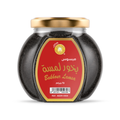
Labdanum is a resin, that is, an aromatic substance secreted by the leaves and stems of the shrub Cistus ladanifer, and today it and its extracts are used mainly in perfumery [10]. Its oil is among the natural materials with the highest measured substantivity [8].
Benzoin (jawi, or luban jawi) is burned as incense in the incense burner. It is a resin that flows from the trunks of trees of the genus Styrax when they are cut, then dries and hardens in the air [11]. Two types are well known: Siam benzoin, described as sweeter and closer to vanilla, and Sumatra benzoin, whose scent is closer to spices. It goes into perfumes as a fixative, that is, a material said to reduce the loss of the lighter notes [11].
Sweet notes
Sweet notes also belong to the end of a perfume: they mostly sit in its base, sometimes in its heart, and hardly ever in its top. They are most often linked with vanilla and then tonka, both of which are mostly base notes [8]. Tonka is the seed of the tree Dipteryx odorata, of the legume family, native to northern South America and northern and western Brazil [15]. Coumarin is obtained from its seeds [16], a substance with a pleasant scent resembling vanilla [17]. Coumarin is among the materials whose amounts in perfumes the International Fragrance Association (IFRA) restricts, because of possible dermal sensitization and systemic toxicity [18], and it is among the sensitizing substances that the Saudi Food and Drug Authority, in a 2018 news release, required to be listed on the perfume label when it exceeds 0.001% [19].
We find them best suited to the evening and to cold days, and go lighter on them in the warm daytime of Jeddah and Jazan.
What is the difference between perfume concentrations and perfume oils?
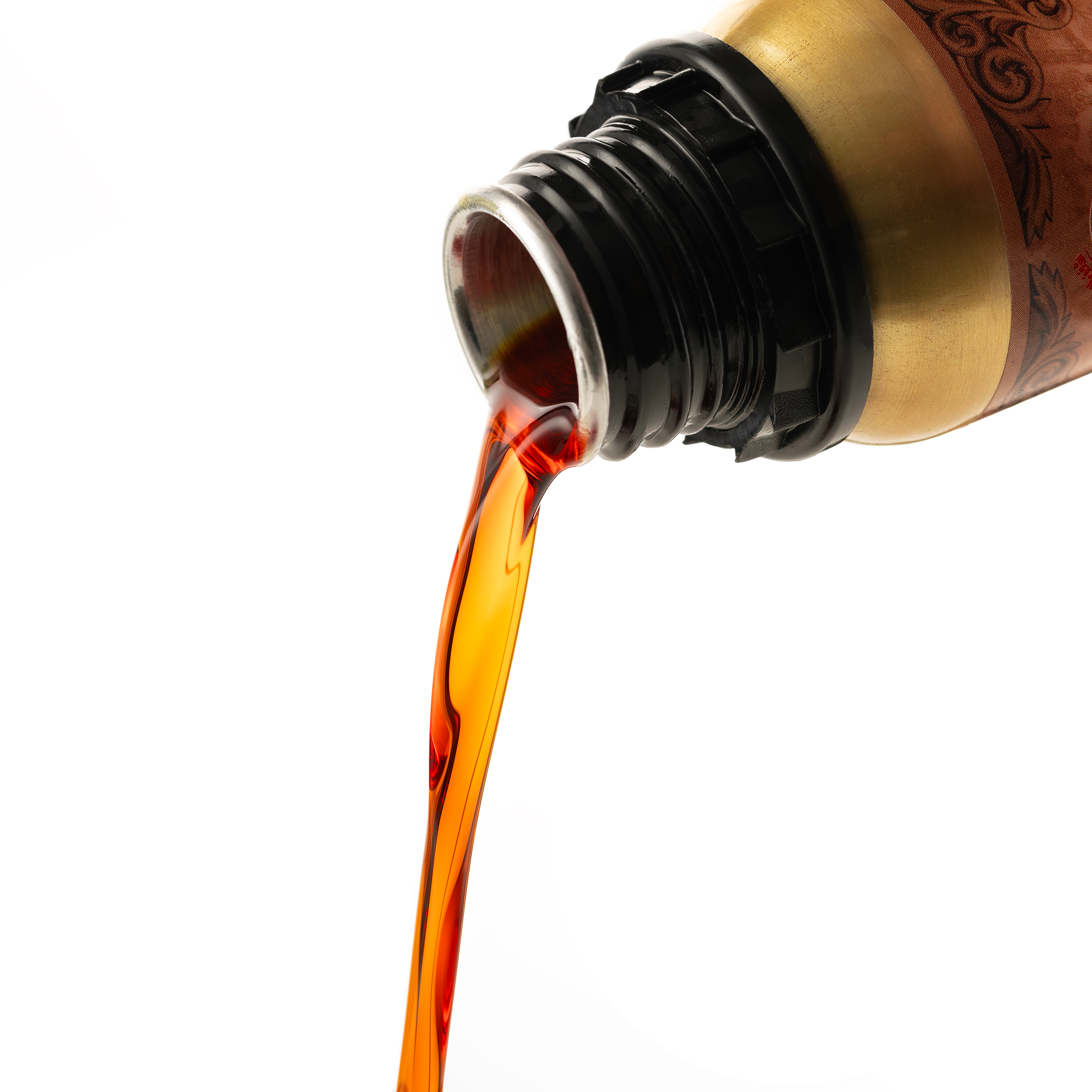
A perfume oil (dehn) differs from an alcohol-based perfume in what the aromatic material is dissolved in: oil instead of alcohol [12]. Types of alcohol-based perfume differ from one another in the proportion of aromatic material, the highest being extrait de parfum, then eau de parfum, then eau de toilette, then eau de Cologne [12]. And two perfumes of one type need not last equally long, since longevity also depends on the perfume's notes [7].
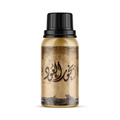
Perfume oils are known to last longer on the skin than alcohol-based perfumes, but they often lack the light top notes, so they seem heavier [12]. Dehn al oud (oud oil) is something else, which we explain in our oud guide.
How should you wear perfume in winter?
- Moisturize your skin before applying perfume: some of its less volatile ingredients evaporate more slowly from better-hydrated skin [3], though the measurements did not include moisturizing cream.
- Go easy on heavy, warm perfumes in majlis rooms, cars and any enclosed space, out of consideration for those around you.
- Use less if you will be sitting near a heater, since heat increases how much of a perfume evaporates [2].
- You can spray perfume on your clothes, such as your thobe and shemagh, after testing it on a hidden spot of the fabric. Perfume oils are another matter: we advise against them on clothes, as they may leave oily stains [12].
- If you can no longer smell your perfume, do not spray more for that reason alone: the nose gets used to a scent it smells for a long time or repeatedly, and becomes temporarily less sensitive to it [13]. The top notes may also have faded, leaving the heart and base, which evaporate more slowly [7].
- With perfume oils, start with a little and add more if needed.
How should you store your perfume in winter?
Keep your perfume in a cool, dark place, away from the heater and the window, and close the bottle after each use, because heat, light and oxygen are among the main things that change the scent of aromatic oils over time [14].
Read also
- Autumn Fragrance Notes: How to Choose Your Perfume in Saudi Weather
- Summer Fragrance Notes: How to Choose and Wear Perfume in the Heat
- Perfume Ingredients: From Raw Material to Note
- Musk in Perfumery: Animal, Synthetic and Its Types
- How to Store Perfume: Where to Keep It, How Long It Lasts, and How to Tell It Has Changed
- Fragrance Families: A Guide to Types of Perfume Scents and How They Are Classified
- Oriental Ingredients in Perfume: Oud, Amber, Saffron, Frankincense and Rose
References
- World Meteorological Organization. WMO Climate Normals for 1991–2020, Kingdom of Saudi Arabia: single station data sheets (Riyadh Old 40438, Dhahran 40416, Jeddah KAIA 41024, Gizan 41140, Abha 41112). NOAA NCEI archive, accession 0253808. In the winter months, data for the Riyadh Old station cover 20 to 21 years of the period, and for Dhahran 23 to 24 years. Data files. Accessed 1 October 2026.
- LibreTexts Chemistry. 13.8: Vapor Pressure. Introductory Chemistry (CK-12). Link. Accessed 27 September 2026.
- Hadjiefstathiou E, Savary G, Malhiac C, Terescenco D, Picard C. Exploring the impact of fragrance molecular and skin properties on the evaporation profile of fragrances. International Journal of Cosmetic Science. 2025;47(6):981–995. doi:10.1111/ics.13085. PMC12666731. Accessed 27 September 2026.
- Egawa M, Oguri M, Kuwahara T, Takahashi M. Effect of exposure of human skin to a dry environment. Skin Research and Technology. 2002;8(4):212–218. doi:10.1034/j.1600-0846.2002.00351.x. Accessed 1 October 2026.
- Engebretsen KA, Johansen JD, Kezic S, Linneberg A, Thyssen JP. The effect of environmental humidity and temperature on skin barrier function and dermatitis. Journal of the European Academy of Dermatology and Venereology. 2016;30(2):223–249. doi:10.1111/jdv.13301. Accessed 5 October 2026.
- Drews T, Nehring M, Werner A, Hummel T. The sense of smell is not strongly affected by ambient temperature and humidity: a prospective study in a controlled environment. European Archives of Oto-Rhino-Laryngology. 2021;278(5):1465–1469. doi:10.1007/s00405-020-06436-3. Accessed 5 October 2026.
- Rodrigues AE, Nogueira I, Faria RPV. Perfume and Flavor Engineering: A Chemical Engineering Perspective. Molecules. 2021;26(11):3095. PMC8196857. Accessed 1 October 2026.
- Zarzo M. What is a Fresh Scent in Perfumery? Perceptual Freshness is Correlated with Substantivity. Sensors (Basel). 2013;13(1):463–483. doi:10.3390/s130100463. PMC3574685. Accessed 1 October 2026.
- Wnuk E, de Valk JM, Huisman JLA, Majid A. Hot and Cold Smells: Odor-Temperature Associations across Cultures. Frontiers in Psychology. 2017;8:1373. doi:10.3389/fpsyg.2017.01373. PMC5554377. Accessed 5 October 2026.
- Frazão DF, Martins-Gomes C, Steck JL, Keller J, Delgado F, Gonçalves JC, Bunzel M, Pintado CMBS, Díaz TS, Silva AM. Labdanum Resin from Cistus ladanifer L.: A Natural and Sustainable Ingredient for Skin Care Cosmetics with Relevant Cosmeceutical Bioactivities. Plants (Basel). 2022;11(11):1477. doi:10.3390/plants11111477. PMC9183103. Accessed 1 October 2026.
- He Q, Sun Y, Chen X, Feng J, Liu Y. Benzoin Resin: An Overview on Its Production Process, Phytochemistry, Traditional Use and Quality Control. Plants (Basel). 2023;12(10):1976. doi:10.3390/plants12101976. PMC10221542. Accessed 1 October 2026.
- Sikora E, Miastkowska M, Wolinska Kennard K, Lason E. Nanoemulsions as a Form of Perfumery Products. Cosmetics. 2018;5(4):63. doi:10.3390/cosmetics5040063. Accessed 1 October 2026.
- Dalton P. Psychophysical and Behavioral Characteristics of Olfactory Adaptation. Chemical Senses. 2000;25(4):487–492. doi:10.1093/chemse/25.4.487. Accessed 27 September 2026.
- Turek C, Stintzing FC. Stability of Essential Oils: A Review. Comprehensive Reviews in Food Science and Food Safety. 2013;12(1):40–53. doi:10.1111/1541-4337.12006. Accessed 27 September 2026.
- Plants of the World Online. Dipteryx odorata (Aubl.) Forsyth f. Royal Botanic Gardens, Kew. powo.science.kew.org. Accessed 17 October 2026.
- Sousa BCM, Castro SP, Lourido KA, et al. Identification of Coumarins and Antimicrobial Potential of Ethanolic Extracts of Dipteryx odorata and Dipteryx punctata. Molecules. 2022;27(18):5837. doi:10.3390/molecules27185837. Accessed 17 October 2026.
- National Center for Biotechnology Information. PubChem Compound Summary for CID 323, Coumarin. pubchem.ncbi.nlm.nih.gov/compound/323. Accessed 17 October 2026.
- International Fragrance Association (IFRA). IFRA Standard: Coumarin (CAS 91-64-5). Amendment 49. 2020. IFRA_STD_023. Accessed 17 October 2026.
- Saudi Food and Drug Authority. “SFDA launches an awareness campaign on the optimal use of cosmetic products” (in Arabic). 24 June 2018. sfda.gov.sa/ar/news/715. Accessed 17 October 2026.
Prepared and edited by: Sedr Al-Khaleej Perfumes team
Last reviewed: 14 October 2026
Was this article helpful?
Leave a comment
Comments are reviewed before they appear. Your email address won’t be shown.