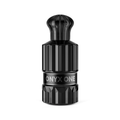
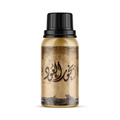
In short: “Oriental ingredients” is a common name for oud (agarwood), amber, saffron, frankincense, rose and musk. Oud is a wood whose scent forms only after its tree is wounded or infected, and frankincense is a resin that comes from Boswellia trees. In perfumery, the word “amber” refers to two different things: ambergris, a rare material that forms in the rectum of the sperm whale; and a scent blend of vanilla, resins and flowers that has nothing to do with the whale. What perfumes commonly use today are synthetic materials with the scent of ambergris, such as Ambrox (a synthetic ambergris). Saffron is the dried stigmas of a flower, and their scent develops during drying and storage; Taif rose is grown on many farms in Taif Governorate. The musk in perfumes today is mostly synthetic.
Table of contents
On a perfume box you read: oud, amber, saffron, Taif rose. Yet the amber in that line may have nothing to do with the sea, and oud has no scent in its tree as long as the tree is healthy.
What do we mean by Oriental ingredients?
We use the term for the materials long associated with perfume in our region: oud, amber, saffron, frankincense, rose and musk. Some of them have common synthetic substitutes.
“Oriental” was the name of a fragrance family in the Fragrances of the World classification, until Amber took its place in 2021 [1].
Oud
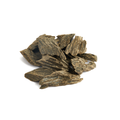
Oud is an aromatic wood from trees of the genera Aquilaria and Gyrinops [2]. A healthy tree does not produce its scent; the aromatic resin forms in its wood after a wound or an infection by insects or fungi [3] [4]. On plantations, trees are induced to form it by methods that include fungal inoculation and wounding [3].
Oud is sold in grades determined by its resin content, density and color, and sometimes its scent, and the prices of these grades lie far apart [3].
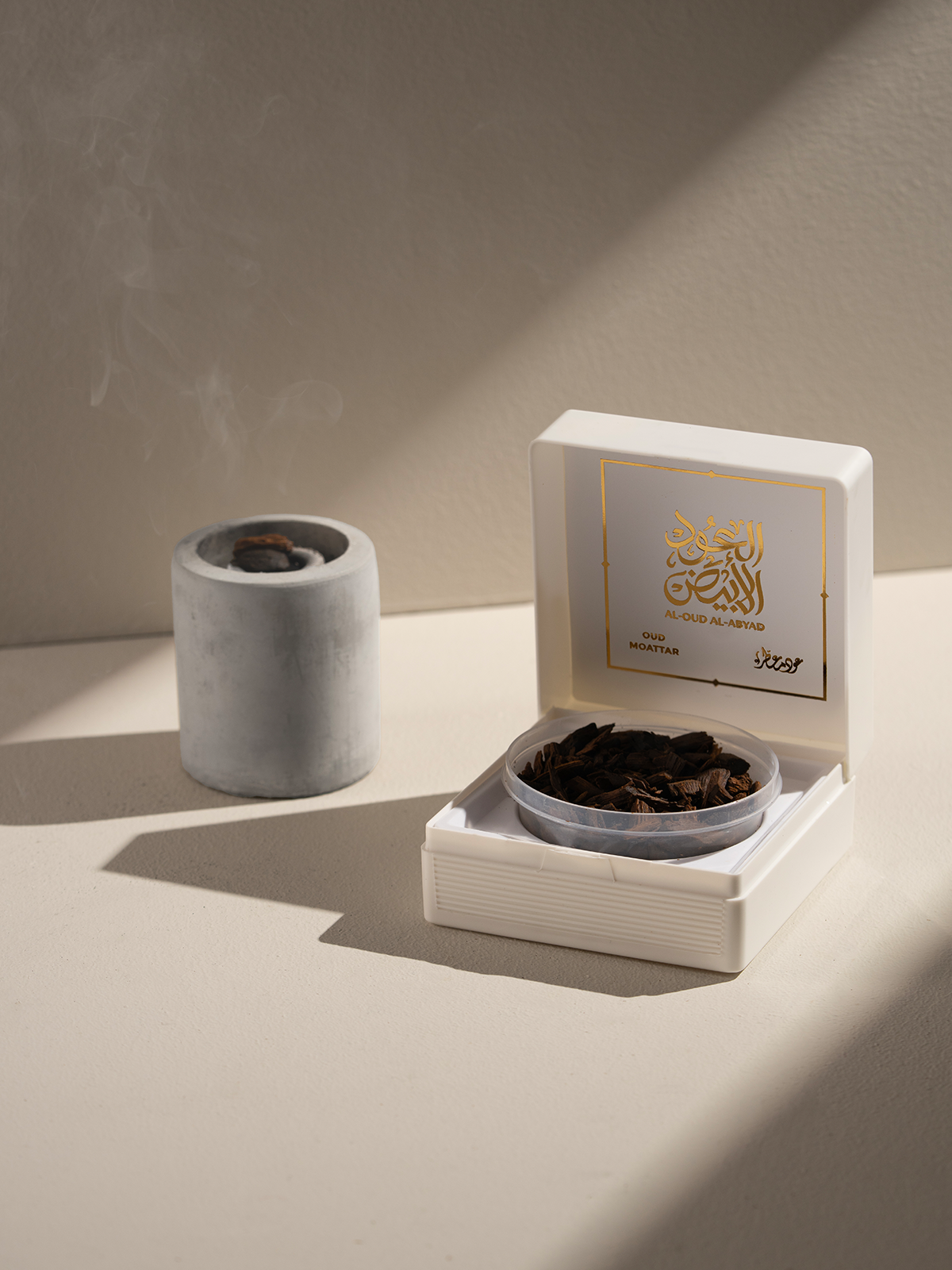
Oud comes from South and Southeast Asia [3]. In our region it is used as bakhoor (the Arabic word for incense) and as oud oil, and its oil goes into the base of perfumes, that is, the last part of their scent to remain [3].
Oud on charcoal does not smell like oud oil, and the likely reason is heat: charcoal turns some of what is in the oud’s resin into aromatic substances that are not in the wood, and what heat transforms in this way does not pass into the oil during distillation, so other compounds appear in the oil [5].
Trees of both genera are listed in Appendix II of CITES, an international convention on trade in endangered species of plants and animals, so their trade between countries is restricted [2] [3].
Amber: one word with more than one meaning
When you read “amber” in a perfume description, it may mean ambergris, a synthetic material with its scent, or a scent blend called amber (an amber accord).
English also calls fossil amber (kahraman in Arabic), a fossil resin [7], amber, with a word that comes from the Arabic ‘anbar [6]. But it is usually not what is meant when “amber” appears in a perfume description.

Ambergris is a rare material that forms in the rectum of the sperm whale, not in “animal glands”, as is sometimes written [8]. Laws on its trade differ from one country to another: in the United States, for example, it may not be collected or sold [11]. It has been used in perfumery to fix scent [8].
Because the sperm whale is an endangered species, synthetic materials have replaced ambergris in the perfume industry [9].
The best known of these synthetic materials is Ambrox, the key compound in the scent of ambergris [10]. Today it is made from plant materials [9].
“Amber” in perfume descriptions
In the Fragrances of the World classification, the Amber family is the name of a scent character created by a blend of resins, flowers and vanilla, not of any one material [1].
Saffron
Saffron is the dried stigmas of the Crocus sativus flower [12]. Harvesting it is laborious: one kilogram takes about 150,000 flowers, collected in 370 to 470 hours of work, after which the stigmas are separated from the flowers and dried [12].
Fresh stigmas have little smell; the scent of saffron forms during drying and storage [12]. Its most important aroma compound is safranal [12].

Frankincense
Frankincense is a gum resin from trees of the genus Boswellia, one of the most important species being Boswellia sacra, in Oman and Yemen [13]. Its scent varies widely from one Boswellia species to another, because the type and amount of its aroma substances differ between them [14].
In Dhofar, Oman, frankincense is sold in four commercial grades whose prices lie far apart, according to the color, size and texture of the pieces. But price does not always follow the oil: when the oils of the four grades were analyzed, the oil of the first grade was very close to that of the fourth in composition, yield and properties [15]. The commercial grade, it seems, follows the appearance of the pieces more than the composition of their oil, and the comparison was of the oil, not of the scent of frankincense on charcoal.

The main source of frankincense today is not Boswellia sacra but another species, Boswellia papyrifera [16].
Taif rose
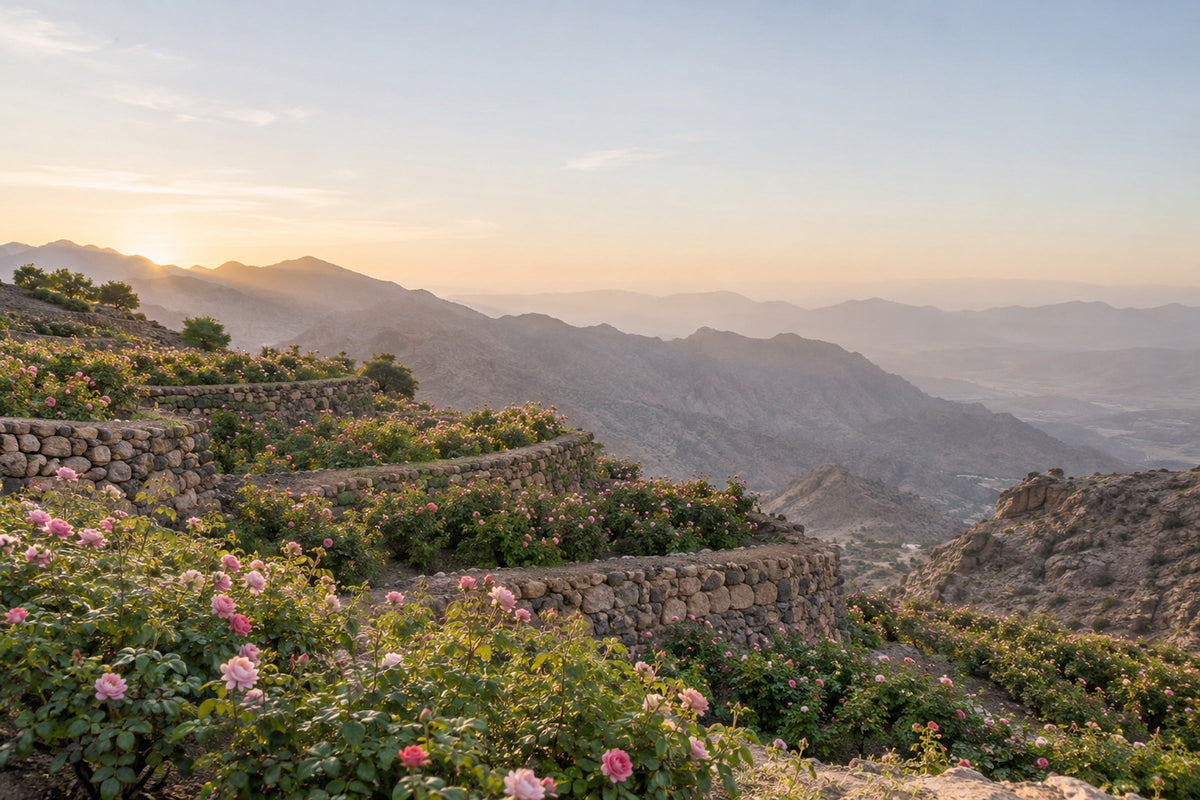
Taif rose is grown in Taif Governorate, on the mountain ridges and in the valley beds, and its scientific name is Rosa damascena var. trigintipetala [17]. Rose oil is distilled from it, and rose water comes out of that distillation [18]; the most abundant substances in the oil are two aromatic compounds, citronellol, followed by geraniol [18].
These two substances are among the fragrance allergens that the European Union requires to be named in the ingredient list of cosmetic products above a set concentration, and the 2023 amendment added rose oil itself to this list [19].
Musk
Animal musk is a secretion that collects in a gland of the male musk deer [20]. It is rare, and its international trade is restricted under CITES [21], so synthetic musk has become its substitute in the perfume industry [22].
A quick comparison of the ingredients
| Ingredient | Source | What is used | Note |
|---|---|---|---|
| Oud | Aquilaria and Gyrinops trees | Resin-saturated wood, and its oil | International trade regulated under CITES [2] |
| Ambergris | Rectum of the sperm whale | Lumps | Sale prohibited in the United States, for example [11] |
| Ambrox | Plant materials, chiefly sclareol | A synthetic material | Has replaced ambergris in perfumes [9] |
| “Amber” in perfume descriptions | A blend | Vanilla, resins and flowers | The name of a scent character, not of a single material [1] |
| Saffron | Crocus sativus flower | Dried stigmas | Its key aroma compound is safranal [12] |
| Frankincense | Boswellia trees | The gum resin | Sold in grades in Dhofar [15] |
| Taif rose | Rosa damascena var. trigintipetala | Rose oil and rose water | Grown in Taif Governorate [17] |
| Musk | Musk deer, or synthetic materials | Mostly synthetic musk | Trade in animal musk is restricted [21] |
Read also
- Oud (Agarwood): A Reference Guide to Its Formation, Types, Oil and Trade
- Musk in Perfumery: Animal, Synthetic and Its Types
- Types of Bakhoor: A Guide to Oud, Frankincense, Maamoul and Mabsous
- The History of Perfume: From the Incense Route to Synthetic Materials
- Harms of Perfume and Bakhoor: What the Evidence Says on Allergy and Smoke
References
- Ilolahia C. From Oriental, to Amber: Why it was time to rename the Oriental fragrance families. Retail Beauty. Spring 2021:68–69. Fragrances of the World. Archived copy on the Internet Archive. Accessed 16 October 2026.
- Layola MRR, Sengupta S, Mallick B, Shil T, Shaw R, Banu F, Chakraborty S, Sardar S, et al. Phylogenetic analysis of the Critically Endangered Aquilaria khasiana (Thymelaeaceae) using barcode markers and chloroplast genome, with updated conservation status. Scientific Reports. 2025;15(1):21511. PMC12214818. Accessed 27 September 2026.
- Naziz PS, Das R, Sen S. The Scent of Stress: Evidence From the Unique Fragrance of Agarwood. Frontiers in Plant Science. 2019;10:840. PMC6646531. Accessed 27 September 2026.
- Shivanand P, Arbie NF, Krishnamoorthy S, Ahmad N. Agarwood—The Fragrant Molecules of a Wounded Tree. Molecules. 2022;27(11):3386. PMC9181942. Accessed 27 September 2026.
- Takamatsu S, Ito M. Agarotetrol: a source compound for low molecular weight aromatic compounds from agarwood heating. Journal of Natural Medicines. 2018;72(2):537–541. doi:10.1007/s11418-018-1185-y. PMID: 29464509. Accessed 5 October 2026.
- Online Etymology Dictionary. Amber. etymonline.com. Accessed 27 September 2026.
- Academy of the Arabic Language in Cairo. Al-Mu‘jam al-Wasit [The Intermediate Dictionary] (in Arabic). Entry “kahraman”.
- Clarke R. The origin of ambergris. Latin American Journal of Aquatic Mammals. 2006;5(1):7–21. doi:10.5597/lajam00087. Accessed 27 September 2026.
- Ncube EN, Steenkamp L, Dubery IA. Ambrafuran (Ambrox™) Synthesis from Natural Plant Product Precursors. Molecules. 2020;25(17):3851. PMC7504449. Accessed 27 September 2026.
- Eichhorn E, Schroeder F. From Ambergris to (−)-Ambrox: Chemistry Meets Biocatalysis for Sustainable (−)-Ambrox Production. Journal of Agricultural and Food Chemistry. 2023;71(13):5042–5052. doi:10.1021/acs.jafc.2c09010. PMID: 36961824. Accessed 27 September 2026.
- NOAA Fisheries. Protected Species Parts. fisheries.noaa.gov. Accessed 27 September 2026.
- Cid-Pérez TS, Nevárez-Moorillón GV, Ochoa-Velasco CE, Navarro-Cruz AR, Hernández-Carranza P, Avila-Sosa R. The Relation between Drying Conditions and the Development of Volatile Compounds in Saffron (Crocus sativus). Molecules. 2021;26(22):6954. PMC8621395. Accessed 27 September 2026.
- Baeten J, Deforce K, Challe S, De Vos D, Degryse P. Holy Smoke in Medieval Funerary Rites: Chemical Fingerprints of Frankincense in Southern Belgian Incense Burners. PLoS One. 2014;9(11):e113142. PMC4229304. Accessed 27 September 2026.
- Mertens M, Buettner A, Kirchhoff E. The volatile constituents of frankincense – a review. Flavour and Fragrance Journal. 2009;24(6):279–300. doi:10.1002/ffj.1942. Accessed 5 October 2026.
- Al-Saidi S, Rameshkumar KB, Hisham A, Sivakumar N, Al-Kindy S. Composition and antibacterial activity of the essential oils of four commercial grades of Omani luban, the oleo-gum resin of Boswellia sacra Flueck. Chemistry & Biodiversity. 2012;9(3):615–624. doi:10.1002/cbdv.201100189. PMID: 22422529. Accessed 27 September 2026.
- Bongers F, Groenendijk P, Bekele T, Birhane E, et al. Frankincense in peril. Nature Sustainability. 2019;2(7):602–610. doi:10.1038/s41893-019-0322-2. Accessed 5 October 2026.
- Galal TM, Al-Yasi HM, Fawzy MA, Abdelkader TG, Hamza RZ, Eid EM, Ali EF. Evaluation of the Phytochemical and Pharmacological Potential of Taif's Rose (Rosa damascena Mill var. trigintipetala) for Possible Recycling of Pruning Wastes. Life. 2022;12(2):273. PMC8876584. Accessed 27 September 2026.
- Mileva M, Ilieva Y, Jovtchev G, Gateva S, Zaharieva MM, Georgieva A, et al. Rose Flowers—A Delicate Perfume or a Natural Healer? Biomolecules. 2021;11(1):127. PMC7835869. Accessed 27 September 2026.
- Commission Regulation (EU) 2023/1545 of 26 July 2023 amending Regulation (EC) No 1223/2009 of the European Parliament and of the Council as regards labelling of fragrance allergens in cosmetic products. Official Journal of the European Union. L 188, 27.7.2023. eur-lex.europa.eu. Accessed 27 September 2026.
- Liu K, Xie L, Deng M, Zhang X, Luo J, Li X. Zoology, chemical composition, pharmacology, quality control and future perspective of Musk (Moschus): a review. Chinese Medicine. 2021;16:46. PMC8214773. Accessed 27 September 2026.
- UNEP-WCMC, CITES Secretariat. Species+: Moschus spp. (Moschidae), CITES listings. speciesplus.net. Accessed 27 September 2026.
- Ahmed L, Zhang Y, Block E, Buehl M, Corr MJ, Cormanich RA, et al. Molecular mechanism of activation of human musk receptors OR5AN1 and OR1A1 by (R)-muscone and diverse other musk-smelling compounds. Proceedings of the National Academy of Sciences. 2018;115(17):E3950–E3958. doi:10.1073/pnas.1713026115. Accessed 27 September 2026.
Prepared and edited by: Sedr Al-Khaleej Perfumes team
Last reviewed: 16 October 2026
Was this article helpful?
Leave a comment
Comments are reviewed before they appear. Your email address won’t be shown.