In short: Store bakhoor, the Arabic word for incense, in an airtight container, in a cool, dark and dry place, away from sunlight, the kitchen and any other source of heat. Heat, light and oxygen do most to change aromatic oils over time, so bakhoor with added oils, such as maamoul, mabsous (local names for incense blends) and scented oud, needs extra care, and so does oud oil. No general shelf life has been set for these oils, so we judge them by smell and sight. Lit charcoal gives off carbon monoxide, so do not light it in a closed room or in a bedroom, and open a window or a door for as long as it is lit. Keep charcoal and the incense burner away from children, and do not empty the ash until it has cooled completely.
Table of contents
- Why does the scent of bakhoor change in storage?
- General rules for storing bakhoor
- Storing each type
- Oud and oud pieces
- Maamoul, mabsous and scented oud
- Oud oil and aromatic oils
- Incense sticks and cones
- Signs that bakhoor has changed
- Storing charcoal, the incense burner and ash: safety tips
- Read also
- References
After the guests leave, the tin of maamoul stays open on the table in the majlis (reception room), and in the car's glove box there is a bottle of oud oil that has spent several summer days there. In both cases, aromatic oils change over time.
Why does the scent of bakhoor change in storage?
One reason the scent changes is that many types of bakhoor contain aromatic oils, and these oils oxidize and change chemically [3]. Maamoul and mabsous have oils added to them, scented oud is wood saturated with them [1], and the resinous wood of oud (agarwood) holds volatile aromatic compounds from which oud oil is distilled [2].
What affects the stability of aromatic oils most is heat, light and access to oxygen [3]. A chemical reaction runs roughly twice as fast with every rise of ten degrees Celsius [3]. Light, both visible and ultraviolet, appears to speed up oxidation too [3].
All this is known from oils such as lavender and thyme, not from oud or bakhoor [3], so we take the general principles from it. Neither a shelf life nor clear storage conditions have yet been defined for aromatic oils [3], so how long they last depends on the type and on how it is kept. Check the expiry date on the package, if there is one.
General rules for storing bakhoor
Start with the container, and make it airtight, because oxygen is one of the main causes of change [3]. Close it after each use, and do not leave it open in the majlis. Choose a size that fits the amount inside, since changes in oils show more clearly in a half-full container than in one with hardly any empty space left [3], although filling a container does not fully prevent oxidation.
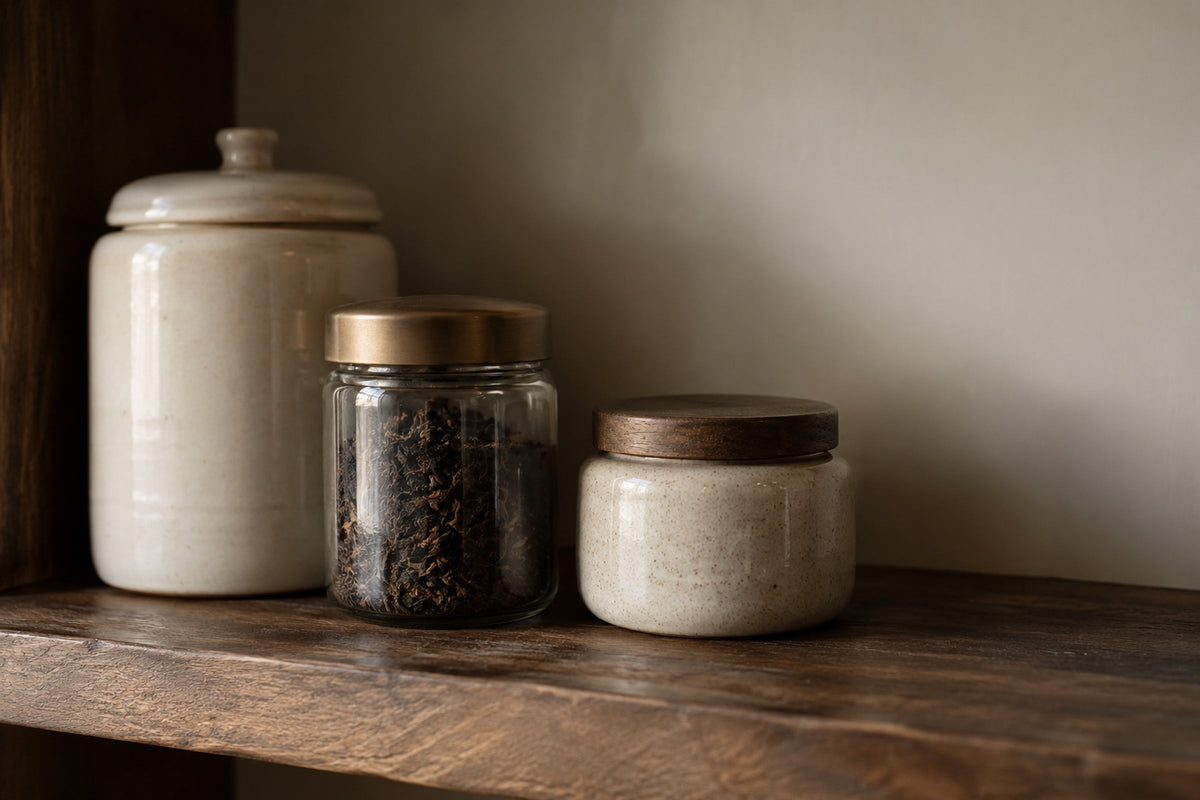
Then the place. In one test, cool, dark storage in a closed container protected limonene, an aromatic compound, from autoxidation for a full year [3]. So keep bakhoor out of direct sunlight, out of a car parked in the heat, and off shelves near the stove and oven. To cool and dark we add dry: keep it away from the bathroom and the kitchen, and from the air-conditioner vent where water condenses.
Give each scent its own container. Do not put different types in one container, and do not store bakhoor with open perfumes, so the scents do not mix. As long as the original package closes well, keep the bakhoor in it; if it does not, move it to an airtight glass or ceramic container. What matters more than the container's material is that it seals tightly, but avoid metal for anything that contains oil, because metal may release impurities into it that promote oxidation [3].

Storing each type
Store each type according to how much oil it contains. Oud pieces are wood that is burned as it is, while blends and oud oil contain oils that need more care.
Oud and oud pieces
Keep oud pieces in a closed container, in a dry place away from strong smells. In the markets of the Middle East and Asia, pieces rich in resin are burned as they are, without processing or added fragrances [4]. If you have more than one grade, give each grade its own container.
Maamoul, mabsous and scented oud
Store these blends with more care, because they contain added oils and aromatic materials:
- Take from them with a clean, dry spoon.
- Keep them away from heat, which speeds up changes in oils [3].
- Do not leave them uncovered on furniture or fabric.
- If the blend dries out or hardens, do not add oil or water to it yourself, and follow the maker's instructions if there are any.
Oud oil and aromatic oils
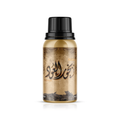
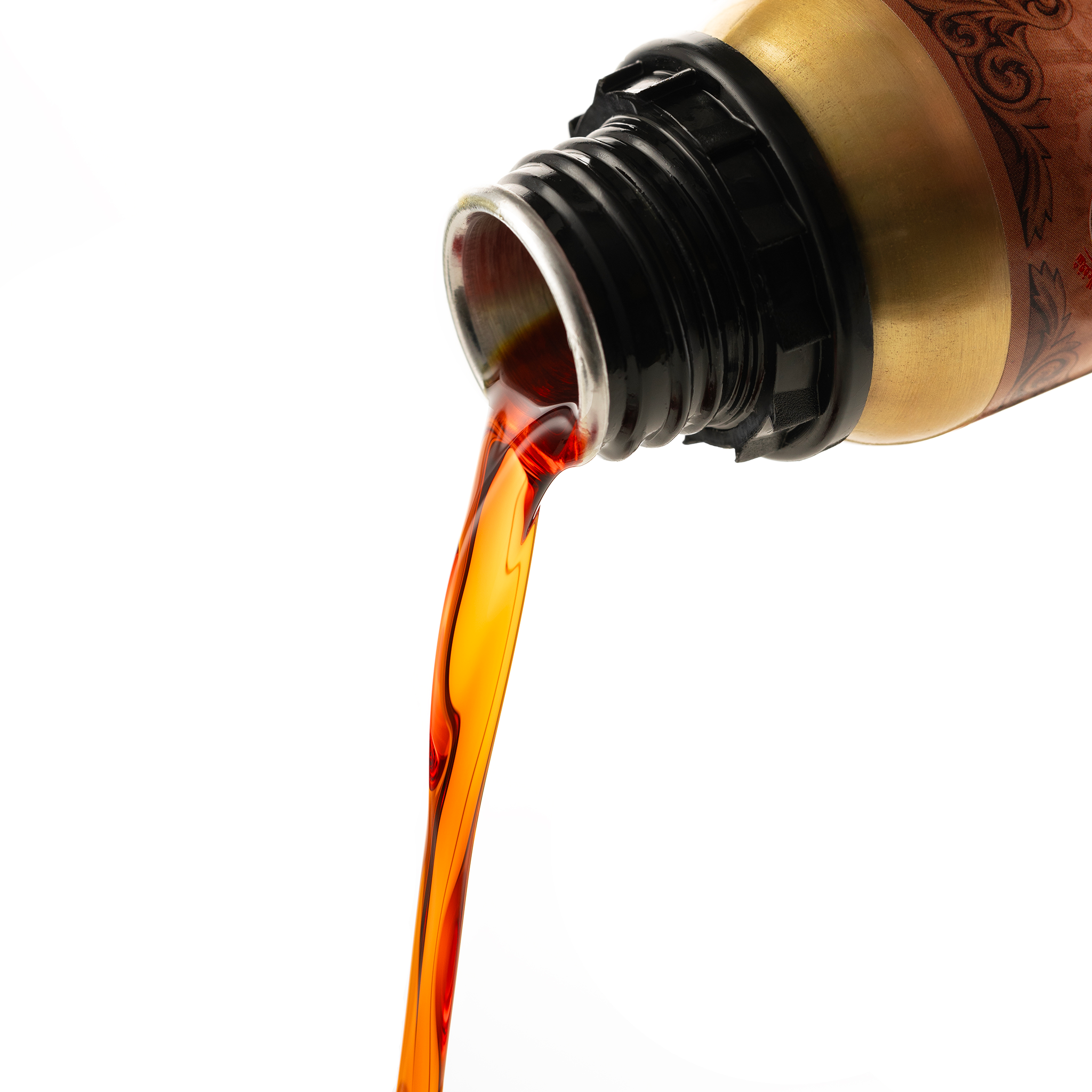
Store oud oil and oil-based perfumes in their bottle with the stopper tightly closed, in a cool, dark place [3]:
- Close the stopper tightly after each use, and put the bottle back in its box.
- Follow the storage instructions on the package if there are any.
- Keep it in its bottle and do not move it to a metal container. Metal may release impurities into the oil, and copper and iron ions in particular promote oxidation [3].
- Choose a size that suits your use: the less oil left in the bottle, the more empty space above it, and changes show more clearly in a half-full container [3].
- We see no need for the refrigerator. Cooling kept some oils stable and raised the markers of oxidation in others, and what holds for one oil cannot be carried over to oud oil [3].
Incense sticks and cones
Keep them in their closed package, in a dry place away from heat. Left uncovered, they may break or pick up the smells around them.
Signs that bakhoor has changed
Oud oil and other oils may develop a sharp or unpleasant smell, change color, or become thicker than they were [3]. With moist blends, compare the texture and smell with how they were on the day you opened the container. With raw oud, your nose is the judge when you burn it, set against how you have known it to smell.
Some aromatic oils and their compounds may, once oxidized, become able to cause skin allergy [3]. We have come across nothing on oud oil in particular here, and the safer course is not to put on your skin an oil whose smell or color has changed.
Storing charcoal, the incense burner and ash: safety tips
Lit charcoal gives off carbon monoxide, a gas with no color or smell [7]. In an experiment on bakhoor from the UAE, the charcoal disc, not the bakhoor, was the main source of this gas in a closed test chamber the size of a living room, even with half a disc [5], and most of the cases of poisoning by this gas that reached the emergency department in Al Ain came from charcoal lit in poorly ventilated homes [6]. So do not light it in a closed room or in a bedroom, do not leave it lit while you sleep, and open a window or a door for as long as it is lit. An electric burner, which is what has been recommended in place of charcoal [1], has no charcoal, so it spares you the charcoal gas, but the bakhoor smoke remains with it. So ventilate the room.
If a headache, dizziness or nausea appears while the charcoal is lit, go out into the fresh air at once, put it out on your way if you can do so without delay, and get medical advice as soon as possible, and do not go back until you have had it. If there is difficulty breathing, sudden confusion, loss of consciousness, weakness, or chest or muscle pain, call an ambulance [10]. Have a carbon monoxide detector near sleeping areas [7]. The details, and what has been measured in rooms, are in the charcoal incense burner section of our guide Making Bakhoor Scent Last at Home.
For storage:
- Keep charcoal before lighting in its closed package, in a dry place, away from heat sources and out of children's reach.
- While bakhoor is burning, keep the incense burner about one meter (three feet) away from children, by analogy with what is recommended around open fires and space heaters [8].
- Do not empty the ash or leftover charcoal until they have cooled completely, then put them in a metal container [8] with a lid, outside and at least three meters (10 feet) from the home [9]. These are the recommendations for fireplace ash, and we treat the ash from the incense burner the same way.
- Do not put the incense burner back in the cupboard or its box until it has cooled, and clean out the ash before storing it.

Read also
- Types of Bakhoor: A Guide to Oud, Frankincense, Maamoul and Mabsous
- Musk in Perfumery: Animal, Synthetic and Its Types
- The History of Perfume: From the Incense Route to Synthetic Materials
References
- Bu-Olayan AH, Thomas BV. Exposition of respiratory ailments from trace metals concentrations in incenses. Scientific Reports. 2021;11(1):10210. doi:10.1038/s41598-021-89493-w. PMC8140077. Accessed 5 October 2026.
- Naziz PS, Das R, Sen S. The Scent of Stress: Evidence From the Unique Fragrance of Agarwood. Frontiers in Plant Science. 2019;10:840. doi:10.3389/fpls.2019.00840. PMC6646531. Accessed 27 September 2026.
- Turek C, Stintzing FC. Stability of Essential Oils: A Review. Comprehensive Reviews in Food Science and Food Safety. 2013;12(1):40–53. doi:10.1111/1541-4337.12006. Accessed 5 October 2026.
- López-Sampson A, Page T. History of Use and Trade of Agarwood. Economic Botany. 2018;72(1):107–129. doi:10.1007/s12231-018-9408-4. Open access: researchonline.jcu.edu.au/58720. Accessed 5 October 2026.
- Cohen R, Sexton KG, Yeatts KB. Hazard assessment of United Arab Emirates (UAE) incense smoke. Science of the Total Environment. 2013;458–460:176–186. doi:10.1016/j.scitotenv.2013.03.101. PMID: 23648447. Accessed 27 September 2026. The experiment’s details, including the half disc and the air exchange rate, are in the master’s paper on which it was based: Cohen RC. Hazard Assessment of United Arab Emirates (UAE) Incense Smoke. Master’s paper, University of North Carolina at Chapel Hill; 2012. doi:10.17615/k902-r429. Accessed 17 October 2026.
- Al Kaabi JM, Wheatley AD, Barss P, Al Shamsi M, Lababidi A, Mushtaq A. Carbon monoxide poisoning in the United Arab Emirates. International Journal of Occupational and Environmental Health. 2011;17(3):202–209. doi:10.1179/107735211799041940. PMID: 21905387. Accessed 5 October 2026.
- Centers for Disease Control and Prevention (CDC). Carbon Monoxide Poisoning Basics. cdc.gov/carbon-monoxide/about. Accessed 27 September 2026.
- North Carolina Office of State Fire Marshal (OSFM). Heating. ncosfm.gov. Accessed 27 September 2026.
- U.S. Fire Administration (USFA), FEMA. Heating Fire Safety (handout). usfa.fema.gov. Accessed 27 September 2026.
- NHS. Carbon monoxide poisoning. Last reviewed: 16 December 2025. nhs.uk. Accessed 15 October 2026.
Prepared and edited by: Sedr Al-Khaleej Perfumes team
Last reviewed: 14 October 2026
Was this article helpful?
Leave a comment
Comments are reviewed before they appear. Your email address won’t be shown.