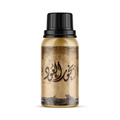
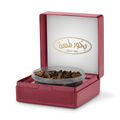
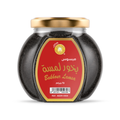
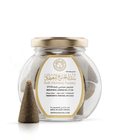
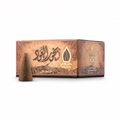
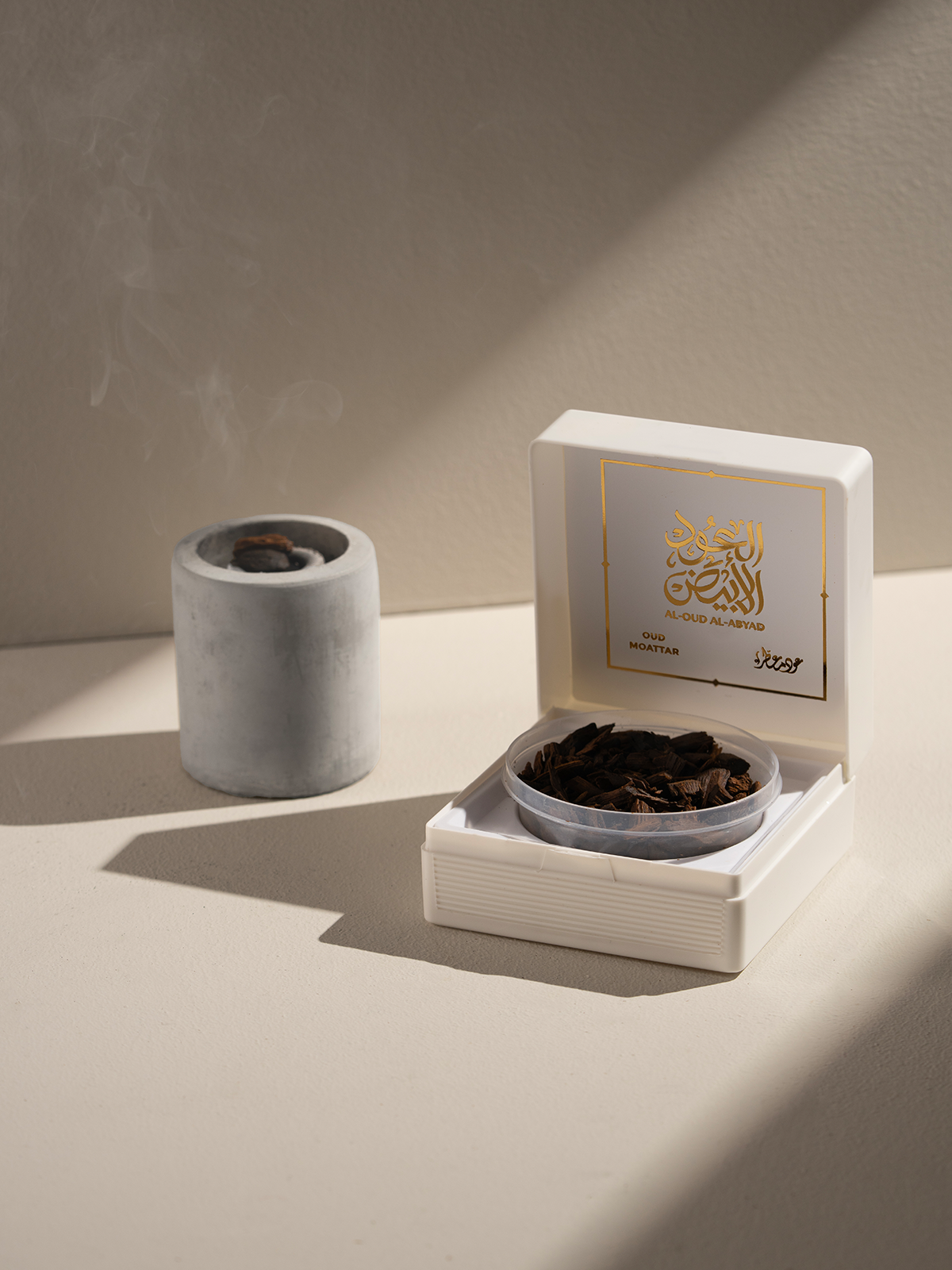
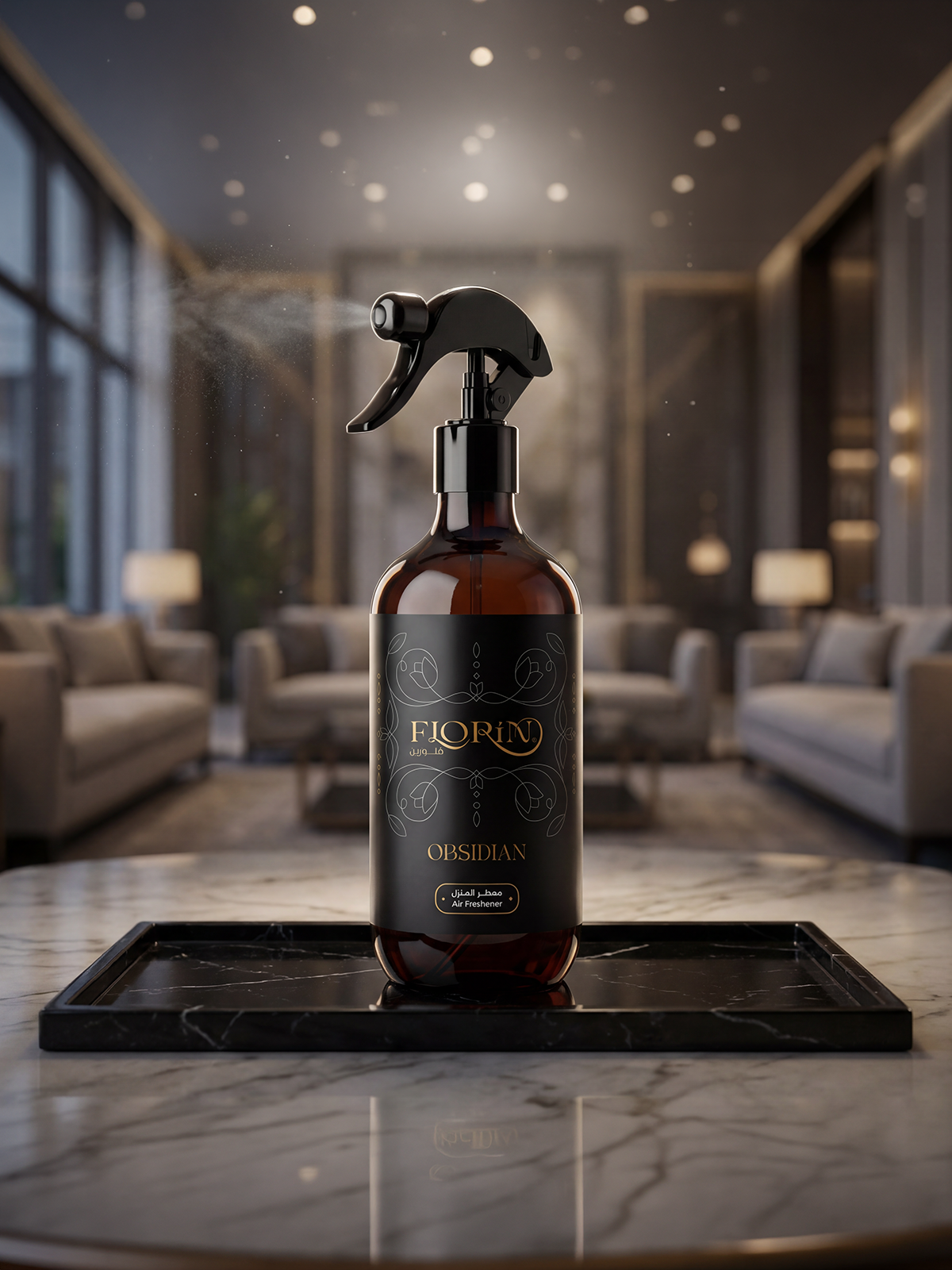
A gathering after sunset prayer. The mabkhara, the burner for bakhoor (Arabian incense), is passed among the guests, and each one holds it to their clothes and hair; then perfume is sprayed at the door. Usually nothing happens. The little that may happen is well known: skin that reacts to one particular fragrance substance, and someone with asthma whose chest may tighten when smoke fills a closed room.
In short: The clearest established harm of perfume is contact allergy of the skin to specific fragrance substances, natural or synthetic, which a dermatologist diagnoses with a patch test. Perfume may worsen asthma symptoms in some patients, and many migraine sufferers name it as a trigger for their attacks, though most of this is what patients themselves report. Bakhoor smoke in a closed space raises fine particles and gases, and may increase wheezing in some children with asthma. Lit charcoal gives off carbon monoxide, so do not light it in a closed room or in a bedroom, and open a window or a door for as long as it is burning. Use small amounts, and anyone who develops symptoms should see a doctor.
Table of contents
- What is proven and what is reported?
- Skin allergy to perfume
- What is it and how does it appear?
- Which substances cause it?
- Are parabens and phthalates causes of fragrance allergy?
- The European label and the International Fragrance Association standards
- How is it diagnosed? The patch test
- Perfume, breathing and headache
- Perfume and asthma
- Fragrance in the air at home
- Migraine and reported complaints
- Bakhoor smoke indoors
- What does the smoke carry?
- What studies have found about health
- The limits of these studies
- Our suggestions for reducing exposure
- With bakhoor
- With perfume
- When should you see a doctor?
- Read also
- References
What is proven and what is reported?
Two things have been established by measurement: skin allergy to specific fragrance substances, and higher levels of indoor air pollutants with bakhoor smoke. As for headaches and breathlessness from perfume, most of what is said comes from reports people give in surveys, which show that the complaint exists without measuring its cause.
| Effect | What the evidence says | Type of evidence |
|---|---|---|
| Skin allergy to perfume | Established for specific fragrance substances | Patch testing in a sample of the general population [1] |
| Worsening of asthma symptoms from perfume | Seen in some asthma patients | A small exposure trial [2] |
| Airway sensitization from the fragrance substances most common in indoor air | Not supported by human studies at usual levels | A scientific review [3] |
| Migraine | Named as a trigger by many patients | Self-reports in surveys [4] [5] |
| Bakhoor smoke and air quality | Raises fine particles and gases indoors | Measurements in a test chamber and in homes [6] [7] |
| Bakhoor smoke and asthma | Increased wheezing in some children with asthma, according to their parents, but was not linked to how common asthma is | A survey of parents [8] |
Skin allergy to perfume
Skin allergy affects a minority of people who wear perfume, and it is caused by specific fragrance substances in the formula.
What is it and how does it appear?
Fragrance contact allergy is an immune reaction that appears in the skin after contact with a fragrance substance to which the person has already become sensitized, and it most often takes the form of eczematous dermatitis [9]. About 1.9% of the general population in five European countries have a fragrance allergy that affects their lives, on a conservative estimate based on patch testing [1]: they had developed a rash, or had to avoid scented products.
Redness after putting on a perfume is not enough to call it an allergy. A diagnosis requires a positive patch test result, and a link between that result and what the person actually comes into contact with [9] [10].
Which substances cause it?
More than 150 fragrance substances are known to cause allergy [10]. Some are weak sensitizers when fresh, then oxidize in air into substances that sensitize more strongly, as limonene and linalool do [10].
A natural substance can cause allergy too. Products described as "natural" or "herbal" can themselves be the source of exposure to fragrance substances, and some essential oils are allergens, such as ylang-ylang oil [9].
Are parabens and phthalates causes of fragrance allergy?
No. Parabens are preservatives, not fragrance substances [11], and allergy to them is uncommon [10]; the American Contact Dermatitis Society named them its "Non-Allergen of the Year" for 2019 [11]. Phthalates, such as diethyl phthalate, are odourless substances that may be used as a solvent and fixative in fragrance formulas [12], so they are not fragrance substances, and we did not find them among the causes of fragrance allergy in our sources.
The European label and the International Fragrance Association standards
If you know which substance you are allergic to, you can look for it in the ingredient list. The EU Cosmetics Regulation requires, for products that fall under it, fragrance allergens to be listed by name when the concentration of any one of them exceeds a set threshold [13]. Even so, the label may not be enough for products made from natural sources [10].
IFRA, the International Fragrance Association, sets standards for specific fragrance substances based on safety assessments: it bans some, and sets a maximum level or a purity requirement for others, and the standards are binding on the association's members [14]. These standards are updated through successive amendments [15] [16].
How is it diagnosed? The patch test
Fragrance allergy is diagnosed with a patch test by a dermatologist. Preparations of the suspected substances are applied to the skin, usually on the back [17], and left for 48 hours; the result is then usually read on day 3 or 4 and again on day 7 [10], because contact allergy is delayed and most of its reactions take two days or more to appear [17].

Try any new perfume on a small area of skin first, and stop using it if redness or itching appears. This trial does not diagnose an allergy; diagnosis is done by a doctor, who has a longer method: applying the product to the forearm over several weeks [10]. People with a proven allergy to more than one fragrance substance are usually advised to use fragrance-free products [10].
Perfume, breathing and headache
The effect of perfume on breathing and headache is less firmly established than its effect on the skin. It may worsen asthma symptoms in some people with asthma, and many migraine sufferers name it as a trigger for their attacks.
Perfume and asthma
Some people with asthma may feel chest tightness with perfume. When asthma patients inhaled perfume from scented paper strips in a small laboratory trial, their lung function fell markedly compared with people without asthma, 20.7% of them developed chest tightness and wheezing, and the effect was greater in severe asthma [2].
Fragrance in the air at home
The fragrance substances most common in indoor air at home, such as limonene, linalool and alpha-pinene, can be smelled in the home, but in the measurements made they do not reach the level of irritation. Their highest concentrations measured in homes are close to or above the odour threshold, and far below the level at which eye and upper airway irritation begins [3]. Human studies do not support their causing airway sensitization at these levels, and the effects observed on lung function are more likely due to smelling the odour than to toxicity [3]. As for the substances formed when fragrances react with ozone gas in the air, information on them is still limited, especially over the long term [3].
Migraine and reported complaints
Many migraine sufferers name perfume as a trigger for their attacks; in one study, 43.7% of them named perfume or odours [4]. Among adults in the general US population, 34.7% said in a survey that they experience at least one health problem, such as migraine or breathing difficulty, when exposed to fragranced products [5]. Both figures are what people said about themselves; their symptoms were not measured.
Bakhoor smoke indoors
Bakhoor smoke raises fine particles and gases in indoor air, and most of the carbon monoxide in it comes from the charcoal [6].
What does the smoke carry?
When incense burns, it gives off smoke containing fine particles, gases and volatile organic compounds [18]. When Emirati bakhoor was burned on charcoal in a closed test chamber the size of an ordinary living room, with its air exchanged about half a time per hour, average levels of particles, carbon monoxide and nitrogen oxides in its air exceeded the values set by government bodies, and most of the carbon monoxide and nitrogen oxides came from the charcoal [6]. In Emirati homes, more frequent burning of bakhoor was linked to higher indoor particle levels [7].
When three types of Arabian bakhoor were burned on charcoal in a small test chamber, about 70% to 75% of the particles by number were ultrafine particles [19]. The trial measured the smoke only, and did not look at its effect on people.
What studies have found about health
In studies, incense smoke has been linked to respiratory symptoms, mostly in people with asthma and those exposed to it for long periods. These studies did not establish that the smoke is the cause.
- Children and asthma: In a survey of ten-year-old children in two regions of Oman, parents of children with asthma reported that bakhoor increases wheezing in 38% to 41% of them, depending on the region, making it the fourth most common trigger after dust, weather and respiratory infections. Burning bakhoor more than twice a week was linked to children's breathing being affected, as their parents describe it, whereas how common asthma was was not linked to bakhoor use [8].
- Workers in bakhoor shops: In the Eastern Province of Saudi Arabia, wheezing was more common among workers in bakhoor shops than among others, and their exposure to the smoke was judged a risk factor for impaired lung function, in a small cross-sectional study [20].
- Long-term use: Longer use of incense was linked to a higher risk of squamous cell cancer of the respiratory tract, but not to lung cancer overall, in a follow-up of Chinese Singaporeans over several years [21].
The limits of these studies
Incense differs in material and in how it is burned from one country to another, so the result of one study cannot be carried over to every kind. In addition, the Oman survey relied on what parents reported, and the Eastern Province study had a small sample. And these studies did not identify an amount at which burning bakhoor has no effect.
Our suggestions for reducing exposure
Reducing exposure starts with using an electric burner indoors and ventilating for as long as charcoal is burning, then with using less, for a shorter time.
With bakhoor
- Lit charcoal gives off carbon monoxide, a gas with no colour or smell [22]. So do not light it in a closed room or in a bedroom, do not leave it burning while you sleep, and open a window or a door for as long as it is burning. If headache, dizziness or nausea appears while the charcoal is burning, go out into the fresh air at once, put it out on your way if you can do so without delay, and get medical advice as soon as possible, and do not go back into the room before getting it; if there is difficulty breathing, sudden confusion, fainting, weakness, or pain in the chest or muscles, call for emergency help [23]. Details, and what has been measured in rooms, are in the charcoal burner section of the guide to making bakhoor scent last at home.
- Inside rooms, use an electric burner: it replaces charcoal, which is where most of this gas comes from when you burn bakhoor [6] [24]. Bakhoor smoke remains, though, so ventilate the room while burning bakhoor and keep exposure short [18].
- Use a small amount, and avoid long sessions of burning bakhoor in a small, unventilated room [24].
- Once you have switched off the electric burner and the smoke has cleared, you may close the windows to keep the scent in.
- If someone at home has asthma, especially a child, watch whether their symptoms get worse when bakhoor is burned [8], and ask their doctor.
With perfume
- If you know which substance you are allergic to, look for it in the ingredient list [10]. It may not be listed if its concentration is below the threshold, or if the product falls outside the scope of the EU regulation [13].
- Close the bottle after each use, because some fragrance substances oxidize in air and become stronger sensitizers [10].
- Be considerate of people with asthma in closed spaces, since perfume may worsen symptoms in some of them [2].
When should you see a doctor?
See a doctor if symptoms keep recurring with perfume or bakhoor, or if any of these cases appears; the above is general information and no substitute for a doctor:
- Redness, itching or eczema that keeps recurring where you apply perfume or personal care products; a dermatologist is the one who performs a patch test.
- Wheezing, chest tightness or coughing with bakhoor smoke or the smell of perfume, especially in people with asthma and in children.
- Headaches that recur or get worse with particular smells.
Call for emergency help immediately if shortness of breath becomes so severe that you are gasping or unable to finish sentences, if the lips or skin become very pale, blue or grey, if you feel severe tightness or heaviness in the chest, or if a person with asthma does not improve after the maximum dose of their reliever inhaler, or gets worse at any point [25] [26]. If headache, dizziness or nausea appears while charcoal is burning, it may be carbon monoxide poisoning [22], and what to do then is in the "With bakhoor" section above.
Read also
- Making Bakhoor Scent Last at Home: Amount, Ventilation and Safety
- Perfume Oils: Concentration, Longevity and Safe Use
- Types of Bakhoor: A Guide to Oud, Frankincense, Maamoul and Mabsous
- Home Fragrances: Types, Ingredients and How to Choose and Use Them
References
- Diepgen TL, Ofenloch R, Bruze M, et al. Prevalence of fragrance contact allergy in the general population of five European countries: a cross-sectional study. British Journal of Dermatology. 2015;173(6):1411–1419. PMID: 26332456. Accessed 6 October 2026.
- Kumar P, Caradonna-Graham VM, Gupta S, Cai X, Rao PN, Thompson J. Inhalation challenge effects of perfume scent strips in patients with asthma. Annals of Allergy, Asthma & Immunology. 1995;75(5):429–433. PMID: 7583865. Accessed 6 October 2026.
- Wolkoff P, Nielsen GD. Effects by inhalation of abundant fragrances in indoor air – An overview. Environment International. 2017;101:96–107. PMID: 28126407. Accessed 6 October 2026.
- Kelman L. The triggers or precipitants of the acute migraine attack. Cephalalgia. 2007;27(5):394–402. PMID: 17403039. Accessed 6 October 2026.
- Steinemann A. Fragranced consumer products: exposures and effects from emissions. Air Quality, Atmosphere & Health. 2016;9(8):861–866. PMC5093181. Accessed 6 October 2026.
- Cohen R, Sexton KG, Yeatts KB. Hazard assessment of United Arab Emirates (UAE) incense smoke. Science of the Total Environment. 2013;458–460:176–186. PMID: 23648447. Accessed 6 October 2026. The experiment’s details, including the half disc and the air exchange rate, are in the master’s paper on which it was based: Cohen RC. Hazard Assessment of United Arab Emirates (UAE) Incense Smoke. Master’s paper, University of North Carolina at Chapel Hill; 2012. doi:10.17615/k902-r429. Accessed 17 October 2026.
- Yeatts KB, El-Sadig M, Leith D, et al. Indoor Air Pollutants and Health in the United Arab Emirates. Environmental Health Perspectives. 2012;120(5):687–694. PMC3346777. Accessed 6 October 2026.
- Al-Rawas OA, Al-Maniri AA, Al-Riyami BM. Home exposure to Arabian incense (bakhour) and asthma symptoms in children: a community survey in two regions in Oman. BMC Pulmonary Medicine. 2009;9:23. PMC2693130. Accessed 6 October 2026.
- Sukakul T, Bruze M, Svedman C. Fragrance Contact Allergy – A Review Focusing on Patch Testing. Acta Dermato-Venereologica. 2024;104:adv40332. PMC11334351. Accessed 6 October 2026.
- Sukakul T, Svedman C. What is New in Contact Allergy To Cosmetics for Physicians, Cosmetologists, and Cosmetic Users? Current Allergy and Asthma Reports. 2025;25(1):48. PMC12552389. Accessed 6 October 2026.
- Fransway AF, Fransway PJ, Belsito DV, Yiannias JA. Paraben Toxicology. Dermatitis. 2019;30(1):32–45. PMID: 30570577. Accessed 6 October 2026.
- U.S. Food and Drug Administration. Phthalates in Cosmetics. Last updated: 19 May 2022. fda.gov. Accessed 6 October 2026.
- European Commission. Commission Regulation (EU) 2023/1545 of 26 July 2023 amending Regulation (EC) No 1223/2009 as regards labelling of fragrance allergens in cosmetic products. Official Journal of the European Union. L 188, 27 July 2023. eur-lex.europa.eu. Accessed 6 October 2026.
- IFRA. IFRA Standards. International Fragrance Association. ifrafragrance.org. Accessed 6 October 2026.
- IFRA. Notification of the 51st Amendment to the IFRA Standards. International Fragrance Association; 30 June 2023. ifrafragrance.org. Accessed 6 October 2026.
- IFRA. IFRA publishes End of Consultation Letter for the 52nd Amendment to the IFRA Standards. International Fragrance Association; 31 August 2026. ifrafragrance.org. Accessed 6 October 2026.
- NHS. Contact dermatitis: Diagnosis. Last reviewed: 3 May 2023. nhs.uk. Accessed 6 October 2026.
- Lin TC, Krishnaswamy G, Chi DS. Incense smoke: clinical, structural and molecular effects on airway disease. Clinical and Molecular Allergy. 2008;6:3. PMC2377255. Accessed 6 October 2026.
- Zhou L, Liang Z, Xu W, Huang RJ, Lee PKH, Chan CK. Indoor Burning of Arabian Incense Generates Abundant Ultrafine Particles with Strong Oxidative Potential. Atmospheric Chemistry and Physics. 2026;26(14):10587–10604. doi:10.5194/acp-26-10587-2026. Accessed 6 October 2026.
- Al Khathlan N, Al-Dabbus Z, Al-Khdir N, Al-Matar M, Al-Nusaif S, Al Yami B. Incense (bakhour) smoke exposure is associated with respiratory symptoms and impaired lung function among adults: A cross-sectional study in Eastern Province of Saudi Arabia. Indoor Air. 2021;31(5):1577–1582. PMID: 33826757. Accessed 6 October 2026.
- Friborg JT, Yuan JM, Wang R, Koh WP, Lee HP, Yu MC. Incense use and respiratory tract carcinomas: a prospective cohort study. Cancer. 2008;113(7):1676–1684. PMC2559972. Accessed 6 October 2026.
- Centers for Disease Control and Prevention (CDC). Carbon Monoxide Poisoning Basics. Last reviewed: 12 January 2026. cdc.gov. Accessed 6 October 2026.
- NHS. Carbon monoxide poisoning. Last reviewed: 16 December 2025. nhs.uk. Accessed 15 October 2026.
- Bu-Olayan AH, Thomas BV. Exposition of respiratory ailments from trace metals concentrations in incenses. Scientific Reports. 2021;11(1):10210. PMC8140077. Accessed 6 October 2026.
- NHS. Shortness of breath. Last reviewed: 30 January 2024. nhs.uk. Accessed 6 October 2026.
- NHS. Asthma attack. Last reviewed: 7 April 2025. nhs.uk. Accessed 6 October 2026.
Prepared and edited by: Sedr Al-Khaleej Perfumes team
Last reviewed: 14 October 2026
Was this article helpful?
Leave a comment
Comments are reviewed before they appear. Your email address won’t be shown.