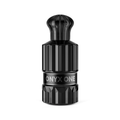
In short: In most of Saudi Arabia's major cities, autumn starts hot. The average maximum temperature in Riyadh is about 40°C in September and 35°C in October, and it does not fall below 30°C there until November, while in Jeddah and Jazan it stays above 33°C even in November. So ease into autumn perfumes: warm spices and woods in moderate amounts early in the season, then vanilla and amber once the weather cools, and oud and incense in the evening. Store your perfume away from heat and light, and do not leave it in the car.
Table of contents
- What is autumn like in Saudi Arabia?
- Which notes suit autumn?
- Warm spices
- Woods and oud
- Vanilla and amber
- Musk and incense
- How do you move from summer to autumn perfumes?
- How do you choose and test an autumn perfume?
- How do you wear perfume in autumn?
- How do you store perfume in autumn?
- Read also
- References
In most of our cities, autumn runs weeks late. Bring out the bottle of oud at the start of September and wear it out during the day, and you find the heat unchanged and the perfume you liked in the evening heavier than you wanted.
What is autumn like in Saudi Arabia?
In most of Saudi Arabia, autumn is not cold. These are the average daily maximum temperatures, in degrees Celsius, at five stations, from the World Meteorological Organization climate normals for 1991–2020 [1]:
| City | September | October | November |
|---|---|---|---|
| Riyadh | 40.4 | 35.2 | 27.5 |
| Dhahran | 40.9 | 36.6 | 29.5 |
| Jeddah | 37.4 | 36.6 | 33.3 |
| Jazan | 38.0 | 36.5 | 34.0 |
| Abha | 30.0 | 26.4 | 23.1 |
September is close to summer in its heat, and October stays above 35°C in four of the five cities. Riyadh and Dhahran cool down in November, Jeddah and Jazan later, and Abha alone is clearly cooler throughout the season.

Any liquid evaporates more as it warms [2], so perfume can be expected to evaporate more on a hot day, and a dense perfume may seem stronger in its first minutes on a hot autumn day. Skin temperature, however, showed no clear effect when the evaporation of fragrance ingredients was measured on the skin of a small number of volunteers [3].
Which notes suit autumn?
As the heat eases, autumn suits notes that are warmer and last longer on the skin: spices early in the season, then woods, vanilla, amber and musk.
How long a note lasts depends on the three layers of a perfume, and each layer evaporates at its own speed. The top notes, also called the opening, such as citrus and green notes, evaporate first. Then come the middle notes, also called the heart, such as spices and florals. Then the base, such as musk and amber, which is the slowest and the last to remain on the skin [4]. How long each layer lasts varies from one perfume to another, so it is no guarantee of how long any particular perfume will last.
Scents described as fresh evaporate quickly, while those further from freshness, such as oriental and powdery ones (those that smell like powder), last longer on the skin [5]. The warmer families include:
| Family | Examples | Place in the perfume | Character |
|---|---|---|---|
| Warm spices | Cinnamon, clove, cardamom, pink pepper | Top and heart | Warmth at the start of the perfume |
| Woods | Sandalwood, cedar | Heart and base | Depth that remains after the opening fades |
| Vanilla and amber | Vanilla, amber, tonka | Base | A warm sweetness at the end of the perfume |
| Musk and incense | Musk, frankincense | Base | A trail at the end of the perfume |
Warm spices
Spices belong to the first hours of a perfume. Cinnamon, clove, cardamom and pink pepper show in the top and heart of a perfume and hardly appear in its base, according to a guide that describes the notes of commercial perfumes [5]. They are where we start autumn.
Woods and oud
Woods are slower than spices and remain after the opening fades. In the same guide, cedarwood appears more in the base than in the heart, and sandalwood oil is among the most persistent of the materials whose substantivity was measured [5].
Oud (agarwood) is wood saturated with resin, an oily aromatic substance that forms inside the wood of Aquilaria trees and builds up in it when they are under stress, such as wounds, insect attack and infection by microorganisms. A healthy tree does not produce it, and this seldom happens in nature except by chance [6].
Vanilla and amber
We tend to hold vanilla and amber back for late autumn and the evening, as some people may find them heavy on hot days.
In that guide, vanilla, amber and tonka appear almost only in the base of a perfume [5].
Vanillin is one of the most important compounds in the scent of vanilla, but it is not the only one: alongside it are compounds present in much smaller amounts whose scent is as intense as its own [7].
In modern perfume descriptions, “amber” may mean a warm blend, and in some fragrance classifications it is the name of a family whose perfumes are described as a mix of resins, flowers and vanilla [8]. This amber is not ambergris, the animal material that forms in the rectum of the sperm whale [9].
Musk and incense
Musk is a base note. It is the most frequent descriptor in perfume bases in that guide, and it hardly appears in the top or heart [5]. Frankincense, a resin of Boswellia trees that has been burned as incense for centuries [10], is also a base note, and its resin is among the most persistent materials [5].
Frankincense here means a note in a perfume you put on your skin. Burning it as incense at home has its own rules on amount, ventilation and safety.
How do you move from summer to autumn perfumes?
Move to autumn perfumes month by month with the weather, not all at once. September and October are still hot in most cities [1], so what works for them is a perfume with a fresh opening and spices or woods in its heart, or your summer perfume if its base is musk, amber or woods.
In November the weather cools in Riyadh and Dhahran, while Jeddah and Jazan stay hotter [1]. Woods, vanilla and amber then become wearable during the day in moderate amounts, and we keep oud, incense and dense musk for evenings and air-conditioned places all through autumn.
In Abha and other highlands the weather is cooler [1], so start on warmer perfumes earlier than everyone else.

How do you choose and test an autumn perfume?
- Read its base, since that is what remains after hours [4], and how long it lasts varies from one perfume to another. If it is oud, incense and dense amber, save it for the evening or late autumn.
- Test it on your skin before you judge it: some fragrance ingredients evaporate more slowly on skin than on glass [3].
- Wait before you decide. The opening fades within about half an hour, and then the heart of the perfume appears [4], where spices may show [5].
- Take a break between one perfume and the next: the nose gets used to a scent it smells for a long time or repeatedly, and becomes temporarily less sensitive to it [11].
How do you wear perfume in autumn?
Go easy on warm perfumes on hot autumn days, especially in closed spaces, out of consideration for people around you. They last longer on the skin than fresh ones [5], and their scent may spread faster in the heat [2]. With perfume oils, start with a little and add more if needed.
Some of the less volatile fragrance ingredients evaporate more slowly from better-hydrated skin, in a measurement that did not include moisturizing cream [3]. If you can no longer smell your perfume after a while, your nose may have got used to it while it is still there [11], so do not reapply for that reason alone. Or the opening may have faded, leaving the heart and base, which evaporate more slowly [4].
How do you store perfume in autumn?
Keep your perfume in a cool, dark place, such as a cupboard indoors away from the window and the bathroom, and close the bottle after each use, because heat, light and oxygen are among the main things that change aromatic oils and weaken their scent over time [12].
Do not leave it in the car. A dark, closed car on a sunny day can become much hotter than the outside air within an hour, even on a mild day [13].
Read also
- Summer Fragrance Notes: How to Choose and Wear Perfume in the Heat
- How to Store Perfume: Where to Keep It, How Long It Lasts, and How to Tell It Has Changed
- Spring Fragrance Notes: Choosing Your Perfume in Saudi Arabia's Short Spring
- Winter Fragrance Notes: How to Choose and Wear Perfume in Saudi Arabia
- Why Doesn't Your Perfume Last? Longevity, Sillage and Olfactory Adaptation
- Fragrance Families: A Guide to Perfume Scent Types and Their Classification
References
- World Meteorological Organization. WMO Climate Normals for 1991–2020, Kingdom of Saudi Arabia: single station data sheets (Riyadh Old 40438, Dhahran 40416, Jeddah KAIA 41024, Gizan 41140, Abha 41112). NOAA NCEI archive, accession 0253808. Data for the Riyadh Old station cover 20 years of the period, and for Dhahran 23 years. Data files. Accessed 27 September 2026.
- LibreTexts Chemistry. 13.8: Vapor Pressure. Introductory Chemistry (CK-12). Link. Accessed 27 September 2026.
- Hadjiefstathiou E, Savary G, Malhiac C, Terescenco D, Picard C. Exploring the impact of fragrance molecular and skin properties on the evaporation profile of fragrances. International Journal of Cosmetic Science. 2025;47(6):981–995. doi:10.1111/ics.13085. PMC12666731. Accessed 27 September 2026.
- Rodrigues AE, Nogueira I, Faria RPV. Perfume and Flavor Engineering: A Chemical Engineering Perspective. Molecules. 2021;26(11):3095. PMC8196857. Accessed 27 September 2026.
- Zarzo M. What is a Fresh Scent in Perfumery? Perceptual Freshness is Correlated with Substantivity. Sensors (Basel). 2013;13(1):463–483. doi:10.3390/s130100463. PMC3574685. Accessed 27 September 2026.
- Naziz PS, Das R, Sen S. The Scent of Stress: Evidence From the Unique Fragrance of Agarwood. Frontiers in Plant Science. 2019;10:840. doi:10.3389/fpls.2019.00840. PMC6646531. Accessed 27 September 2026.
- Pérez-Silva A, Odoux E, Brat P, Ribeyre F, Rodriguez-Jimenes G, Robles-Olvera V, García-Alvarado MA, Günata Z. GC–MS and GC–olfactometry analysis of aroma compounds in a representative organic aroma extract from cured vanilla (Vanilla planifolia G. Jackson) beans. Food Chemistry. 2006;99(4):728–735. doi:10.1016/j.foodchem.2005.08.050. Accessed 27 September 2026.
- Ilolahia C. From Oriental, to Amber: Why it was time to rename the Oriental fragrance families. Retail Beauty. Spring 2021:68–69. Archived copy on the Internet Archive. Accessed 16 October 2026.
- Clarke R. The origin of ambergris. Latin American Journal of Aquatic Mammals. 2006;5(1):7–21. doi:10.5597/lajam00087. Accessed 5 October 2026.
- Baeten J, Deforce K, Challe S, De Vos D, Degryse P. Holy Smoke in Medieval Funerary Rites: Chemical Fingerprints of Frankincense in Southern Belgian Incense Burners. PLoS ONE. 2014;9(11):e113142. doi:10.1371/journal.pone.0113142. PMC4229304. Accessed 27 September 2026.
- Dalton P. Psychophysical and Behavioral Characteristics of Olfactory Adaptation. Chemical Senses. 2000;25(4):487–492. doi:10.1093/chemse/25.4.487. Accessed 27 September 2026.
- Turek C, Stintzing FC. Stability of Essential Oils: A Review. Comprehensive Reviews in Food Science and Food Safety. 2013;12(1):40–53. doi:10.1111/1541-4337.12006. Accessed 27 September 2026.
- McLaren C, Null J, Quinn J. Heat Stress From Enclosed Vehicles: Moderate Ambient Temperatures Cause Significant Temperature Rise in Enclosed Vehicles. Pediatrics. 2005;116(1):e109–e112. doi:10.1542/peds.2004-2368. Accessed 27 September 2026.
Prepared and edited by: Sedr Al-Khaleej Perfumes team
Last reviewed: 14 October 2026
Was this article helpful?
Leave a comment
Comments are reviewed before they appear. Your email address won’t be shown.