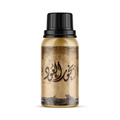
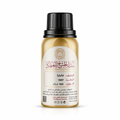
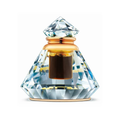
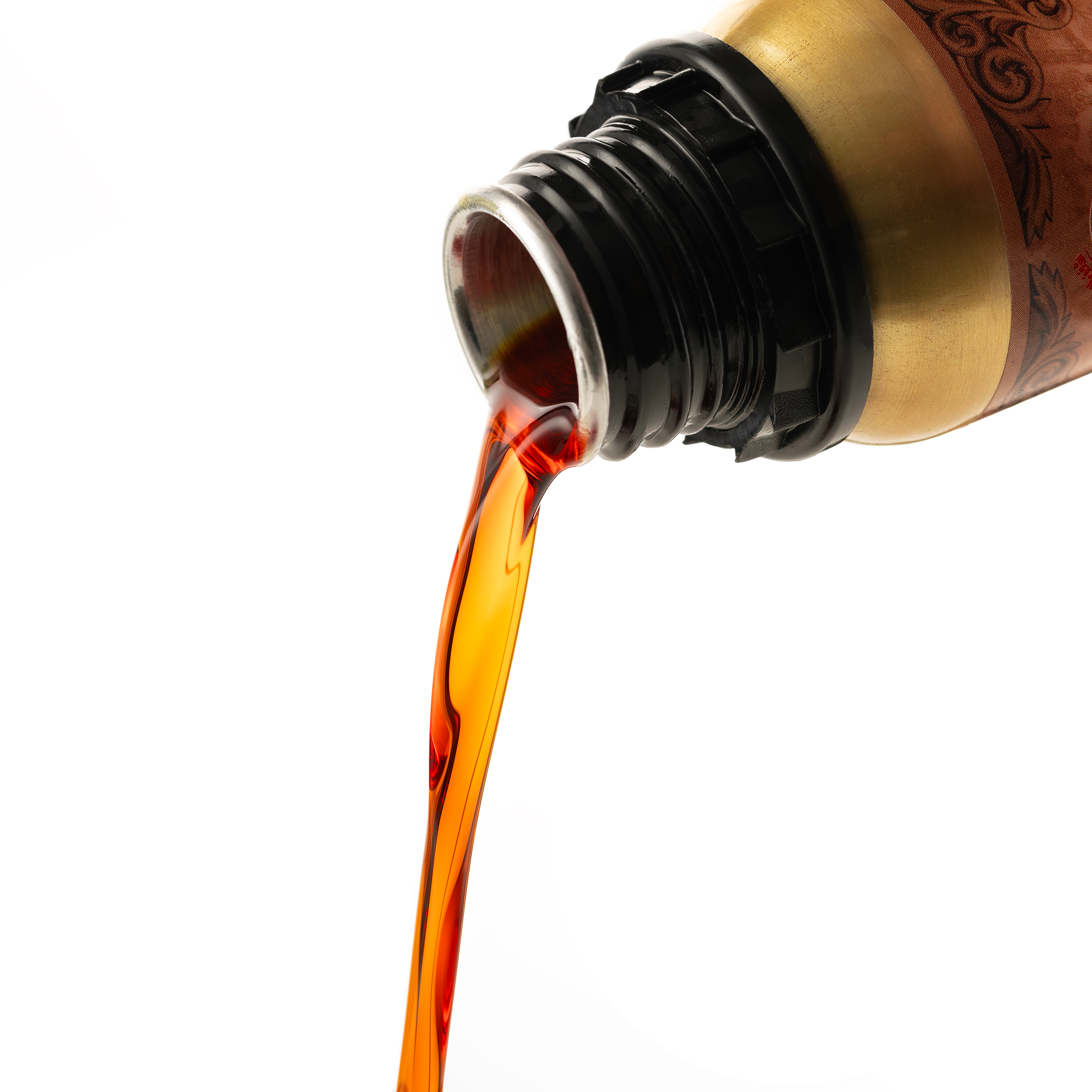
In short: A mosque is an enclosed space that gets crowded at prayer times, and the worshippers include older people, people with asthma, and children. So for a mosque we choose a light scent and a small amount of bakhoor (incense), burned well before the prayer with the space ventilated, not while it is crowded, and indoors we prefer an electric burner, which still gives off smoke and still needs ventilation. Lit charcoal gives off carbon monoxide, so do not light it while the mosque is closed or crowded, and open the doors or windows for as long as it is lit. Keep the burner stable and away from the carpet and from children, and do not empty the ash until it has cooled completely.
Table of contents
- What is different about burning bakhoor in a mosque?
- How to choose bakhoor for a mosque
- Read the notes, not the name
- Common types and what their names mean
- Charcoal or an electric burner?
- Amount, timing and ventilation
- Being considerate of people with asthma and allergies
- The burner and the ash: fire safety tips
- If you want to give bakhoor to a mosque
- Read also
- References
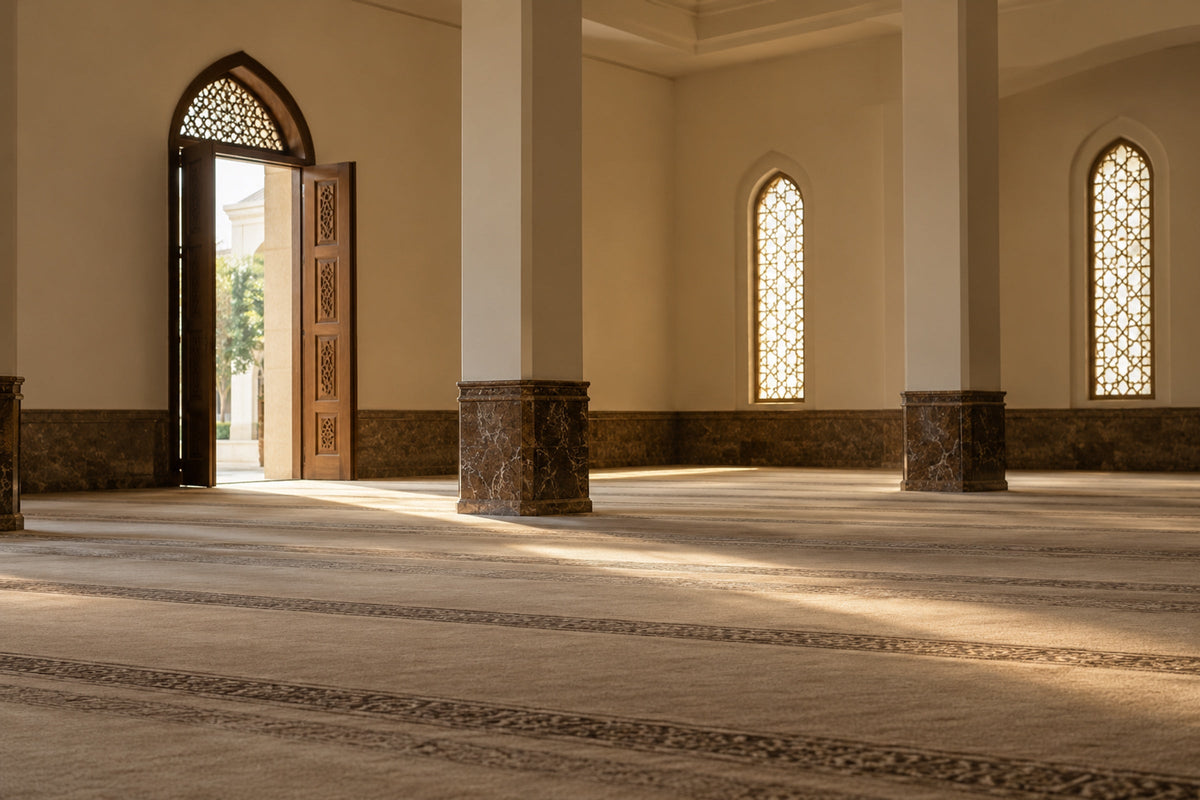
Before the Friday prayer, one of the people who look after the mosque walks between the rows with the incense burner, and a pleasant scent greets those coming in. Then the mosque fills up, the doors and windows are closed so the air conditioning can run, and a trace of smoke stays in the air. Most worshippers never notice it, though someone with asthma may find it uncomfortable.
What is different about burning bakhoor in a mosque?
A mosque is usually closed, it holds more people at one time than any home does, and once it is full its air may not be renewed enough. When the air in one mosque was measured on a Friday, carbon dioxide levels showed that ventilation fell short during the prayer, which may matter for the worshippers most sensitive to what is in the air [1].
The windows make the difference. In a Turkish mosque about 40% full, carbon dioxide did not exceed 922 parts per million with the windows open and the fans running, against a usual recommendation of staying below 1,000 [2]. When the whole mosque was full, it reached 1,644 with the windows open. When the windows were closed and the air conditioning switched on, with the mosque about 40% full as in the first case, it climbed over a single prayer from 410 parts to 3,541 [2]. Bakhoor smoke was not measured in either of the mosques studied, and carbon dioxide is not smoke, but whatever enters the air of a closed, crowded mosque most likely does not leave it quickly.
So what we want from bakhoor in a mosque is a light, pleasant scent, not thick smoke.
How to choose bakhoor for a mosque
Choose a light scent you have tried before, and a type that suits the burner available in the mosque.
Read the notes, not the name
The trade name of a bakhoor does not, on its own, tell you how it smells, so read the notes listed on the product page or on the package. For a mosque we lean toward calm scents, such as sandalwood, amber, musk and rose in moderate proportions, and steer clear of very heavy ones. Try the bakhoor at home in a small amount before you take it to the mosque.
Common types and what their names mean
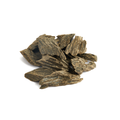
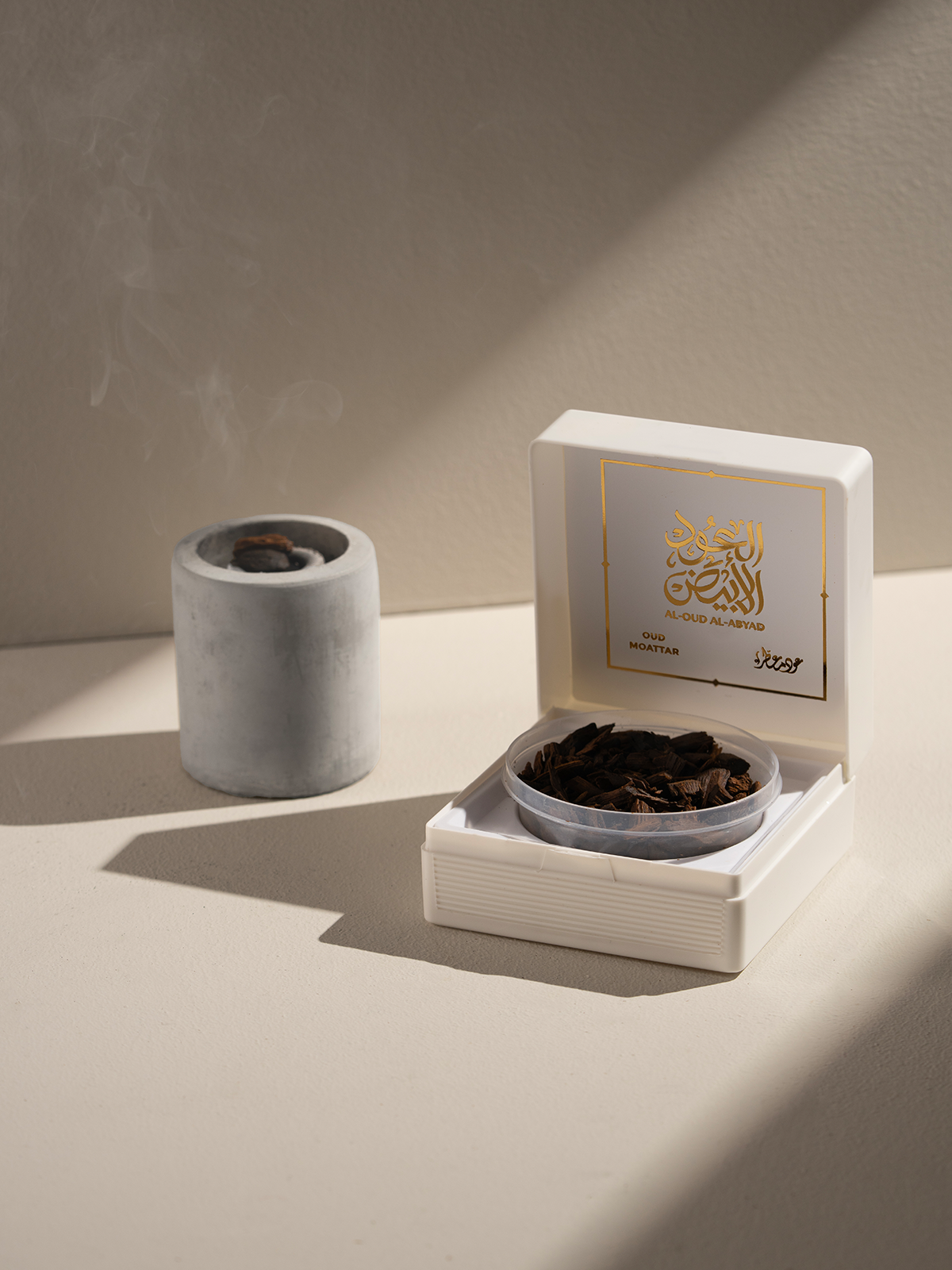
Scented oud is pieces of wood saturated with aromatic oils [3], and its scent follows the blend used. Maamoul is a compounded Arabian incense blend [4]. Mabsous is a local name for a type of incense blend, with no definition in the scientific references we consulted. "Enhanced oud" is similar: a trade description for which we came across no standard definition. It may mean oud with something added to strengthen its scent, so ask what it means before you buy.
How to light it differs from one type to the next, as our guide to types of bakhoor explains, so check the directions on the package.
Charcoal or an electric burner?
Inside the mosque we choose an electric burner. Lit charcoal gives off carbon monoxide, a gas with no color or smell [5], and in an Emirati study the charcoal disc, not the bakhoor, was the main source of that gas and of nitrogen oxides in a closed test chamber the size of a living room, even with half a disc [6]. In Emirati homes, though, its concentrations came out low in a weekly measurement, which does not show the short rise during burning [9]. The people most likely to be affected by the gas are older adults and those with chronic heart disease or breathing problems [5], and some of them may be among the worshippers. The region knows the danger of charcoal in poorly ventilated homes: charcoal was the predominant source of carbon monoxide poisoning among cases that reached the emergency department in Al Ain, in the United Arab Emirates [7], and the study did not say for what purpose the charcoal was lit.
If you do use charcoal, open the doors or windows for as long as it is lit, and do not light it while the mosque is closed or crowded. The details, and what has been measured in rooms, are in the charcoal incense burner section of our guide Making Bakhoor Scent Last at Home.
An electric burner heats the bakhoor without charcoal, and a Kuwaiti study recommended it in its place [3]. It does not eliminate the smoke, though: long burning on one was also associated with respiratory symptoms in that study's questionnaire about bakhoor in homes [3]. Use it with ventilation and according to its maker's instructions.
If any of the worshippers or the people who look after the mosque develop a headache, dizziness or nausea while the charcoal is lit, it may be carbon monoxide poisoning [5]. Take the person out into the fresh air at once, put the charcoal out on your way if you can do so without delay, and get them medical advice as soon as possible, and they should not go back until they have had it. If there is difficulty breathing, sudden confusion, loss of consciousness, weakness, or chest or muscle pain, call an ambulance [8].
Amount, timing and ventilation
We choose a little bakhoor for a mosque. Smoke has a stronger effect in smaller rooms, especially with more people in them and less ventilation. That is why the Kuwaiti study advised cutting down a great deal on burning bakhoor in small, unventilated rooms, and suggested a limit of 0.5–1 g of bakhoor per day [3]. None of the studies we reviewed described any amount as safe, and their recommendations point toward reducing exposure.
Burn it well before the prayer, so the smoke disperses and the scent remains before the mosque fills up, and do not burn it while the mosque is crowded. We found no specific timing for this in the studies. Open the doors or windows, or run the ventilation, while the electric burner is going and afterwards, for as long as there is smoke in the space. In a large mosque, small amounts in several places are better than a large amount in one.

Being considerate of people with asthma and allergies
Bakhoor smoke carries fine particles, gases and volatile organic compounds [4]. Its effects have been studied in the Gulf in homes and shops, not in mosques. In Emirati homes, more frequent burning was associated with higher concentrations of fine and coarse particles indoors [9]. In Oman, parents reported that bakhoor made wheezing worse in 38% of the children with asthma, and burning it more than twice a week was associated with effects on the children's breathing, although bakhoor use was not associated with the prevalence of asthma [10]. In the Eastern Province of Saudi Arabia, wheezing was more common among bakhoor shop workers [11].
These are associations, not proven causes, and for us they are reason enough for caution where people gather:
- Do not bring the burner close to worshippers' faces, especially older people, children and anyone with asthma.
- Place the burner away from the front rows and from the air inlets into the prayer hall.
- If some of the worshippers find the smoke uncomfortable, use a smaller amount or do without it at that time.
- Anyone with asthma or a chest allergy should ask their doctor about exposure to bakhoor smoke.
The burner and the ash: fire safety tips
Pick a stable burner that does not tip over easily and set it on a heat-resistant surface, not directly on the carpet, and away from curtains, copies of the Quran and books. Do not leave it running with no one watching it, and if it is electric, switch it off and unplug it when you have finished. Keep children about a metre away from it, the distance recommended around open fires and space heaters [12].
As for ash and the remains of charcoal, do not empty them until they have cooled completely. The advice for ash from heaters is to let it cool before putting it in a metal container [12] with a lid, and to keep the container outside, at least three metres from the home [13]. We treat the ash from the burner the same way.

If you want to give bakhoor to a mosque
Speak to the imam of the mosque or the people who look after it before you give: ask what kind of burner they have, electric or charcoal, how much they need, and where the bakhoor will be stored. Then choose a type that suits their burner, and keep it in an airtight container in a cool, dark, dry place, as our guide to storing bakhoor explains.
Read also
- Types of Bakhoor: A Guide to Oud, Frankincense, Maamoul and Mabsous
- How to Choose Bakhoor and Oud for Home and Occasions
- Making Bakhoor Scent Last at Home: Amount, Ventilation and Safety
- Harms of Perfume and Bakhoor: What the Evidence Says on Allergy and Smoke
- How to Store Bakhoor, Oud and Oud Oil: A Storage Guide
References
- Ocak Y, Kılıçvuran A, Eren AB, Sofuoglu A, Sofuoglu SC. Exposure to particulate matter in a mosque. Atmospheric Environment. 2012;56:169–176. doi:10.1016/j.atmosenv.2012.04.007. Open abstract: hdl.handle.net/11147/4602. Accessed 27 September 2026.
- Yüksel A, Arıcı M, Krajčík M, Civan M, Karabay H. Energy consumption, thermal comfort, and indoor air quality in mosques: Impact of Covid-19 measures. Journal of Cleaner Production. 2022;354:131726. doi:10.1016/j.jclepro.2022.131726. PMC9006753. Accessed 5 October 2026.
- Bu-Olayan AH, Thomas BV. Exposition of respiratory ailments from trace metals concentrations in incenses. Scientific Reports. 2021;11(1):10210. doi:10.1038/s41598-021-89493-w. PMC8140077. Accessed 5 October 2026.
- Lin TC, Krishnaswamy G, Chi DS. Incense smoke: clinical, structural and molecular effects on airway disease. Clinical and Molecular Allergy. 2008;6:3. PMC2377255. Accessed 27 September 2026.
- Centers for Disease Control and Prevention (CDC). Carbon Monoxide Poisoning Basics. Last reviewed: 12 January 2026. cdc.gov/carbon-monoxide/about. Accessed 27 September 2026.
- Cohen R, Sexton KG, Yeatts KB. Hazard assessment of United Arab Emirates (UAE) incense smoke. Science of the Total Environment. 2013;458–460:176–186. doi:10.1016/j.scitotenv.2013.03.101. PMID: 23648447. Accessed 27 September 2026.
- Al Kaabi JM, Wheatley AD, Barss P, Al Shamsi M, Lababidi A, Mushtaq A. Carbon monoxide poisoning in the United Arab Emirates. International Journal of Occupational and Environmental Health. 2011;17(3):202–209. doi:10.1179/107735211799041940. PMID: 21905387. Accessed 5 October 2026.
- NHS. Carbon monoxide poisoning. Last reviewed: 16 December 2025. nhs.uk. Accessed 5 October 2026.
- Yeatts KB, El-Sadig M, Leith D, et al. Indoor Air Pollutants and Health in the United Arab Emirates. Environmental Health Perspectives. 2012;120(5):687–694. doi:10.1289/ehp.1104090. PMC3346777. Accessed 27 September 2026.
- Al-Rawas OA, Al-Maniri AA, Al-Riyami BM. Home exposure to Arabian incense (bakhour) and asthma symptoms in children: a community survey in two regions in Oman. BMC Pulmonary Medicine. 2009;9:23. doi:10.1186/1471-2466-9-23. PMC2693130. Accessed 27 September 2026.
- Al Khathlan N, Al-Dabbus Z, Al-Khdir N, Al-Matar M, Al-Nusaif S, Al Yami B. Incense (bakhour) smoke exposure is associated with respiratory symptoms and impaired lung function among adults: A cross-sectional study in Eastern Province of Saudi Arabia. Indoor Air. 2021;31(5):1577–1582. doi:10.1111/ina.12833. PMID: 33826757. Accessed 27 September 2026.
- North Carolina Office of State Fire Marshal (OSFM). Heating. ncosfm.gov. Accessed 27 September 2026.
- U.S. Fire Administration (USFA), FEMA. Heating Fire Safety (handout). usfa.fema.gov. Accessed 27 September 2026.
Prepared and edited by: Sedr Al-Khaleej Perfumes team
Last reviewed: 14 October 2026
Was this article helpful?
Leave a comment
Comments are reviewed before they appear. Your email address won’t be shown.