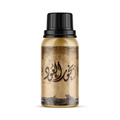
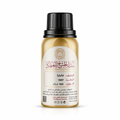
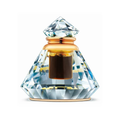
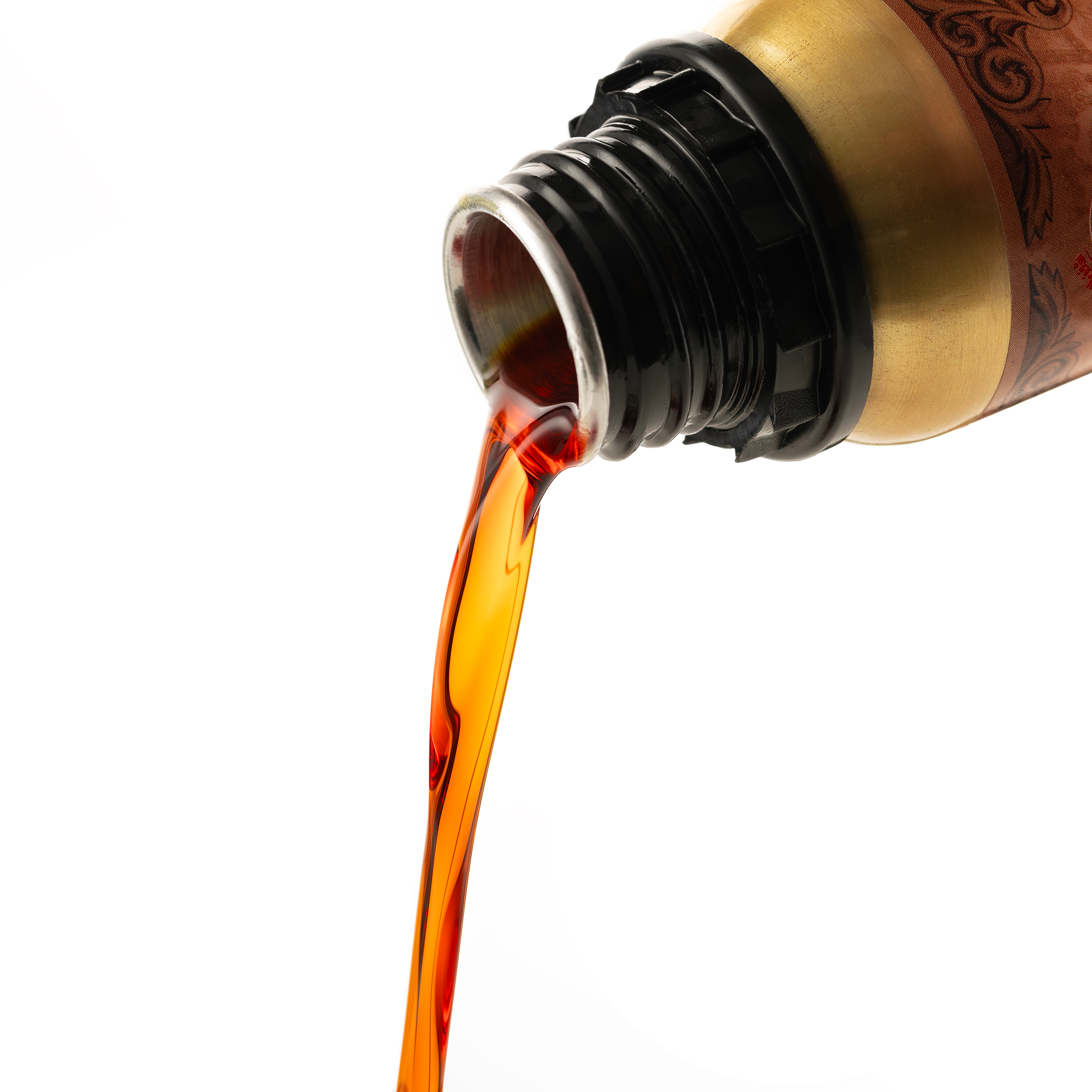
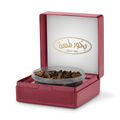
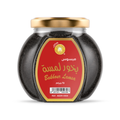

In short: Musk is originally a secretion that collects in a gland of the male musk deer, and the main source of its scent is a substance called muscone. International trade in it is restricted under CITES, and because it is rare and restricted, synthetic musk has become its substitute in perfumery. The best-known synthetic musks belong to four families: nitro, macrocyclic, polycyclic and alicyclic. As for “white musk”, “Musk al-Tahara” and “black musk”, these are names given to perfumes, and what is sold under them may differ in composition from one maker to another. Musk belongs to the base of a perfume, meaning what remains at the end, and its materials are valued because they fix what is with them.
Table of contents
- What is musk?
- Animal musk: from the musk deer
- Protecting the musk deer and the musk trade
- The history of musk
- Synthetic musk
- Nitro musks
- Macrocyclic (large-ring) musks
- Polycyclic musks
- Alicyclic musks
- A quick comparison of musk types
- White musk, Musk al-Tahara and black musk
- The role of musk in perfume
- Materials mentioned with musk that are not musk
- Frequently asked questions
- Read also
- References
On a single shelf you may find three bottles, each labeled “musk”: white musk, black musk and Musk al-Tahara, and they may not smell alike at all. Originally, though, the word meant one material: a secretion dried from a gland of the male of an Asian animal called the musk deer.
What is musk?
Today the word “musk” is used for an animal material, a secretion that collects in a gland of the adult male musk deer only and is then dried [1], and for many synthetic materials that differ in their chemical structure but share a musky scent character [2].
Animal musk: from the musk deer
The musk deer is a ruminant that lives in the forests and mountains of Asia. Despite its name, it belongs to a family separate from deer, called Moschidae [5] [3].
Musk collects in a glandular sac between the navel and the genitals, and once dried, it forms irregular grains or pieces, purplish-black or dark brown, oily and slightly shiny, or a yellowish-brown powder [1].
The main source of musk’s scent is muscone, a large-ring ketone [1].
Protecting the musk deer and the musk trade
All musk deer species are now classified as threatened, except the Siberian musk deer, whose classification is vulnerable. Among the most serious threats to them is illegal poaching, driven by the value of musk in perfumery and traditional medicine [5].
In the past, obtaining musk meant killing the deer, and their numbers fell sharply over the past three or four decades [1].
International trade in musk is regulated by the Convention on International Trade in Endangered Species of Wild Fauna and Flora (CITES). Musk deer in some countries are listed in Appendix I, the most restrictive appendix, and musk deer in all other countries in Appendix II, which allows trade only with an export permit and under conditions [3].
In China, musk deer are raised on farms, and farming there has become the only legal way to obtain natural musk [1].
Because musk pods were scarce and large-ring compounds were hard to prepare in large quantities, synthetic musk emerged as a substitute for it [4], and it is cheaper than natural musk in perfumes and personal care products [6].
The history of musk
The Arabic word for musk, “misk”, is an Arabized Persian word. In “Lisan al-Arab”, Ibn Manzur quotes al-Jawhari: musk, among perfumes, is an Arabized Persian word, and the Arabs used to call it “al-mashmum” [7]. The Persian word goes back to a Sanskrit root meaning “testicle”, because the gland was likened to a scrotum [8].
Because the musk deer lives only in Asia [5], musk reached other lands through trade. It has been known as a perfume and a medicine for more than two thousand years [4], and in medieval Islamic civilization it became the most important of all aromatics [9].
Its first mention in China is in the Shennong materia medica, and Europe used it in perfumery for centuries [1].
Synthetic musk began in 1888, when Albert Baur prepared the first nitro musks. Later, the chemist Leopold Ružička discovered that the odor molecules of musk and civet are large rings, and for this discovery and his work on terpene chemistry he received the Nobel Prize in 1939 [2].
Synthetic musk
Synthetic musk comes in four chemical families [6] that differ in structure but are united by a musky scent character [2].

Nitro musks
Nitro musk is the oldest synthetic musk and was used as a fixative in perfumes [2], and its best-known types are now prohibited or restricted.
The standards of the International Fragrance Association (IFRA) prohibit musk ambrette because of photosensitization, meaning a reaction of the skin to sunlight after the material is applied to it, and because of neurotoxicity [10]. They prohibit musk xylene because it is very persistent in the environment and very bioaccumulative, and they allow musk ketone only if it contains less than 0.1% musk xylene [11].
The European Union’s Cosmetics Regulation prohibits three nitro musks, musk ambrette among them, and allows musk ketone and musk xylene up to maximum limits [12]; since July 2014, musk xylene can no longer be used there without authorization [13].
Macrocyclic (large-ring) musks
Their molecules are a large ring of atoms, like muscone in animal musk and civetone in civet [2].
A number of them were prepared between 1924 and 1934, including muscone, Exaltolide and ambrettolide [2].
Polycyclic musks
These materials appeared in the 1950s and 1960s: the first in 1951, then Galaxolide in 1962. From a precursor in the production of Galaxolide came Cashmeran, whose scent is woody and musky [2].
Musk ingredients spread in laundry detergents, where they are what keeps the scent on clothes after washing [2].
Polycyclic musks dominate the global market today. They are fat-soluble, persist in the environment and accumulate in living organisms, which is why they are detected in soil and sediment and raise environmental concern [4]. Synthetic musks of all families are detected especially in fresh water and its sediments, which they reach with wastewater, and they may break down into substances that are more persistent and more toxic to the environment [6].
Alicyclic musks
This is the newest of the four families, and its first material, Helvetolide, appeared in 1990 [2].
A quick comparison of musk types
| Type | Example | When it became known | Note |
|---|---|---|---|
| Animal musk | Muscone | Since antiquity | International trade restricted under CITES [3] |
| Nitro | Musk xylene | 1888 | Some types are prohibited under IFRA standards [10] [11] |
| Macrocyclic | Exaltolide, ambrettolide | 1924–1934 | Large-ring, like muscone [2] |
| Polycyclic | Galaxolide | 1951–1962 | Spread in laundry detergents [2] |
| Alicyclic | Helvetolide | 1990 | The newest family [2] |
White musk, Musk al-Tahara and black musk
These are names perfumes are sold under, and we found no single definition for any of them in the standards and references we consulted. What one maker sells as “white musk” may differ in composition from what another sells under that name.
So the name does not tell you the origin of the musk in a perfume, or its type, and usually the ingredient list does not either: in the European Union, for example, fragrance materials are grouped there under a single word, “parfum”, except for a few that the regulation requires to be named [12]. Judge a perfume by trying it on your skin, not by its name.
The role of musk in perfume
Musk materials are valued in perfume for their longevity and because they fix the fragrance materials around them [4].
Musk is a base note. The note pyramid divides fragrance materials by how fast they evaporate, and base notes in it are those that last more than four hours, as an approximation rather than a guaranteed duration for every musk perfume [14].
People differ in how they smell musk, and part of that difference is inherited. Someone may not smell a particular musk material yet smell other musks, which is called specific anosmia; one example is the inability to smell Galaxolide, which has been linked to a genetic variation in one of the olfactory receptors [15]. People who inherited the more sensitive version of the gene for one of the musk receptors [4] from both parents detected muscone at lower concentrations and found macrocyclic musks stronger than others did [16].
Materials mentioned with musk that are not musk
- Ambergris: it does not smell like musk. The synthetic material Ambrox, which carries the smell of ambergris, is soft and dry, not musky [2].
- Civet: another animal secretion, and not musk, even though one of its odor molecules is civetone, a large-ring molecule like muscone [2].
Frequently asked questions
Why can’t I smell some musk perfumes?
Your nose may have got used to the scent after a while [17]. And if you cannot smell a particular musk material [15], try a perfume based on other musk materials.
Can musk cause allergies?
Some nitro musks are prohibited under IFRA standards for reasons that include photosensitization [10]. With any perfume, the safer course is to test it on a small patch of skin first, and to stop using it if redness or itching appears.
Read also
- The History of Perfume: From the Incense Route to Synthetic Materials
- Perfume Ingredients: From Raw Material to Note
- Why Doesn't Your Perfume Last? Longevity, Sillage and Olfactory Adaptation
- Summer Fragrance Notes: How to Choose and Wear Perfume in the Heat
- Types of Bakhoor: A Guide to Oud, Frankincense, Maamoul and Mabsous
References
- Liu K, Xie L, Deng M, Zhang X, Luo J, Li X. Zoology, chemical composition, pharmacology, quality control and future perspective of Musk (Moschus): a review. Chinese Medicine. 2021;16:46. PMC8214773. Accessed 5 October 2026.
- David ORP, Doro F. Industrial Fragrance Chemistry: A Brief Historical Perspective. European Journal of Organic Chemistry. 2023;26(44):e202300900. doi:10.1002/ejoc.202300900. Accessed 27 September 2026.
- UNEP-WCMC, CITES Secretariat. Species+: Moschus spp. (Moschidae), CITES listings. speciesplus.net. Accessed 27 September 2026.
- Ahmed L, Zhang Y, Block E, Buehl M, Corr MJ, Cormanich RA, et al. Molecular mechanism of activation of human musk receptors OR5AN1 and OR1A1 by (R)-muscone and diverse other musk-smelling compounds. Proceedings of the National Academy of Sciences. 2018;115(17):E3950–E3958. doi:10.1073/pnas.1713026115. Accessed 5 October 2026.
- Chen G, Li X, Miao Y, Pang D, Wang H, Fan H, Zhang B. Population Genomic Analysis Provides Insights Into the Evolution and Conservation of Two Critically Endangered Musk Deer Species. Evolutionary Applications. 2025;18(8):e70134. PMC12311986. Accessed 27 September 2026.
- Li J, Lu Y, Chen H, Zheng D, Yang Q, Campos LC. Synthetic musks in the natural environment: Sources, occurrence, concentration, and fate. A review of recent developments (2010–2023). Science of the Total Environment. 2024;922:171344. doi:10.1016/j.scitotenv.2024.171344. Accessed 5 October 2026.
- Ibn Manzur. لسان العرب (Lisan al-Arab), entry مسك (m-s-k), quoting al-Jawhari. Arabic Lexicon. Accessed 27 September 2026.
- Online Etymology Dictionary. Musk. etymonline.com. Accessed 27 September 2026.
- King AH. Scent from the Garden of Paradise: Musk and the Medieval Islamic World. Leiden: Brill; 2017. Islamic History and Civilization, vol. 140. ISBN 9789004336247 (print), 9789004336315 (e-book). doi:10.1163/9789004336315. What is cited from it here is taken from the publisher’s description of the book. Accessed 27 September 2026.
- IFRA. IFRA Standard: Musk ambrette. Amendment 40; 2006 (in force under the 51st Amendment). ifrafragrance.org. Accessed 27 September 2026.
- IFRA. IFRA Standard: Musk ketone. Amendment 45; 2010 (in force under the 51st Amendment). ifrafragrance.org. Accessed 27 September 2026.
- Regulation (EC) No 1223/2009 of the European Parliament and of the Council of 30 November 2009 on cosmetic products. Official Journal of the European Union. 2009;L 342:59–209. Annex II (entries 414, 421 and 422), Annex III (entries 96 and 97), and Article 19(1)(g). eur-lex.europa.eu. The text as published in 2009, not the consolidated version with its amendments. Accessed 5 October 2026.
- Commission Regulation (EU) No 143/2011 of 17 February 2011 amending Annex XIV to Regulation (EC) No 1907/2006 (REACH). Official Journal of the European Union. 2011;L 44:2–6. eur-lex.europa.eu. Accessed 5 October 2026.
- Rodrigues AE, Nogueira I, Faria RPV. Perfume and Flavor Engineering: A Chemical Engineering Perspective. Molecules. 2021;26(11):3095. PMC8196857. Accessed 27 September 2026.
- Li B, Kamarck ML, Peng Q, Lim FL, Keller A, Smeets MAM, Mainland JD, Wang S. From musk to body odor: Decoding olfaction through genetic variation. PLoS Genetics. 2022;18(2):e1009564. PMC8812863. Accessed 5 October 2026.
- Sato-Akuhara N, Trimmer C, Keller A, Niimura Y, Shirasu M, Mainland JD, Touhara K. Genetic variation in the human olfactory receptor OR5AN1 associates with the perception of musks. Chemical Senses. 2023;48:bjac037. doi:10.1093/chemse/bjac037. Accessed 5 October 2026.
- Dalton P. Psychophysical and Behavioral Characteristics of Olfactory Adaptation. Chemical Senses. 2000;25(4):487–492. doi:10.1093/chemse/25.4.487. Accessed 27 September 2026.
Prepared and edited by: Sedr Al-Khaleej Perfumes team
Last reviewed: 14 October 2026
Was this article helpful?
Leave a comment
Comments are reviewed before they appear. Your email address won’t be shown.