

In short: If your perfume seems to have faded, your nose may have got used to it while it is still there, or it may really have faded. Your own perception cannot tell the two apart, so ask someone who has not been around you before you add more sprays. Longevity is how long a perfume lasts and sillage is the distance it reaches around you; they are not the same thing. A perfume lasts according to how much slow-evaporating material its formula contains, how carefully those materials were chosen and how good its raw materials are, and then your skin and the weather have their say. Most people miss the scent of at least one substance, so you may not find in a perfume what others find in it.
Table of contents
- What is the difference between longevity and sillage?
- How can you assess your perfume's performance?
- Why can't you smell your perfume when others can?
- Are some people unable to smell a particular substance?
- What makes one perfume last longer than another?
- Volatility: why do some ingredients last longer than others?
- Fixatives: how do they affect the evaporation of a perfume's ingredients?
- The proportion of base materials
- The purity and condition of the material
- Concentration and fragrance family
- What effect do skin and weather have?
- What about clothes and hair?
- Is rubbing harmful? Do petroleum jelly and applying perfume to pulse points help?
- What about perfume oils?
- Read also
- References
At a gathering, a man leans toward his friend and whispers: “Is my perfume still noticeable?” He put it on an hour ago and filled the car with it on the way, and since then it has faded for him little by little until he thinks it is gone. His friend smiles, because he smelled it the moment the man walked in. Behind this small question are two things we tend to confuse: a perfume that is really evaporating, and a nose that has stopped paying attention to a perfume that is still there.
What is the difference between longevity and sillage?
The difference between them is one of time versus distance: longevity is how long a perfume lasts, and sillage is how far it reaches. A perfume can stay close to the skin for hours without reaching the person sitting next to you. The technical literature calls the first tenacity, the persistence of a scent near the spot where it was applied as time passes, and the second diffusion, meaning it can be smelled at a distance from that spot [1].
Perfume also has a third aspect, the scent trail, which people in the trade call by the French word sillage in its strict sense: what a wearer leaves in a place after passing through, because the movement of air around a person walking carries the scent farther than the molecules travel by diffusion alone [1].

How can you assess your perfume's performance?
Assess it in four steps. They are observation, not a laboratory test, and they do not rely on your own perception alone:
- Decide what you are assessing: are you asking whether the scent stays near the spot where you sprayed it, which is longevity, or whether it is noticeable around you, which is sillage?
- Ask someone who has not been around you, such as someone who has just come in, not someone who has been sitting with you since you put the perfume on, because their nose has been exposed to it just as yours has [2]. Stepping out into other air does not cut you off from a perfume that is on your skin and clothes, so do not rely on it. As for the coffee beans offered in perfume shops, there is no evidence that they restore your perception: in a preliminary study they were no more useful than lemon slices or ordinary air for identifying a new perfume after smelling other perfumes repeatedly [3].
- Test on your skin, under similar conditions: note where you sprayed, how many sprays you used and when you checked, and change one factor at a time. A paper strip shows you how the scent develops on paper, not how long it lasts on your skin, because skin holds on to some aroma materials and so changes how they evaporate [4].
- Do not add more sprays because you can no longer smell it, as being considerate of the people around you is part of perfume etiquette. When a woman goes out of her home, she should keep to a scent that does not spread.
Why can't you smell your perfume when others can?
Because your nose may have adapted to it. Continuous exposure to one scent weakens your perception of it, and the perception returns once the exposure stops [2]. A perfume on your skin and clothes does not stop reaching you when you change places, which is why you think it has faded while a friend smells it as soon as they come in, though it may also really have faded over the hours.
This adaptation does not run on a fixed clock. Its strength, its duration and the time it takes to wear off all depend on the concentration of the odor and the length of exposure to it [2]. So, contrary to the common claim, the nose does not get used to a perfume after a set number of minutes.
Adaptation can last for days. When participants in one study spent two weeks in their homes with an odor that never stopped, their sensitivity to it weakened, and for most of them the weakening lasted up to two weeks after the odor was removed [5]. That odor was not a perfume applied to the skin, but it brings a familiar complaint closer: that the perfume you wear every day now seems weaker to you than it used to.

Are some people unable to smell a particular substance?
Yes, and it is common. It is called specific anosmia: being unable to smell one particular substance while the sense of smell is otherwise normal [6]. So if you praise a perfume and your friend does not find in it what you found, you may both be right.
The substance a person cannot smell varies from one person to the next, and it is almost certain that any one of us has a specific anosmia to some substance [6], so much so that the study authors regarded it as the rule in the sense of smell, not the exception [7]. Nor does it appear to be fixed: people who trained daily for three months to smell what they had been unable to smell clearly improved [6].
Among perfume materials, the best-known example is musk. It has been known for decades that some people cannot smell certain musks [8] [9], and a hereditary cause has since emerged: differences in how people smell Galaxolide, a synthetic musk, are linked to variants in a single olfactory receptor, one of the receptors in the nose that pick up odors. A person may be unable to smell one musk or some musks, not all musks [10].
Ambroxan, a synthetic aroma material, is another case. Some people smell it at a concentration of 0.01% or lower, while others smell it only at 1% [11]. This is a difference between two groups selected for comparison; it does not show how common each is in the population.

What makes one perfume last longer than another?
A perfume lasts according to how much slow-evaporating material its formula contains, and how skillfully its maker chose and balanced those materials. After that come the quality and storage of the raw materials, the concentration, and the fragrance family.
Volatility: why do some ingredients last longer than others?
A material evaporates faster the higher its vapor pressure, meaning its tendency to turn into vapor, the lighter its molecule and the weaker the attraction between its molecules, so weight alone does not decide it [4].
A material is not smelled just because it lingers. Its odor is perceived only as long as its concentration in the air stays above the odor threshold, the lowest concentration of it that a person can detect [1]. One material may linger for a long time and hardly be noticed because its odor is weak, while another lingers in a small amount and fills the room.
Fixatives: how do they affect the evaporation of a perfume's ingredients?
A fixative changes how fast the materials around it evaporate, because a material in a mixture does not evaporate the way it does on its own: its vapor pressure depends on its proportion and on the materials around it [1]. A fixative is a material added to make a scent last longer. Examples include patchouli [12] and nitro musk, one of the oldest synthetic musks [13].
The effect has been measured. When a mixture of aroma materials was applied to skin, it evaporated without a fixative in two stages, fast then slow; once a musk fixative was added, it evaporated in a single, steady stage [14]. The effect varies from one material to another: in an experimental perfume, the fixatives tested had an effect on the less volatile materials, not on all of them [15]. So it would be wrong to say that a particular fixative doubles the longevity of a whole perfume.
The proportion of base materials
A perfume whose formula is rich in base materials, the slow-evaporating materials that remain at the end of a perfume, can be expected to last longer, because they are what give a perfume its staying power. The accepted view in the trade about the three layers of a perfume is that top notes, mostly citrus and green scents, last a quarter of an hour to half an hour; that heart notes, such as spices and florals, last three to four hours; and that base notes, mostly amber and musk, last more than four hours [1]. This is a general estimate, not a measurement of a particular perfume, and we know of no peer-reviewed source that sets a maximum time a perfume lasts on the skin.

The purity and condition of the material
Heat, light and oxygen are among the main factors that change natural essential oils and lower their quality over time [16]. Common forms of adulteration include adding a cheaper oil or synthetic materials, or diluting with a vegetable oil [17]. So an oil that has weakened or been diluted does not do what is expected of it in the formula.
A finished perfume also weakens if it is poorly stored. As for the idea that natural materials last longer than synthetic ones, or the reverse, we found no peer-reviewed source to support it. Each group includes fast- and slow-evaporating materials, because how fast a material evaporates follows the properties of its molecule, not its source [4].
Concentration and fragrance family
A higher concentration does not, on its own, make a perfume last longer, and the fragrance family can be expected to affect longevity according to how much base material it contains. The proportion of aromatic material is usually higher in an eau de parfum than in an eau de toilette [18], but what remains after the first hours is the base materials. That is why fragrance families dominated by base materials can be expected to last longer than those dominated by citrus, and a citrus perfume can be expected to open brightly and then fade quickly.
What effect do skin and weather have?
Better-hydrated skin may hold on to some of a perfume's ingredients for longer, and moving air and heat can be expected to speed its evaporation. Of the skin properties measured in a small study, hydration had the most influence, and some of the less volatile materials evaporated more slowly from better-hydrated skin [4]; that concerns the skin's own hydration, not a moisturizer applied before the perfume. Not all of a perfume goes into the air, as the skin absorbs part of it [19]. As for air, when the evaporation of benzyl alcohol, a single aroma material, from the forearm was measured, the amount that evaporated rose considerably as the airflow grew stronger [20]. So a perfume can be expected to fade faster with air from a fan or air conditioner blowing directly on you.
Heat raises the vapor pressure of a liquid [21], so perfume can be expected to evaporate faster in hot summer weather and to smell stronger at first.
As for the “body chemistry” that is said to transform a perfume, when skin was compared with an inert ceramic surface, clean, dry skin changed the perfume's ingredients chemically only slightly, and changes appeared in the armpit, probably caused by bacteria [23].
What about clothes and hair?
The advice for hair and clothes consists of usage tips, not measured results for longevity: for hair, use a very light spray while it is damp, before drying it, or spray the brush or comb before using it [22]. We suggest testing the perfume on a hidden spot of the garment first. Do not put perfume oils on fabric, as they may leave oily stains [18].
Is rubbing harmful? Do petroleum jelly and applying perfume to pulse points help?
Do not rub your wrists together after spraying. Rubbing is said to “bruise” the notes and weaken their development [22]; that is advice from experience, not a measurement, and we follow it. As for petroleum jelly under perfume, we do not promise that it makes the perfume last longer: what was measured was the skin's own hydration, and neither petroleum jelly nor any cream was tested [4].
Pulse points, such as the wrists, the temples, below the earlobes and the base of the throat, are recommended because the warmth of the skin there helps the scent spread [22], which makes them about sillage rather than longevity.
What about perfume oils?
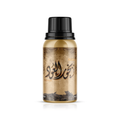
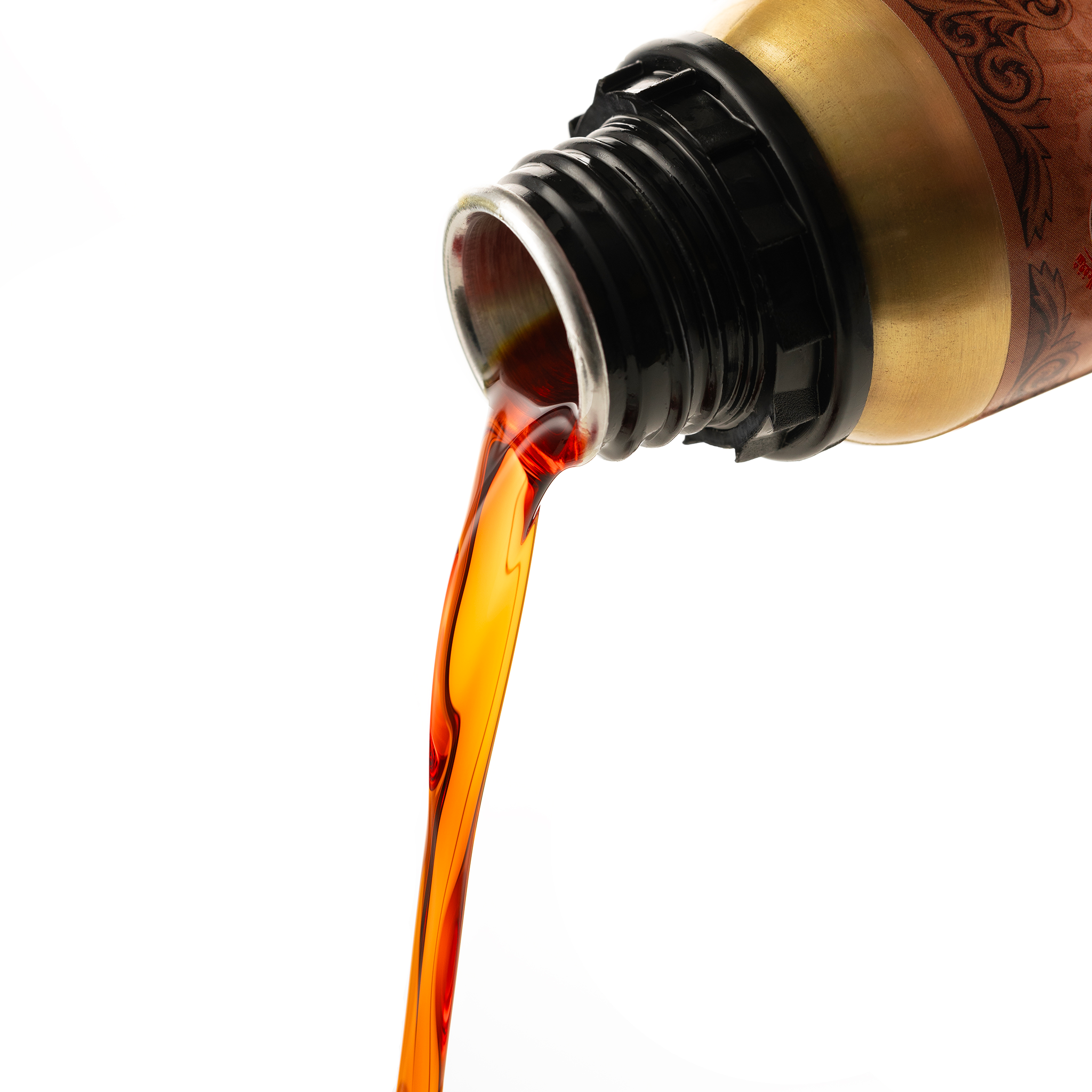
Perfume oil is estimated to last longer on the skin than alcohol-based perfume, but it usually lacks the light top notes [18]. How long the scent of bakhoor lasts in the home and on clothes is a different matter.
Read also
- Perfume Ingredients: From Raw Material to Note
- How to Choose, Test and Apply Perfume: A Practical Guide
- Summer Fragrance Notes: How to Choose and Wear Perfume in the Heat
- How to Store Perfume: Where to Keep It, How Long It Lasts, and How to Tell It Has Changed
- Fragrance Families: A Guide to the Types of Perfume Scents and How They Are Classified
References
- Rodrigues AE, Nogueira I, Faria RPV. Perfume and Flavor Engineering: A Chemical Engineering Perspective. Molecules. 2021;26(11):3095. doi:10.3390/molecules26113095. PMC8196857. Accessed 2 October 2026.
- Dalton P. Psychophysical and Behavioral Characteristics of Olfactory Adaptation. Chemical Senses. 2000;25(4):487–492. doi:10.1093/chemse/25.4.487. Accessed 2 October 2026.
- Grosofsky A, Haupert ML, Versteeg SW. An exploratory investigation of coffee and lemon scents and odor identification. Perceptual and Motor Skills. 2011;112(2):536–538. doi:10.2466/24.pms.112.2.536-538. PMID: 21667761. Accessed 2 October 2026.
- Hadjiefstathiou E, Savary G, Malhiac C, Terescenco D, Picard C. Exploring the impact of fragrance molecular and skin properties on the evaporation profile of fragrances. International Journal of Cosmetic Science. 2025;47(6):981–995. doi:10.1111/ics.13085. PMC12666731. Accessed 2 October 2026.
- Dalton P, Wysocki CJ. The nature and duration of adaptation following long-term odor exposure. Perception & Psychophysics. 1996;58(5):781–792. doi:10.3758/bf03213109. PMID: 8710455. Accessed 2 October 2026.
- Croy I, Olgun S, Mueller L, Schmidt A, Muench M, Hummel C, Gisselmann G, Hatt H, Hummel T. Peripheral adaptive filtering in human olfaction? Three studies on prevalence and effects of olfactory training in specific anosmia in more than 1600 participants. Cortex. 2015;73:180–187. doi:10.1016/j.cortex.2015.08.018. PMID: 26457822. Accessed 2 October 2026.
- Croy I, Olgun S, Mueller L, Schmidt A, Muench M, Gisselmann G, Hatt H, Hummel T. Spezifische Anosmie als Prinzip olfaktorischer Wahrnehmung [Specific anosmia as a principle of olfactory perception]. HNO. 2016;64(5):292–295. doi:10.1007/s00106-016-0119-9. PMID: 26879880. Accessed 2 October 2026.
- Whissell-Buechy D, Amoore JE. Odour-blindness to musk: simple recessive inheritance. Nature. 1973;242(5395):271–273. doi:10.1038/242271a0. Accessed 2 October 2026.
- Kalmus H, Seedburgh D. Correlated odour threshold bimodality of two out of three synthetic musks. Annals of Human Genetics. 1975;38(4):495–499. doi:10.1111/j.1469-1809.1975.tb00639.x. PMID: 1190740. Accessed 2 October 2026.
- Li B, Kamarck ML, Peng Q, Lim FL, Keller A, Smeets MAM, Mainland JD, Wang S. From musk to body odor: Decoding olfaction through genetic variation. PLOS Genetics. 2022;18(2):e1009564. doi:10.1371/journal.pgen.1009564. PMC8812863. Accessed 2 October 2026.
- Hummel T, Olgun S, Gerber J, Huchel U, Frasnelli J. Brain responses to odor mixtures with sub-threshold components. Frontiers in Psychology. 2013;4:786. doi:10.3389/fpsyg.2013.00786. PMC3807048. Accessed 2 October 2026.
- Swamy MK, Sinniah UR. A Comprehensive Review on the Phytochemical Constituents and Pharmacological Activities of Pogostemon cablin Benth. Molecules. 2015;20(5):8521–8547. doi:10.3390/molecules20058521. PMC6272783. Accessed 2 October 2026.
- David ORP, Doro F. Industrial Fragrance Chemistry: A Brief Historical Perspective. European Journal of Organic Chemistry. 2023;26(44):e202300900. doi:10.1002/ejoc.202300900. Accessed 2 October 2026.
- Saiyasombati P, Kasting GB. Two-stage kinetic analysis of fragrance evaporation and absorption from skin. International Journal of Cosmetic Science. 2003;25(5):235–243. doi:10.1046/j.1467-2494.2003.00193.x. Accessed 2 October 2026.
- Berthier DL, Girard J, Fromm KM, Herrmann A. Fixative effect of 2-oxo-2-phenylacetates in fine fragrance and eau-de-toilette applications. Flavour and Fragrance Journal. 2024;39(1):80–89. doi:10.1002/ffj.3769. Accessed 2 October 2026.
- Turek C, Stintzing FC. Stability of Essential Oils: A Review. Comprehensive Reviews in Food Science and Food Safety. 2013;12(1):40–53. doi:10.1111/1541-4337.12006. Accessed 2 October 2026.
- Capetti F, Marengo A, Cagliero C, Liberto E, Bicchi C, Rubiolo P, Sgorbini B. Adulteration of Essential Oils: A Multitask Issue for Quality Control. Three Case Studies: Lavandula angustifolia Mill., Citrus limon (L.) Osbeck and Melaleuca alternifolia (Maiden & Betche) Cheel. Molecules. 2021;26(18):5610. doi:10.3390/molecules26185610. PMC8471154. Accessed 2 October 2026.
- Sikora E, Miastkowska M, Wolinska Kennard K, Lason E. Nanoemulsions as a Form of Perfumery Products. Cosmetics. 2018;5(4):63. doi:10.3390/cosmetics5040063. Accessed 2 October 2026.
- Kasting GB, Saiyasombati P. A physico-chemical properties based model for estimating evaporation and absorption rates of perfumes from skin. International Journal of Cosmetic Science. 2001;23(1):49–58. doi:10.1046/j.1467-2494.2001.00079.x. PMID: 18503438. Accessed 2 October 2026.
- Saiyasombati P, Kasting GB. In vivo evaporation rate of benzyl alcohol from human skin. Journal of Pharmaceutical Sciences. 2004;93(2):515–520. doi:10.1002/jps.10561. PMID: 14705207. Accessed 2 October 2026.
- LibreTexts Chemistry. 13.8: Vapor Pressure. Introductory Chemistry (CK-12). Link. Accessed 2 October 2026.
- Edwards M. Fragrance Q&A. Fragrances of the World. fragrancesoftheworld.com. Accessed 2 October 2026.
- Behan JM, Macmaster AP, Perring KD, Tuck KM. Insight into how skin changes perfume. International Journal of Cosmetic Science. 1996;18(5):237–246. doi:10.1111/j.1467-2494.1996.tb00154.x. Accessed 2 October 2026.
Prepared and edited by: Sedr Al-Khaleej Perfumes team
Last reviewed: 14 October 2026
Was this article helpful?
Leave a comment
Comments are reviewed before they appear. Your email address won’t be shown.