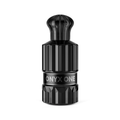
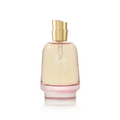
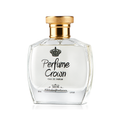
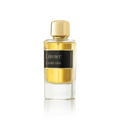
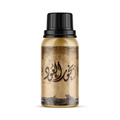

In short: Summer in Saudi Arabia is hot: dry in Riyadh, humid in Jeddah, Jazan and Dhahran, and milder than all of them in Abha. Heat makes more of a perfume evaporate, so expect it to smell stronger at first and its light notes to fade sooner; it does not appear to weaken the sense of smell. For summer we choose citrus, green notes, light florals and aquatic notes, over a light base of musk or amber, worn in moderation. As a precaution, keep the spots where you apply citrus perfumes out of direct sun, because some citrus oils may cause a phototoxic reaction, that is, pigmentation of skin exposed to the sun. And do not leave the bottle in the car.
Table of contents
- What is summer like in Saudi Arabia?
- Why does perfume change in the heat?
- Which notes suit summer?
- Citrus
- Green and herbal notes
- Light florals
- Aquatic and marine notes
- A light base, not a heavy one
- How to choose and test your summer perfume
- How to wear perfume in the heat
- How to store your perfume in summer
- Read also
- References
Walk out of an air-conditioned office in Riyadh into the car park on a July afternoon and the air is hot and dry. In Jeddah the heat meets you, humid, at the front door. Both people put on perfume an hour ago, and both want a perfume that can take this heat.
What is summer like in Saudi Arabia?
Summer in Saudi Arabia is hot in Riyadh, Dhahran, Jeddah and Jazan, and milder in Abha. But in humidity there are two summers: dry air in Riyadh, humid air in Jeddah and Jazan, and in Dhahran humidity that climbs as the summer goes on [1]. These are the average daily maximum, then minimum, temperatures in degrees Celsius at five stations, from the World Meteorological Organization's climate normals for 1991–2020 [1]:
| City | June | July | August |
|---|---|---|---|
| Riyadh | 42.7 / 28.4 | 43.4 / 29.4 | 43.6 / 29.5 |
| Dhahran | 43.0 / 27.9 | 44.1 / 29.3 | 43.5 / 29.1 |
| Jeddah | 38.3 / 25.8 | 39.4 / 27.6 | 38.7 / 28.6 |
| Jazan | 38.4 / 30.1 | 38.3 / 30.5 | 38.0 / 29.8 |
| Abha | 31.4 / 17.3 | 31.0 / 17.8 | 30.7 / 17.2 |
In Jazan the night hardly cools down, with a minimum of about 30 degrees [1].
The difference in humidity is large: in July the air in Jeddah holds nearly four times as much water vapor as the air in Riyadh, and the air in Jazan nearly five times as much [1]. As for how the humidity of the air affects how long a perfume lasts on the skin, we found no one who has measured it.
Why does perfume change in the heat?
The warmer a liquid is, the higher its vapor pressure, meaning more of it evaporates [3], and perfume is a liquid. So on a hot day, expect it to smell stronger in its first minutes, and its light notes to fade sooner.
The first thing to go is its top layer, because a perfume has three layers of notes, each evaporating at its own rate. The top layer, called the opening, such as citrus and green notes, evaporates first. Then the middle layer, called the heart, such as florals and spices. Then the base, such as musk and amber, which is the slowest and gives the perfume its staying power [2]. How long each layer lasts varies from one perfume to another, so the only way to know how long a particular perfume lasts is to try it.
Air temperature is not the whole story. When the evaporation of perfume ingredients was measured on the skin of a small number of volunteers, skin hydration was the property with the greatest effect on it, and skin temperature showed no clear effect [4].
As for the nose, neither heat nor humidity appears to weaken it: people whose sense of smell was tested at 20 and 35 degrees, in dry air and in humid air, showed no significant difference in their results [5]. But the July maximum in Riyadh, Dhahran, Jeddah and Jazan is above the 35 degrees at which they were tested [1].
Which notes suit summer?
For summer we choose fresh, light scents, such as citrus, green notes, light florals and aquatic notes, over a light base.
In the classification of scents, fresh ones are preferred in summer, perhaps because they evoke coolness, and among them are citrus, green and aquatic notes [6]. The materials described as fresh are mostly the least persistent [6], so freshness is the first thing to leave a perfume, and a summer perfume needs a heart and a base to keep its trail. This classification comes from temperate climates, and summer in Saudi Arabia is much hotter [1].
These are the best-known fresh families, along with the light base:
| Family | Examples | Place in the perfume | Behavior in the heat |
|---|---|---|---|
| Citrus | Bergamot, lemon, orange | Top notes | The first thing you smell, and it evaporates quickly |
| Green and herbal | Mint, basil, green leaves | Usually top notes | Freshness that does not last |
| Light florals | Lily of the valley, white flowers | Heart notes | Last for hours and give the perfume its heart |
| Aquatic and marine | Synthetic compounds such as Calone | Varies with the formula | Evoke the scent of the sea and the breeze |
| Light base | Musk, amber, pale woods | Base notes | Keep the perfume's trail after its opening fades |

Citrus
Bergamot, lemon, orange and grapefruit are fresh top notes, and they are the first to evaporate from a perfume [2].
Bergamot oil is extracted by pressing the peel of the fruit, and it contains compounds called furocoumarins, among them bergapten, to which is attributed pigmentation that appeared on areas of skin exposed to light, such as the neck, face and arms; an oil free of them is prepared for perfumes and cosmetics [7]. Because of this effect, called phototoxicity, the standards of IFRA, the International Fragrance Association, restrict the level of bergapten in products left on skin exposed to the sun, and the restrictions also cover other expressed oils, such as lemon, lime, grapefruit and bitter orange [8].
Green and herbal notes
Green notes usually appear with citrus in the opening of a perfume [2], with a freshness like the smell of mint, basil or freshly picked leaves. They are light and evaporate quickly, so they do not last on their own.
Mint feels cool because menthol activates a receptor in the sensory nerves of the face that is also activated by cold [9].
Light florals
Florals usually sit in the heart of a perfume and last for hours after the opening fades [2]. In summer we prefer light florals, such as lily of the valley, to florals weighed down by spices and dense sweetness.
Aquatic and marine notes
These notes evoke the scent of the sea and the breeze, and the best-known materials behind them are synthetic compounds [10].
A light base, not a heavy one
A summer perfume needs a base too, or it fades quickly [2], and we lean toward the lighter ones, such as musk, light amber or pale woods.
Patchouli is a base note, not a fresh one. It is persistent, with a sweet, herbal scent and some warmth to it, and it is used as a fixative in perfumes [11]. It may appear in a summer perfume in a small amount, but it does not make a fresh perfume on its own.
How to choose and test your summer perfume
Read a perfume's ingredients before you try it: one whose base is all oud and heavy spices can work in summer in a smaller amount, and we lean toward keeping it for the evening and air-conditioned places, or for the cooler months. Then test it on your skin, because skin changes the way it evaporates, and some of its ingredients evaporate less on skin than on glass [4]. Then wait. The opening fades within about half an hour and the heart of the perfume appears after it [2], so do not judge it by its first minutes.
Do not test many perfumes one after another, either, because the nose gets used to a scent it smells for a long time or repeatedly and becomes temporarily less sensitive to it [12], so take a break between one perfume and the next.
How to wear perfume in the heat
- Use a moderate amount, and stick to what is on the package. Scent may spread faster in the heat [3], so go easy on it in enclosed spaces, out of consideration for those around you.
- Moisturize your skin before applying perfume: some of its less volatile ingredients evaporate more slowly on more hydrated skin [4], though the effect of moisturizing creams themselves has not been tested.
- Do not reapply just because you can no longer smell your perfume after a while: your nose may have got used to it while it is still there [12], or its opening may have gone, leaving the heart and the base, which are quieter [2].
- As a precaution, apply citrus perfumes to spots that are not exposed to direct sun, because some citrus oils may cause a phototoxic reaction [7] [8].
- Start with a little perfume oil and add more if you need it. Oil-based perfumes often lack light top notes, so they seem heavier [13].
- If you spray perfume on your clothes, test it first on a hidden spot of the fabric, and avoid oil-based perfumes on them, because they may leave greasy stains [13].
How to store your perfume in summer
Keep your perfume somewhere cool and dark, such as a cupboard inside the home away from the window and the bathroom, because heat, light and oxygen are among the main things that change aromatic oils and weaken their scent over time [14]. And close the bottle after every use: limonene, one of the components of citrus, oxidizes in air, and its oxidation produces substances that may cause skin allergy [16].
And do not leave perfume in the car: on a sunny day, a closed dark car heats up within an hour to well above the air temperature, even when the weather is mild [15].

Read also
- How to Store Perfume: Where to Keep It, How Long It Lasts, and How to Tell It Has Changed
- Spring Fragrance Notes: Choosing Your Perfume in Saudi Arabia's Short Spring
- Autumn Fragrance Notes: How to Choose Your Perfume in Saudi Weather
- Winter Fragrance Notes: How to Choose and Wear Perfume in Saudi Arabia
References
- World Meteorological Organization. WMO Climate Normals for 1991–2020, Kingdom of Saudi Arabia: single station data sheets (Riyadh Old 40438, Dhahran 40416, Jeddah KAIA 41024, Gizan 41140, Abha 41112). NOAA NCEI archive, accession 0253808. For the summer months, the Riyadh Old station data cover 20 to 21 years of the period, and Dhahran 23 to 24 years. Data files. Accessed 5 October 2026.
- Rodrigues AE, Nogueira I, Faria RPV. Perfume and Flavor Engineering: A Chemical Engineering Perspective. Molecules. 2021;26(11):3095. PMC8196857. Accessed 27 September 2026.
- LibreTexts Chemistry. 13.8: Vapor Pressure. Introductory Chemistry (CK-12). Link. Accessed 27 September 2026.
- Hadjiefstathiou E, Savary G, Malhiac C, Terescenco D, Picard C. Exploring the impact of fragrance molecular and skin properties on the evaporation profile of fragrances. International Journal of Cosmetic Science. 2025;47(6):981–995. doi:10.1111/ics.13085. PMC12666731. Accessed 27 September 2026.
- Drews T, Nehring M, Werner A, Hummel T. The sense of smell is not strongly affected by ambient temperature and humidity: a prospective study in a controlled environment. European Archives of Oto-Rhino-Laryngology. 2021;278(5):1465–1469. doi:10.1007/s00405-020-06436-3. Accessed 5 October 2026.
- Zarzo M. What is a Fresh Scent in Perfumery? Perceptual Freshness is Correlated with Substantivity. Sensors (Basel). 2013;13(1):463–483. doi:10.3390/s130100463. PMC3574685. Accessed 5 October 2026.
- Navarra M, Mannucci C, Delbò M, Calapai G. Citrus bergamia essential oil: from basic research to clinical application. Frontiers in Pharmacology. 2015;6:36. doi:10.3389/fphar.2015.00036. PMC4345801. Accessed 5 October 2026.
- IFRA. IFRA Standard: Citrus oils and other furocoumarins containing essential oils. Amendment 49. 2020. Standard document. Accessed 5 October 2026.
- McKemy DD, Neuhausser WM, Julius D. Identification of a cold receptor reveals a general role for TRP channels in thermosensation. Nature. 2002;416(6876):52–58. doi:10.1038/nature719. Accessed 5 October 2026.
- Riad N, Zahi MR, Bouzidi N, Daghbouche Y, Touafek O, El Hattab M. Occurrence of Marine Ingredients in Fragrance: Update on the State of Knowledge. Chemistry. 2021;3(4):1437–1463. doi:10.3390/chemistry3040103. Accessed 27 September 2026.
- Swamy MK, Sinniah UR. A Comprehensive Review on the Phytochemical Constituents and Pharmacological Activities of Pogostemon cablin Benth. Molecules. 2015;20(5):8521–8547. PMC6272783. Accessed 27 September 2026.
- Dalton P. Psychophysical and Behavioral Characteristics of Olfactory Adaptation. Chemical Senses. 2000;25(4):487–492. doi:10.1093/chemse/25.4.487. Accessed 27 September 2026.
- Sikora E, Miastkowska M, Wolinska Kennard K, Lason E. Nanoemulsions as a Form of Perfumery Products. Cosmetics. 2018;5(4):63. doi:10.3390/cosmetics5040063. Accessed 1 October 2026.
- Turek C, Stintzing FC. Stability of Essential Oils: A Review. Comprehensive Reviews in Food Science and Food Safety. 2013;12(1):40–53. doi:10.1111/1541-4337.12006. Accessed 27 September 2026.
- McLaren C, Null J, Quinn J. Heat Stress From Enclosed Vehicles: Moderate Ambient Temperatures Cause Significant Temperature Rise in Enclosed Vehicles. Pediatrics. 2005;116(1):e109–e112. doi:10.1542/peds.2004-2368. Accessed 27 September 2026.
- Karlberg AT, Magnusson K, Nilsson U. Air oxidation of d-limonene (the citrus solvent) creates potent allergens. Contact Dermatitis. 1992;26(5):332–340. doi:10.1111/j.1600-0536.1992.tb00129.x. Accessed 27 September 2026.
Prepared and edited by: Sedr Al-Khaleej Perfumes team
Last reviewed: 14 October 2026
Was this article helpful?
Leave a comment
Comments are reviewed before they appear. Your email address won’t be shown.