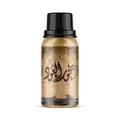
In short: The alcohol in perfume is ethanol, and perfume is dissolved in it because it dissolves the scent materials that do not dissolve in water. Alcohol Denat. on an ingredient list is ethanol to which a substance has been added to make it unfit for drinking, and national regulations set which substances are permitted for this. Not every name containing alcohol is ethanol: the list may include fatty alcohols with other functions, and scent materials that are alcohols in their chemical structure. The phrase "alcohol free" is used for products that contain no ethanol, and they may contain other alcohols. When a perfume has no alcohol, something else carries it, such as oil or water; water needs a substance that brings the scent materials into it and a preservative, and in every case the base affects how the scent is released.
Table of contents
- What is the alcohol in perfume?
- Why is perfume dissolved in alcohol?
- What does Alcohol Denat. mean?
- Why is alcohol denatured?
- What is it denatured with, and who decides?
- Other alcohols on the ingredient list
- Does "alcohol free" mean anything specific?
- Alternatives to alcohol: oil and water
- Oil
- Water
- What changes when the base changes?
- What the safety review says about denatured alcohol on the skin
- Frequently asked questions
- Read also
- References
You read Alcohol Denat. on the ingredient list of a perfume spray, then read "alcohol free" on another pack and find cetearyl alcohol in its list. The word is the same, and the substances are different. This article is about the alcohol in perfume: what it is, why perfume is dissolved in it, and what carries the perfume when there is no alcohol. In this article, "alcohol" on its own means ethanol, and anything else is called by its name. As for its religious ruling, that is a question for scholars and recognised religious authorities, such as the General Presidency of Scholarly Research and Ifta in Saudi Arabia.
What is the alcohol in perfume?
It is ethanol, also called ethyl alcohol. The word alcohol on its own on a cosmetic label means this alcohol, as the U.S. Food and Drug Administration states [1]. It is a liquid that mixes with water in any proportion and boils at 78 °C [2].
Ethanol is made by fermenting starch, sugar, and other carbohydrates, and it is also made chemically from ethylene and other sources [3]. The EU cosmetic ingredients database (CosIng) has two names for it: Alcohol, which is undenatured ethanol, and Alcohol Denat., which is denatured ethanol [4].
Why is perfume dissolved in alcohol?
Because ethanol dissolves scent materials, most of which do not dissolve in water. That is why it has been the base of traditional perfumes, as researchers who worked on water-based perfume note [5]. It also mixes with water [2], and water is one of the solvents of perfume alongside it [6]. The names of alcohol-based perfumes by concentration, such as eau de parfum and eau de toilette, are explained in the glossary of perfume terms.
When perfume is sprayed, its scent reaches the nose only after it evaporates and spreads through the air [6]. How each scent material is released from an ethanol solution depends on its interaction with the ethanol and on its vapour pressure, that is, its tendency to evaporate [6]. So the alcohol is not a neutral vessel from which all the materials leave in the same way. How some perfume materials react with the alcohol in the bottle over time is explained in How to Store Perfume.
What does Alcohol Denat. mean?
Alcohol Denat. is denatured ethanol, that is, ethanol to which one or more denaturants have been added in accordance with the national legislation of each EU member state, as CosIng defines it [4]. Denaturing makes the alcohol unfit for drinking [7]. On U.S. labels, denatured alcohol may be written SD Alcohol followed by its formula number, such as SD Alcohol 40-B, or written Alcohol Denat., a general name for denatured alcohol introduced in Europe [1]. Where it sits when you read an ingredient list is explained in Reading a Perfume Label.
Why is alcohol denatured?
Because regulation treats denatured alcohol differently from alcohol for drinking. In the United Kingdom, denatured alcohol is exempt from duty only when it is denatured to specific standards and used correctly [7]. In the United States, the Alcohol and Tobacco Tax and Trade Bureau (TTB) defines Specially Denatured Alcohol as alcohol to which denaturing materials have been added, and notes that it is generally used in cosmetics, and beyond them in medicines and other products [8].
What is it denatured with, and who decides?
National regulations set the denaturants and their amounts, and authorise specific formulas for each industry. In the United States, the federal regulations list the formulas authorised for perfumes, toilet waters, and colognes, among them formulas 39-C and 40-B [9]. In formula 40-B, every hundred gallons of alcohol contain 1/16 ounce of denatonium benzoate and one-eighth of a gallon of tert-butyl alcohol [10]. Among the UK formulas authorised for making perfumes are two: the first contains tert-butyl alcohol and denatonium benzoate, and the fifth contains 5% benzyl benzoate [7]. In the European Union, denaturing is left to the national legislation of each state [4].
Denatonium benzoate is an intensely bitter substance, effective as a denaturant at 0.0006% [11]. CosIng groups the U.S. SD Alcohol formulas, including 39-C and 40-B, under a single name, Alcohol Denat. [4], so this name does not tell you which substance the alcohol was denatured with.
Other alcohols on the ingredient list
Not every name containing alcohol is ethanol. Alcohols are a broad and diverse chemical family, and ethanol is one of them [1].
Among them are fatty alcohols, such as cetyl alcohol, stearyl alcohol, and cetearyl alcohol, which the FDA says have effects on the skin quite different from those of ethanol [1]. The functions CosIng lists for cetearyl alcohol are emollient, emulsifying, and emulsion stabilising; perfuming and solvent are not among them [4].
Among them too are scent materials that are alcohols in their chemical structure. Linalool, geraniol, and 2-phenylethanol, listed as phenethyl alcohol, are all alcohols in chemical classification [12], and perfuming is among their functions in CosIng [4]. Benzyl alcohol is an aromatic alcohol, meaning its structure contains a benzene ring [12], and CosIng records functions for it including preservative, solvent, and perfuming [4]. Some of these names have a particular role on the label, explained in Reading a Perfume Label.
Among them also is methanol (methyl alcohol), an alcohol other than ethanol. On 7 October 2020, the Saudi Food and Drug Authority warned against five perfumes in which methanol exceeded the limit permitted in the technical regulation on safety requirements for cosmetic and personal care products (SFDA.CO/GSO 1943:2016) [13].

Does "alcohol free" mean anything specific?
The U.S. Food and Drug Administration says the phrase is used for products that contain no ethyl alcohol, and points out that a product labelled with it may contain other alcohols, such as fatty alcohols [1]. So it does not mean the product is free of every alcohol, and the phrase is read together with the ingredient list, not instead of it.
Alternatives to alcohol: oil and water
If perfume is not dissolved in alcohol, it needs another base to carry it. The base is not neutral in any case: the scent of a fragrance mixture is affected by the base it is in [6].
Oil
In a perfume oil, the perfume is dissolved in an oil instead of alcohol. Its concentration, longevity, and safe use are explained in Perfume Oils.
Water
Water does not dissolve most scent materials. That is why researchers describe bringing oily scent materials into water without a co-solvent such as ethanol as very difficult, and say it requires substances that help solubilise them, either polyols such as glycols and glycerin, or surfactants [5]. In their water-based perfume they used a non-ionic surfactant derived from castor oil, and obtained a clear, stable nano-perfume [5].
Water raises a second matter: preservation. The U.S. Food and Drug Administration counts water and contaminated raw materials, along with an ineffective preservation system, among the sources of microbial contamination in cosmetics, and says preservatives are added to prevent microbial growth [14]. The researchers added a preservative to their water-based perfume and tested its effectiveness against the ISO 11930 standard [5].
What changes when the base changes?
In experiments that measured the effect of cosmetic bases on scent materials, dipropylene glycol retained the scent materials more than the other bases, so their odour intensity was lower [15], while they were released quickly from glycerin because they are hydrophobic [6]. The researchers concluded that how hydrophilic the base is strongly affects the release of scent materials [15].
These experiments do not compare how long an alcohol-based perfume lasts on the skin with an oil or water-based one, since the scent was measured in the air above the sample, not on the skin [15], so no conclusion can be drawn from them about which lasts longer or projects more.
What the safety review says about denatured alcohol on the skin
The U.S. Cosmetic Ingredient Review Expert Panel reviewed the safety of Alcohol Denat. in a report published in 2008. It found that applying products containing it to the skin, or inhaling them, does not produce significant systemic exposure to ethanol, that is, exposure reaching the body as a whole, and so it based its judgement on the safety of these ingredients on the safety of the denaturant [11]. It found alcohol denatured with substances including tert-butyl alcohol safe as used in cosmetics, considered the data sufficient for denatonium benzoate, and insufficient to reach a conclusion on three denaturants: quassin, brucine, and brucine sulfate [11]. The review concerns denatured alcohol and its denaturants, not the whole perfume formula.
Ethanol is highly flammable, with a flash point of 12 °C [2], which is why an alcohol-based perfume is not put on charcoal, as explained in the guide to bakhoor perfume oils.
Frequently asked questions
Is Alcohol Denat. the alcohol people drink?
It is ethanol, but a substance has been added to it to make it unfit for drinking [4] [7]. National regulations set which substances are permitted for this.
I found cetearyl alcohol on the list. Does the product contain ethanol?
Its name does not indicate that. Cetearyl alcohol is a fatty alcohol whose effect on the skin is quite different from that of ethanol, and it may be in a product labelled "alcohol free" [1]. Ethanol is listed as Alcohol or Alcohol Denat. [4], and on U.S. labels it may be written SD Alcohol with its formula number [1].
Read also
- Perfume Oils: Concentration, Longevity and Safe Use
- Reading a Perfume Label: Ingredients, Allergens, and Pack Symbols
- Perfume Ingredients: From Raw Material to Note
- Glossary of Perfume and Bakhoor Terms in English and Arabic
References
- U.S. Food and Drug Administration. “Alcohol Free”. Content current as of 25 February 2022. fda.gov. Accessed 14 October 2026.
- International Labour Organization and World Health Organization. International Chemical Safety Card 0044: Ethanol (anhydrous). May 2018. chemicalsafety.ilo.org. Accessed 14 October 2026.
- PubChem. Ethanol (CID 702): Methods of Manufacturing, from the Hazardous Substances Data Bank, citing The Merck Index, 2013, p. 696. pubchem.ncbi.nlm.nih.gov. Accessed 14 October 2026.
- European Commission. CosIng, Cosmetic Ingredients database: ALCOHOL DENAT. (74174), ALCOHOL (31401), CETEARYL ALCOHOL (75132), BENZYL ALCOHOL (32153), PHENETHYL ALCOHOL (36519), LINALOOL (35016), and GERANIOL (33991). ec.europa.eu. Accessed 14 October 2026.
- Miastkowska M, Lasoń E, Sikora E, Wolińska-Kennard K. Preparation and Characterization of Water-Based Nano-Perfumes. Nanomaterials. 2018;8(12):981. doi:10.3390/nano8120981. pmc.ncbi.nlm.nih.gov. Accessed 14 October 2026.
- Rodrigues AE, Nogueira I, Faria RPV. Perfume and Flavor Engineering: A Chemical Engineering Perspective. Molecules. 2021;26(11):3095. doi:10.3390/molecules26113095. pmc.ncbi.nlm.nih.gov. Accessed 14 October 2026.
- HM Revenue & Customs. Production, distribution and use of denatured alcohol (Excise Notice 473). Last updated 18 November 2025: sections 1.1, 14.1, and 18. gov.uk. Accessed 14 October 2026.
- Alcohol and Tobacco Tax and Trade Bureau (TTB). Industrial Alcohol: Denatured Alcohol. Last updated 5 November 2025. ttb.gov. Accessed 14 October 2026.
- U.S. Code of Federal Regulations, Title 27, § 21.141: List of products and processes using specially denatured alcohol and rum, and formulas authorized therefor (codes 121 and 122). law.cornell.edu. Accessed 14 October 2026.
- U.S. Code of Federal Regulations, Title 27, § 21.76: Formula No. 40-B. law.cornell.edu. Accessed 14 October 2026.
- Cosmetic Ingredient Review Expert Panel. Final report of the safety assessment of Alcohol Denat., including SD Alcohol 3-A, SD Alcohol 30, SD Alcohol 39, SD Alcohol 39-B, SD Alcohol 39-C, SD Alcohol 40, SD Alcohol 40-B, and SD Alcohol 40-C, and the denaturants, Quassin, Brucine Sulfate/Brucine, and Denatonium Benzoate. International Journal of Toxicology. 2008;27 Suppl 1:1–43. doi:10.1080/10915810802032388. PMID 18569160. pubmed.ncbi.nlm.nih.gov. Accessed 14 October 2026.
- PubChem. Linalool (CID 6549), Geraniol (CID 637566), 2-Phenylethanol (CID 6054), and Benzyl Alcohol (CID 244): descriptions from ChEBI. pubchem.ncbi.nlm.nih.gov. Accessed 14 October 2026.
- Saudi Food and Drug Authority. Warning against five perfumes containing a high level of methanol (in Arabic). 7 October 2020. sfda.gov.sa. Accessed 14 October 2026.
- U.S. Food and Drug Administration. Microbiological Safety and Cosmetics. Content current as of 15 October 2024. fda.gov. Accessed 14 October 2026.
- Costa P, Velasco CV, Loureiro JM, Rodrigues AE. Effect of cosmetic matrices on the release and odour profiles of the supercritical CO2 extract of Origanum majorana L. International Journal of Cosmetic Science. 2016;38(4):364–374. doi:10.1111/ics.12297. PMID 26611174. doi.org. Accessed 14 October 2026.
Prepared and edited by: Sedr Al-Khaleej Perfumes team
Last reviewed: 14 October 2026
Was this article helpful?
Leave a comment
Comments are reviewed before they appear. Your email address won’t be shown.