In short: More than eighty terms from the language of perfume and bakhoor (Arabian incense), in seven sections: concentration, perfume structure, performance, olfactory families, materials and extraction methods, oud (agarwood) and bakhoor, and market language. Most entries begin with the term as it appears on packaging, followed by its Arabic name, then a short definition. To look a word up directly, use the alphabetical index at the end.
Table of contents
You read a perfume description and find extrait, sillage and Chypre in it, and a seller in the oud market talks to you about "ma'amoul", "mukhallat" and "tola". These are two languages for one craft, and they are seldom found together in one place. The terms in each section are in alphabetical order, except in the sections on concentration and notes, which follow their familiar order. Where a term has no settled Arabic equivalent, the Arabic in parentheses is a gloss, not a name.
Concentration terms
Concentration is the proportion of fragrance materials in a product, and names such as "eau de parfum" and "eau de toilette" are based on it. The percentages differ from one reference to another. The subject is covered in detail in How to Choose, Test and Apply Perfume.
Concentration (Arabic: تركيز العطر): The proportion of fragrance concentrate (concentré) in the whole product. The medium it is dissolved in is alcohol in most perfumes, and oil in perfume oils [1]. The categories have no agreed limits: eau de Cologne, for example, is 3–8% in one reference [1] and 3–5% in another [2], while a third puts European cologne at 1–3% [3].
Concentré (Arabic: المركّز العطري): The perfume's composition once its materials have been weighed out as the perfumer devised it, and before it is dissolved in alcohol or goes into another product. Extrait de parfum, eau de toilette and other products are made from it [36].
Extrait de parfum, also written Parfum (Arabic: خلاصة العطر): The most concentrated category. It contains up to 40% fragrance materials [1], and another estimate puts it between 12 and 30% [3].
Eau de parfum, abbreviated EdP (Arabic: ماء العطر): The category that comes after extrait, at 10–15% [1] or 8–15% [2].
Eau de toilette, abbreviated EdT (Arabic: ماء التواليت): Lighter than eau de parfum, at 5–10% [1] or 4–8% [2]; a third estimate widens its range to 4–18% [3].
Eau de Cologne, abbreviated EdC (Arabic: ماء الكولونيا): The lightest of the common categories; its figures are given under "Concentration". The French classification assigns the first eau de Cologne to the citrus family [4]. Below it comes a lighter category called "splash cologne", at 1–3% [2].

Eau fraîche, also called Body mist (Arabic: الماء المنعش): Lighter than eau de Cologne, with up to 3% fragrance materials, and diluted mainly with water [1].
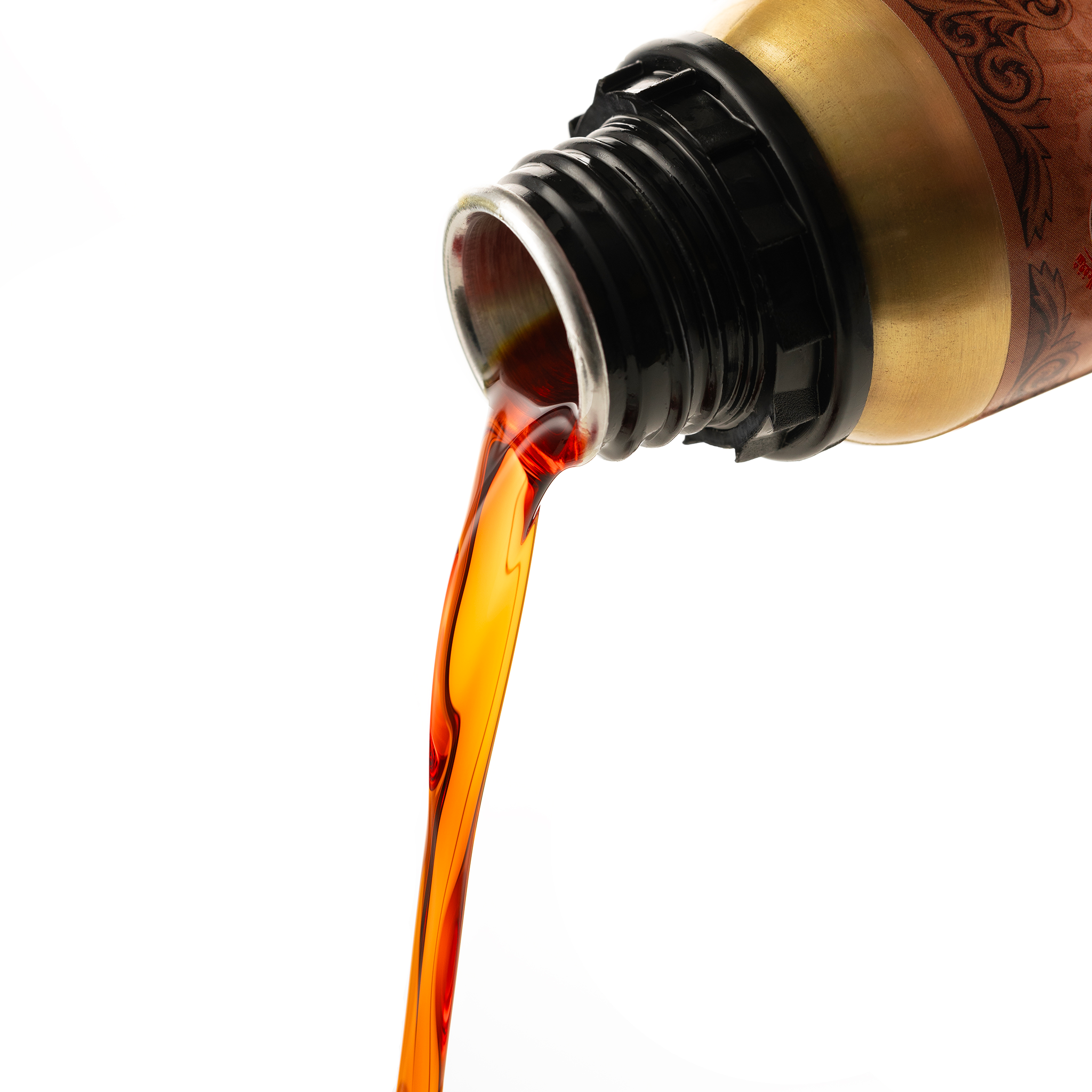
Perfume oil, also called Attar (Arabic: العطر الزيتي): A concentrated perfume whose medium is oil, not alcohol. The International Fragrance Association defines the word "attar" as a concentrated oil-based perfume that is mostly used as it is, without dilution [5]. The fragrance materials in perfume oils are generally estimated at about 20% [1]. Details are in Perfume Oils.
Carrier oil (Arabic: الزيت الحامل): A neutral oil in which the fragrance concentrate of a perfume oil is dissolved; jojoba and fractionated coconut oil are the most commonly used [1].
Maceration (Arabic: التعتيق): Leaving the fragrance concentrate in alcohol for a period, from days to months, until its scent is at its best. Some plant substances settle out in the meantime, so the solution is chilled and filtered to make it clear [36].
Perfume structure and notes
A perfume is described by what can be smelled in it at each stage, from the first spray to what remains hours later. This is explained in Perfume Ingredients: From Raw Material to Note.
Note (Arabic: النفحة): The name of a scent character that can be smelled in a perfume, such as bergamot, jasmine or sandalwood. It describes a smell, in a single material or in the whole composition, so the material named does not have to be in the composition: lilac and lily of the valley notes are built from synthetic materials [36]. Notes are divided into three layers according to how fast they evaporate [6]. The layers are also called the head, the heart and the base.
Olfactory pyramid (Arabic: هرم النفحات): A diagram that arranges a perfume's notes in three layers, with the top notes at its tip and the base notes at its bottom; it is attributed to the perfumer Jean Carles [6]. The ingredients of a perfume affect one another's evaporation [6], so the layers are not completely separate.
Top notes, also called Head notes (Arabic: النفحات العليا): The first part of a perfume to be smelled and the quickest to fade. They last 15 to 30 minutes [6], or 10 to 15 minutes by another estimate [3].
Middle notes, also called Heart notes (Arabic: النفحات الوسطى): The notes that appear after the top notes and form the body of the perfume, lasting three to four hours [6].
Base notes (Arabic: النفحات القاعدية): The slowest materials to evaporate and the last part of the perfume to remain, lasting more than four hours [6].
Soliflore (Arabic: الزهرة المفردة): A perfume built on the scent of a single flower; it is a subfamily of the floral family in the French classification [4].
Perfumer, nicknamed Nose (Arabic: العطّار): The person who composes a perfume's formula. "Nose" is the common nickname in the trade [3].
Base (Arabic: القاعدة الجاهزة): An elementary fragrance structure composed in advance, which the perfumer uses as part of a composition [36]. It is not the same thing as base notes.
Accord (Arabic: توليفة): The effect produced by blending two or more fragrance materials [36]. The French classification uses this word to describe the Chypre and Fougère families, each of which is an accord of particular materials [4].
Dry-down (Arabic: آخر العطر على البشرة): The final stage of a perfume, after its top and middle notes have evaporated and only the base notes remain [36].
Headspace (Arabic: تحليل الهواء حول مصدر الرائحة): A technique that captures the volatile substances around the source of a smell, such as a living flower or the air of a place, and then analyzes them so that the smell can be recreated in the laboratory [3] [36].
Performance terms
A perfume's performance is how long it lasts, how far it reaches and what it leaves behind its wearer. These are three descriptions that are often confused. We explain them in Why Doesn't Your Perfume Last? Longevity, Sillage and Olfactory Adaptation.
Diffusion (Arabic: الفوحان, also الانتشار): The distance a perfume's scent reaches around its wearer, that is, how far from the point of application it can be smelled [6] [3]. Shops use the word "projection" in a similar sense.
Fixative (Arabic: المثبّت): A material added to a composition to prolong the time its scent can be perceived [36]. Patchouli is one example [9].
Layering (Arabic: الجمع بين أشكال العطر): Using more than one form of the same perfume together, not wearing two different perfumes, which the author of this definition advises against [3].
Odor threshold (Arabic: عتبة الشم): The lowest concentration of a substance in the air that the nose can detect [6].
Odor value (Arabic: قيمة الرائحة): The ratio of a substance's concentration in the air to its odor threshold, used to estimate each substance's contribution to what is smelled in a perfume [6].
Olfactory adaptation (Arabic: التكيّف الشمي): The fading of the perception of a smell during continued exposure to it, and the return of that perception after moving away from the smell. Its extent, its speed and the speed of recovery depend on the concentration of the smell and the length of exposure, and after long exposure the smell may seem to have gone [7]. This is why a person may not smell their own perfume while the people around them do; it is also called "odour fatigue" [3].
Sillage (Arabic: الأثر العطري): What a perfume leaves behind in a place after its wearer has passed through. The word is French, and its counterpart in the English-language references is "trail" [6].
Specific anosmia (Arabic: العمى الشمي النوعي): Being unable to smell one particular substance while the sense of smell is otherwise normal. It is common, so much so that it has been described as the rule in the sense of smell, not the exception [8].
Tenacity, in shop descriptions Longevity (Arabic: الثبات): How long a perfume's scent remains near the point of application [6] [36]. "Longevity" is the name shops usually give it.
Volatility (Arabic: التطاير): How fast a fragrance material evaporates. Notes are ordered by it: the most volatile are smelled first and fade first, and the least volatile remain [6] [36].
Olfactory families
An olfactory family is a group of perfumes that share a dominant scent character. There are two well-known classifications of the families, and they do not match, which explains why the same perfume can be found under two descriptions. Details are in Fragrance Families: A Guide to Perfume Scent Types and Their Classification.
Olfactory family (Arabic: العائلة العطرية): A category to which a perfume is assigned according to its overall character. A secondary description is then added for what accompanies that character, as in "fruity floral". There are seven families in the classification of the French Society of Perfumers [4], and fourteen on Edwards' wheel [10].
Fragrance Wheel (Arabic: عجلة العطور): A classification devised by Michael Edwards that arranges perfumes in fourteen adjoining families [10], gathered into four groups: Floral, Amber, Woody and Fresh [11]. Families that sit next to each other are close in scent.
Ambrée-Orientale in the French classification, Amber according to Edwards (Arabic: العنبرية, also called الشرقية): A family with a sweet, soft character, whose materials include vanilla and labdanum [4]. Edwards changed its name on his wheel from "Oriental" to "Amber" in 2021 [11], and both names still appear in perfume descriptions.
Aromatique (Arabic: طابع الأعشاب العطرية): A subfamily in the French classification [4], and part of the Aromatic Fougère family on Edwards' wheel [10].
Boisée, in English Woody (Arabic: الخشبية): A family with a warm or dry character, whose materials include sandalwood, patchouli, cedar and vetiver [4].
Chypre (Arabic: عائلة طحلب البلوط والبرغموت): A woody, mossy family, whose materials include oakmoss, labdanum, patchouli and bergamot [4]. Its name comes from a perfume launched by the house of Coty in 1917 [3], and Chypre is the French name of the island of Cyprus [38].
Cuir (Arabic: الجلدية): A family with a dry character that imitates the smell of leather [4].
Florale (Arabic: الزهرية): A family whose theme is a flower or a bouquet of flowers, such as jasmine and rose. Its subfamilies in the French classification include soliflore, aldehydic floral (Fleuri aldéhydé) and fruity floral [4].
Fougère (Arabic: عائلة الخزامى وطحلب البلوط ومركب Coumarin): The word means "fern" in French [38]. The name is fanciful and does not refer to the smell of fern; the family's materials are lavender, woods, oakmoss, coumarin and bergamot [4].
Gourmand (Arabic: طابع حلو يذكّر بالحلوى): A description that appears in the lists of the Osmothèque perfume archive as a subdivision under families such as Amber [12]. It is not a family in either of the two classifications mentioned.
Hespéridée, in English Citrus (Arabic: الحمضية): A fresh family based on citrus peel oils, such as bergamot, lemon and orange [4].
Water, Green and Fruity (Arabic: المائية والخضراء والفاكهية): Three separate families on Edwards' wheel [10]. In the French classification, the water character is a secondary description, as in marine floral and marine woody [4].
Materials and extraction methods
The names in this section are of two kinds: those that name a method of extracting a scent or its product, and those that name a material. Most of the definitions of the first kind come from the international standard ISO 9235, the vocabulary of aromatic natural raw materials [13]. They are explained in Perfume Ingredients and Essential Oils in Perfumery.
Extraction methods and their products
Absolute (Arabic: المطلق): An extract obtained with ethanol from an earlier extract: a concrete, a pomade, a resinoid or a carbon dioxide extract. The solution is then chilled and filtered to remove the waxes, and the ethanol is removed [13].
Cold pressing, also called Expression (Arabic: العصر البارد): A mechanical treatment of the peel of citrus fruits at room temperature [13]. It is the most widely used method for orange, lemon and bergamot [2].
Concrete (Arabic: مستخلص من مادة نباتية طازجة): An extract that remains after fresh plant material has been extracted with a solvent and all or part of the solvent has then been removed [13].
Dry distillation (Arabic: التقطير الجاف): The distillation of wood, bark, roots or gums without water or steam [13].
Enfleurage (Arabic: الاستخلاص بالدهن): A method in which the scent of flowers is transferred to a fat [2]. The scented fat that results is called a pomade [13].
Essential oil (Arabic: الزيت العطري, also called الزيت الأساسي): A product obtained from plant material by steam distillation, by pressing the peel of citrus fruits, or by dry distillation [13]. The first of these Arabic names, literally "fragrant oil", is also applied in the market to perfume oil, so the name alone does not show what is in the bottle.
Hydrolate, in French Hydrolat (Arabic: الماء العطري): The water left over from steam distillation after the oil has been separated from it [13].
Resinoid (Arabic: مستخلص من مادة نباتية جافة): An extract obtained with a solvent from dry plant material; benzoin is one of the examples given in the standard [13].
Steam distillation (Arabic: التقطير بالبخار): The most common method of extracting essential oils. Steam passes through the plant material and carries off its volatile substances, then condenses, and the oil separates from the water [2].
Supercritical CO2 extraction (Arabic: الاستخلاص بثاني أكسيد الكربون فوق الحرج): An extraction method that uses carbon dioxide in a state called "supercritical"; the extract is then separated by lowering the pressure [13]. It is carried out at a low temperature, and the extract carries with it non-volatile substances such as waxes [14].
Frequently mentioned materials
Aldehydes: In perfumery the name mostly refers to synthetic materials called aliphatic aldehydes, and the description "aldehydic" comes from their prominence in a composition [36].
Ambergris (Arabic: العنبر): A substance that forms in the rectum of the sperm whale and is estimated to occur in about one whale in a hundred [18]. In family names, the word "Amber" (in Arabic the same word, العنبر) describes a sweet, soft character [4], not this substance. More in Amber in Perfumery: Ambergris, Fossil Amber, Ambrox, and Why the Name Gets Confused.
Ambrox (Arabic: عنبر مصنّع): An ambergris-scented material that appeared in the mid-twentieth century [22]. It is mostly prepared from sclareol, a compound extracted from the plant Salvia sclarea (clary sage) [23].
Castoreum (Arabic: إفراز القندس): A substance from the scent sacs of the beaver; its extract is prepared with alcohol, and it has been widely used in perfumes [19].
Civet (Arabic: الزباد): A glandular secretion of the African civet, used for centuries as a fixative in perfumes; synthetic substitutes for it have been available for decades [15].
IFRA, the International Fragrance Association (Arabic: الرابطة الدولية للعطور): A body set up by the fragrance industry to regulate itself [24]. It issues standards that prohibit the use of some materials, restrict the quantities of others, or set purity requirements [5].
Labdanum (Arabic: اللاذن): A resin secreted by the leaves and stems of the shrub Cistus ladanifer; the resin and its extracts are used in perfumery [20].
Musk (Arabic: المسك): Originally a glandular secretion of the male musk deer; trade in it is restricted under CITES, the convention on international trade in endangered species [21]. Synthetic musk has taken its place in perfumery; the first to appear was nitro musk, in 1888 [22] [39]. "White musk" and "black musk" are trade names with no single agreed definition. Details are in Musk in Perfumery.
Oakmoss, in French Mousse de chêne (Arabic: طحلب البلوط): An extract of Evernia prunastri, which is a lichen, not a moss in the botanical sense [37]. It is one of the materials of the Chypre and Fougère families in the French classification [4].
Orris (Arabic: السوسن): A material extracted from the rhizomes of the iris plant, that is, its underground stems, not from its flower. Its scent comes chiefly from compounds called irones [16].
Patchouli: An oil from the leaves of the plant Pogostemon cablin. It is a base note with strong tenacity, and it is used as a fixative [9].
Sandalwood (Arabic: الصندل): An oil from the heartwood of trees of the genus Santalum, extracted mainly by steam distillation [17].
Synthetics (Arabic: المواد المصنّعة): Fragrance materials made by chemical synthesis, which may start from a plant material, as with Ambrox [23]. Nitro musk, which appeared in 1888, is among the oldest of them [22] [39].
Oud and bakhoor terms
Most of these names are local, with meanings that differ from country to country and from shop to shop, and the types of Arabian bakhoor do not seem to have standard ingredients even within a single country [25]. Three of them, mabthouth, mabsous and oud muhassan ("enhanced oud"), have no definition in the scientific and regulatory references we consulted, so ask your seller what they mean by the name. Details are in Types of Bakhoor and Oud (Agarwood): A Reference Guide.
Bakhoor, in English Incense (Arabic: البخور): Something burned so that its scent spreads; most of it is a combination of fragrant gums, resins, wood powders, herbs and spices [26]. In Gulf markets it is oud powder or shavings mixed with other scents and aromatic woods [27].
Dihn al-oud, in English Agarwood oil (Arabic: دهن العود): An oil extracted from oud wood by distillation [27] [28]. It is sold both pure and blended with other perfumes [27].
Frankincense, also called Olibanum (Arabic: اللبان): Grains of resin from trees of the genus Boswellia [32], burned on lit charcoal or in an electric incense burner (mabkhara) [31].
Incense burner (Arabic: المبخرة): A vessel in which bakhoor is burned, over lit charcoal or with an electric heater [31].
Incense cones (Arabic: البخور الهرمي, also المخروطي): Bakhoor shaped into a cone [26]; in the market it is called pyramid bakhoor. Details are in Pyramid Bakhoor.
Incense sticks (Arabic: أعواد البخور): A thin bamboo stick coated with the incense mixture; about 35% of its weight is fragrance materials. The kind with no stick at its core is called a "joss stick" [26].
Ma'amoul (Arabic: المعمول): The name of an Arabian bakhoor blend; one scientific review renders it as "Arabian mix incense" [26].
Mabthouth and Mabsous (Arabic: المبثوث والمبسوس): Two local names for a kind of bakhoor blend.
Mukhallat (Arabic: المخلط): A perfume blended from oud, amber, sandalwood and other materials [27]. How it is blended is covered in Composing Perfume Oil Blends.
Oud, in English Agarwood (Arabic: العود): A fragrant wood from trees of the genera Aquilaria and Gyrinops, in which resin forms when the tree is wounded and infected by fungi [29]. Both genera are listed in CITES Appendix II [30]. The Arabic names of oud include "aluwwa" (الألُوّة) [28].
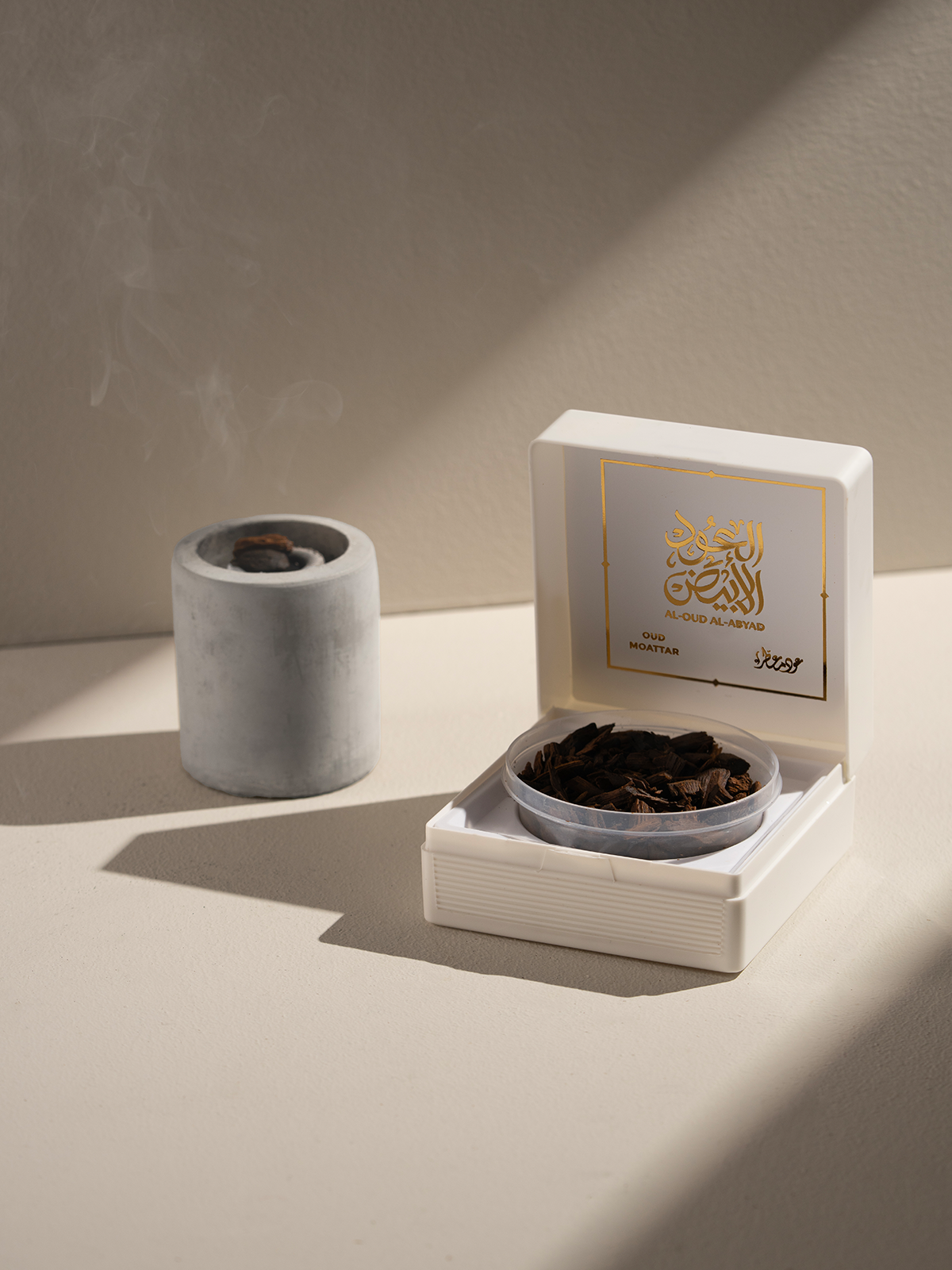
Oud mu'attar, "scented oud" (Arabic: العود المعطّر): A trade description for wood saturated with perfume.
Oud muhassan, "enhanced oud" (Arabic: العود المحسّن): A trade description with no definition in the references.
Tola (Arabic: التولة): A unit of weight by which oud, its oil and blends are sold, equal to about 11.62 grams [27].
Wild and Induced agarwood (Arabic: العود الطبيعي والعود المستحث): Wild agarwood is wood whose resin formed in the wild without intervention. Induced agarwood comes from cultivated trees that were deliberately wounded or injected so that resin forms in them; it is real agarwood whose quality varies with the method [29].
Market and packaging terms
This section covers what the European cosmetics regulation requires to be written on the packaging, and the terms that shops and reviews use. The words Designer and Tester belong to the language of the market, and the glossary of the French Society of Perfumers has neither in this sense [36].
Batch number, also called Batch code (Arabic: رقم التشغيلة): A number or code on the packaging that identifies the product and its manufacturing batch. It is one of the mandatory label details under the European cosmetics regulation [33].
Designer (Arabic: عطور دور الأزياء): A description of the perfumes of fashion houses (designer houses), which are houses that sell perfume alongside their clothing; it is used in contrast to Niche [40].
Flanker (Arabic: إصدار متفرّع من عطر معروف): A new release that carries the name of a successful perfume, with a change to its scent [34].
Niche (Arabic: عطور الدور المتخصصة): Perfumes from houses that make only this kind of perfume, with limited distribution, a high price and an innovative approach, and with their own perfumer or creative director. Some houses bought by large groups may be considered closer to selective distribution than to this description [35].
Parfum, in the ingredient list (Arabic: مواد العطر مجتمعة): A single word under which a perfume's fragrance materials are grouped in the ingredient list on the packaging, as the European regulation requires [33]. Certain fragrance substances are listed by name alongside it if they exceed a set limit [33]. Here, then, the word does not indicate the concentration category.
Period after opening, abbreviated PAO (Arabic: مدة الاستعمال بعد الفتح): The period during which a product can be used after opening without harm; it is shown by an open jar symbol. The European regulation does not require a "best used before the end of" date on products with a minimum durability of more than thirty months, and requires the period after opening to be shown on them, except where a period after opening is not relevant [33]. What happens to a perfume over time is covered in How to Store Perfume.
Tester (Arabic: عبوة التجربة): A bottle of perfume made available to shops so that their customers can try the perfume [41].
Alphabetical index of terms
For readers looking up a word as it appeared on packaging or in a review: the term, then its Arabic equivalent, then its section.
| Term | Arabic | Section |
|---|---|---|
| Absolute | المطلق | Materials and extraction |
| Accord | توليفة | Perfume structure |
| Agarwood oil, Dihn al-oud | دهن العود | Oud and bakhoor |
| Agarwood, Oud | العود | Oud and bakhoor |
| Aldehydes | فئة من المركبات العضوية | Materials and extraction |
| Amber, Ambrée-Orientale | العنبرية | Families |
| Ambergris | العنبر | Materials and extraction |
| Ambrox | عنبر مصنّع | Materials and extraction |
| Aromatique | طابع الأعشاب العطرية | Families |
| Attar, Perfume oil | العطر الزيتي | Concentration |
| Bakhoor, Incense | البخور | Oud and bakhoor |
| Base | القاعدة الجاهزة | Perfume structure |
| Base notes | النفحات القاعدية | Perfume structure |
| Batch number, Batch code | رقم التشغيلة | Market and packaging |
| Boisée, Woody | الخشبية | Families |
| Carrier oil | الزيت الحامل | Concentration |
| Castoreum | إفراز القندس | Materials and extraction |
| Chypre | عائلة طحلب البلوط والبرغموت | Families |
| Citrus, Hespéridée | الحمضية | Families |
| Civet | الزباد | Materials and extraction |
| Cold pressing, Expression | العصر البارد | Materials and extraction |
| Concentration | تركيز العطر | Concentration |
| Concentré | المركّز العطري | Concentration |
| Concrete | مستخلص من مادة نباتية طازجة | Materials and extraction |
| Cuir | الجلدية | Families |
| Designer | عطور دور الأزياء | Market and packaging |
| Diffusion | الفوحان، الانتشار | Performance |
| Dry distillation | التقطير الجاف | Materials and extraction |
| Dry-down | آخر العطر على البشرة | Perfume structure |
| Eau de Cologne (EdC) | ماء الكولونيا | Concentration |
| Eau de parfum (EdP) | ماء العطر | Concentration |
| Eau de toilette (EdT) | ماء التواليت | Concentration |
| Eau fraîche, Body mist | الماء المنعش | Concentration |
| Enfleurage | الاستخلاص بالدهن | Materials and extraction |
| Essential oil | الزيت العطري، الزيت الأساسي | Materials and extraction |
| Extrait de parfum, Parfum | خلاصة العطر | Concentration |
| Fixative | المثبّت | Performance |
| Flanker | إصدار متفرّع من عطر معروف | Market and packaging |
| Florale | الزهرية | Families |
| Fougère | عائلة الخزامى وطحلب البلوط ومركب Coumarin | Families |
| Fragrance Wheel | عجلة العطور | Families |
| Frankincense, Olibanum | اللبان | Oud and bakhoor |
| Gourmand | طابع حلو يذكّر بالحلوى | Families |
| Headspace | تحليل الهواء حول مصدر الرائحة | Perfume structure |
| Hydrolate, Hydrolat | الماء العطري | Materials and extraction |
| IFRA | الرابطة الدولية للعطور | Materials and extraction |
| Incense burner | المبخرة | Oud and bakhoor |
| Incense cones | البخور الهرمي | Oud and bakhoor |
| Incense sticks | أعواد البخور | Oud and bakhoor |
| Induced agarwood | العود المستحث | Oud and bakhoor |
| Labdanum | اللاذن | Materials and extraction |
| Layering | الجمع بين أشكال العطر | Performance |
| Ma'amoul | المعمول | Oud and bakhoor |
| Maceration | التعتيق | Concentration |
| Middle notes, Heart notes | النفحات الوسطى | Perfume structure |
| Mukhallat | المخلط | Oud and bakhoor |
| Musk | المسك | Materials and extraction |
| Niche | عطور الدور المتخصصة | Market and packaging |
| Note | النفحة | Perfume structure |
| Oakmoss, Mousse de chêne | طحلب البلوط | Materials and extraction |
| Odor threshold | عتبة الشم | Performance |
| Odor value | قيمة الرائحة | Performance |
| Olfactory adaptation | التكيّف الشمي | Performance |
| Olfactory family | العائلة العطرية | Families |
| Olfactory pyramid | هرم النفحات | Perfume structure |
| Oriental | الشرقية (العنبرية) | Families |
| Orris | السوسن | Materials and extraction |
| Parfum (in the ingredient list) | مواد العطر مجتمعة | Market and packaging |
| Patchouli | زيت أوراق نبات عطري | Materials and extraction |
| Perfumer, Nose | العطّار | Perfume structure |
| Period after opening (PAO) | مدة الاستعمال بعد الفتح | Market and packaging |
| Pomade | الدهن المعطّر الناتج من الاستخلاص بالدهن | Materials and extraction |
| Resinoid | مستخلص من مادة نباتية جافة | Materials and extraction |
| Sandalwood | الصندل | Materials and extraction |
| Sillage | الأثر العطري | Performance |
| Soliflore | الزهرة المفردة | Perfume structure |
| Specific anosmia | العمى الشمي النوعي | Performance |
| Steam distillation | التقطير بالبخار | Materials and extraction |
| Supercritical CO2 extraction | الاستخلاص بثاني أكسيد الكربون فوق الحرج | Materials and extraction |
| Synthetics | المواد المصنّعة | Materials and extraction |
| Tenacity, Longevity | الثبات | Performance |
| Tester | عبوة التجربة | Market and packaging |
| Tola | التولة | Oud and bakhoor |
| Top notes, Head notes | النفحات العليا | Perfume structure |
| Volatility | التطاير | Performance |
| Water, Green, Fruity | المائية والخضراء والفاكهية | Families |
| Wild agarwood | العود الطبيعي | Oud and bakhoor |
References
- Sikora E, Miastkowska M, Wolinska Kennard K, Lason E. Nanoemulsions as a Form of Perfumery Products. Cosmetics. 2018;5(4):63. doi:10.3390/cosmetics5040063. Accessed 10 October 2026.
- Sharmeen JB, Mahomoodally FM, Zengin G, Maggi F. Essential Oils as Natural Sources of Fragrance Compounds for Cosmetics and Cosmeceuticals. Molecules. 2021;26(3):666. PMC7865210. Accessed 10 October 2026.
- Edwards M. Fragrance Q&A. Fragrances of the World. fragrancesoftheworld.com. Accessed 10 October 2026.
- Société Française des Parfumeurs. Les familles olfactives. sfp-parfumeurs.com. Accessed 10 October 2026.
- IFRA. Guidance for the use of IFRA Standards. 30 June 2023 (Amendment 51). Section 2.2 "Key principles of the IFRA Standards" (p. 22), and Section 6.5.16 "Attars and attar-type fragrances" (pp. 39–40). Guidance document. Accessed 10 October 2026.
- Rodrigues AE, Nogueira I, Faria RPV. Perfume and Flavor Engineering: A Chemical Engineering Perspective. Molecules. 2021;26(11):3095. PMC8196857. Accessed 10 October 2026.
- Dalton P. Psychophysical and Behavioral Characteristics of Olfactory Adaptation. Chemical Senses. 2000;25(4):487–492. doi:10.1093/chemse/25.4.487. Accessed 10 October 2026.
- Croy I, Olgun S, Mueller L, Schmidt A, Muench M, Hummel C, et al. Peripheral adaptive filtering in human olfaction? Three studies on prevalence and effects of olfactory training in specific anosmia in more than 1600 participants. Cortex. 2015;73:180–187. doi:10.1016/j.cortex.2015.08.018. Accessed 10 October 2026.
- Swamy MK, Sinniah UR. A Comprehensive Review on the Phytochemical Constituents and Pharmacological Activities of Pogostemon cablin Benth. Molecules. 2015;20(5):8521–8547. PMC6272783. Accessed 10 October 2026.
- Edwards M. Fragrance Wheel. Fragrances of the World. fragrancesoftheworld.com. Accessed 10 October 2026.
- Edwards M. It's Time to Change. British Society of Perfumers; June 2021. bsp.org.uk. Accessed 10 October 2026.
- Osmothèque. Collection Osmothèque (juin 2015). osmotheque.fr. Accessed 10 October 2026.
- ISO 9235:2021. Aromatic natural raw materials — Vocabulary. 3rd ed. Geneva: International Organization for Standardization; 2021. iso.org. Accessed 10 October 2026.
- Baranauskienė R, Venskutonis PR. Supercritical CO2 Extraction of Narcissus poeticus L. Flowers for the Isolation of Volatile Fragrance Compounds. Molecules. 2022;27(2):353. PMC8782035. Accessed 10 October 2026.
- Swanepoel LH, Camacho G, Power RJ, Amiard P, Do Linh San E. A conservation assessment of Civettictis civetta. In: Child MF, Roxburgh L, Do Linh San E, Raimondo D, Davies-Mostert HT, editors. The Red List of Mammals of South Africa, Swaziland and Lesotho. South African National Biodiversity Institute and Endangered Wildlife Trust; 2016. ewt.org. Accessed 10 October 2026.
- Friščić M, Maleš Ž, Maleš I, Duka I, Radonić A, Mitić B, et al. Gas Chromatography–Mass Spectrometry Analysis of Volatile Organic Compounds from Three Endemic Iris Taxa: Headspace Solid-Phase Microextraction vs. Hydrodistillation. Molecules. 2024;29(17):4107. PMC11397506. Accessed 10 October 2026.
- Yan X, David SD, Du G, Li W, Liang D, Nie S, et al. Biological Properties of Sandalwood Oil and Microbial Synthesis of Its Major Sesquiterpenoids. Biomolecules. 2024;14(8):971. PMC11352278. Accessed 10 October 2026.
- Clarke R. The origin of ambergris. Latin American Journal of Aquatic Mammals. 2006;5(1):7–21. doi:10.5597/lajam00087. Accessed 10 October 2026.
- Burdock GA. Safety assessment of castoreum extract as a food ingredient. International Journal of Toxicology. 2007;26(1):51–55. doi:10.1080/10915810601120145. Accessed 10 October 2026.
- Frazão DF, Martins-Gomes C, Steck JL, Keller J, Delgado F, Gonçalves JC, et al. Labdanum Resin from Cistus ladanifer L.: A Natural and Sustainable Ingredient for Skin Care Cosmetics with Relevant Cosmeceutical Bioactivities. Plants (Basel). 2022;11(11):1477. PMC9183103. Accessed 10 October 2026.
- Liu K, Xie L, Deng M, Zhang X, Luo J, Li X. Zoology, chemical composition, pharmacology, quality control and future perspective of Musk (Moschus): a review. Chinese Medicine. 2021;16:46. PMC8214773. Accessed 10 October 2026.
- David ORP, Doro F. Industrial Fragrance Chemistry: A Brief Historical Perspective. European Journal of Organic Chemistry. 2023;26(44):e202300900. doi:10.1002/ejoc.202300900. Accessed 10 October 2026.
- Ncube EN, Steenkamp L, Dubery IA. Ambrafuran (Ambrox™) Synthesis from Natural Plant Product Precursors. Molecules. 2020;25(17):3851. PMC7504449. Accessed 10 October 2026.
- International Fragrance Association (IFRA). About IFRA. ifrafragrance.org/about-ifra. Accessed 10 October 2026.
- Al-Rawas OA, Al-Maniri AA, Al-Riyami BM. Home exposure to Arabian incense (bakhour) and asthma symptoms in children: a community survey in two regions in Oman. BMC Pulmonary Medicine. 2009;9:23. PMC2693130. Accessed 10 October 2026.
- Lin TC, Krishnaswamy G, Chi DS. Incense smoke: clinical, structural and molecular effects on airway disease. Clinical and Molecular Allergy. 2008;6:3. PMC2377255. Accessed 10 October 2026.
- Antonopoulou M, Compton J, Perry LS, Al-Mubarak R. The Trade and Use of Agarwood (Oudh) in the United Arab Emirates. Petaling Jaya, Selangor, Malaysia: TRAFFIC Southeast Asia; 2010. traffic.org. Accessed 10 October 2026.
- López-Sampson A, Page T. History of Use and Trade of Agarwood. Economic Botany. 2018;72(1):107–129. doi:10.1007/s12231-018-9408-4. Accessed 10 October 2026.
- Shivanand P, Arbie NF, Krishnamoorthy S, Ahmad N. Agarwood—The Fragrant Molecules of a Wounded Tree. Molecules. 2022;27(11):3386. PMC9181942. Accessed 10 October 2026.
- UNEP-WCMC, CITES Secretariat. Species+: Aquilaria, Gyrinops, CITES listings. speciesplus.net (Aquilaria), speciesplus.net (Gyrinops). Accessed 10 October 2026.
- Bu-Olayan AH, Thomas BV. Exposition of respiratory ailments from trace metals concentrations in incenses. Scientific Reports. 2021;11(1):10210. PMC8140077. Accessed 10 October 2026.
- Baeten J, Deforce K, Challe S, De Vos D, Degryse P. Holy Smoke in Medieval Funerary Rites: Chemical Fingerprints of Frankincense in Southern Belgian Incense Burners. PLoS One. 2014;9(11):e113142. PMC4229304. Accessed 10 October 2026.
- Regulation (EC) No 1223/2009 of the European Parliament and of the Council of 30 November 2009 on cosmetic products. Article 19(1), and Annex III. Consolidated text, 24 April 2024. eur-lex.europa.eu. Accessed 10 October 2026.
- May A. Chanel, YSL and Prada's new flankers are speaking to fragrance literate Gen Z differently. Cosmetics Business. 15 September 2026. cosmeticsbusiness.com. Accessed 10 October 2026.
- Bonnet G. Esxence 2024: Reshuffling the cards in alternative and niche perfumery. Premium Beauty News. 23 April 2024. premiumbeautynews.com. Accessed 10 October 2026.
- Société Française des Parfumeurs. Glossaire. sfp-parfumeurs.com. Accessed 10 October 2026.
- Scientific Committee on Consumer Products (SCCP). Opinion on oak moss / tree moss (sensitisation only). SCCP/1131/07. European Commission; 15 April 2008. ec.europa.eu. Accessed 10 October 2026.
- Larousse. Dictionnaire français-arabe : « Chypre », « fougère ». larousse.fr (Chypre), larousse.fr (fougère). Accessed 10 October 2026.
- Gautschi M, Bajgrowicz JA, Kraft P. Fragrance Chemistry – Milestones and Perspectives. CHIMIA. 2001;55(5):379–387. doi:10.2533/chimia.2001.379. Accessed 10 October 2026.
- Virginás P. Liquid Wardrobes and Sensing: A Phenomenological Approach to Digital Perfume Communities. Acta Universitatis Sapientiae, Social Analysis. 2022;12(1):113–130. doi:10.2478/aussoc-2022-0006. Accessed 10 October 2026.
- Court of Justice of the European Union. Judgment of the Court (Fourth Chamber) of 3 June 2010. Coty Prestige Lancaster Group GmbH v Simex Trading AG. Case C-127/09. Paragraph 48. eur-lex.europa.eu. Accessed 10 October 2026.
Prepared and edited by: Sedr Al-Khaleej Perfumes team
Last reviewed: 14 October 2026
Was this article helpful?
Leave a comment
Comments are reviewed before they appear. Your email address won’t be shown.