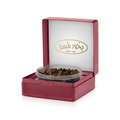
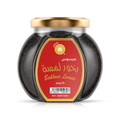
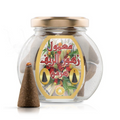
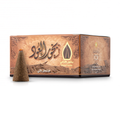
In short: Bakhoor charcoal is a piece or disc of charcoal that is lit so that bakhoor can be heated on it. The common kinds are quick-light charcoal, which contains a substance that helps it catch from a match or lighter, natural wood charcoal, and pressed coconut-shell charcoal; the last two need a longer flame. Put the bakhoor on when the whole piece is glowing and its first smoke has settled, and start with a small piece. Burning charcoal gives off carbon monoxide, so light it and use it outdoors, in an open space. For burning bakhoor indoors, use an electric burner, which has no charcoal.
Table of contents
- What is bakhoor charcoal?
- Types of bakhoor charcoal
- Quick-light charcoal
- Natural charcoal
- Pressed coconut-shell charcoal
- How do you light bakhoor charcoal?
- When should you put bakhoor on the charcoal?
- Why does oud burn on very hot charcoal?
- How do you choose charcoal for oud?
- How to burn bakhoor without charcoal
- Charcoal and carbon monoxide
- Read also
- References
In a bakhoor shop you will find discs in boxes marked "quick-light", and next to them dark cubes labelled only "coconut charcoal". Both are sold for the burner, but they are not lit the same way, and they are not ready for bakhoor at the same moment.
What is bakhoor charcoal?
It is charcoal lit in a burner (mabkhara) so that bakhoor can be heated on it. Charcoal is made by carbonising wood or coconut shell until most of what remains is carbon [1]. When bakhoor is placed on lit charcoal it heats up and its scent is released with its smoke.
Types of bakhoor charcoal
Three kinds are sold. They differ in what they are made from and what is added to them, and so in how they are lit. What we say here about how each kind lights, its heat, and its effect on the scent of bakhoor comes from experience of use, not from measurement, except where we cite a reference.
Quick-light charcoal
A pressed disc of charcoal powder with something added so that it catches from a match or lighter.
When one edge is lit, sparks travel across the disc until all of it glows. When it is first lit it gives off smoke with its own smell, and bakhoor put on before that smoke settles takes on some of it.
In a hookah test, the average carbon monoxide from a single quick-light briquette over ninety minutes was about twice that from a non-quick-light briquette, which the study called natural, while the latter burned hotter [2]. The measurement was taken inside the hookah apparatus, not in room air, so it compares the two kinds; it does not estimate what reaches people in a room.
Natural charcoal
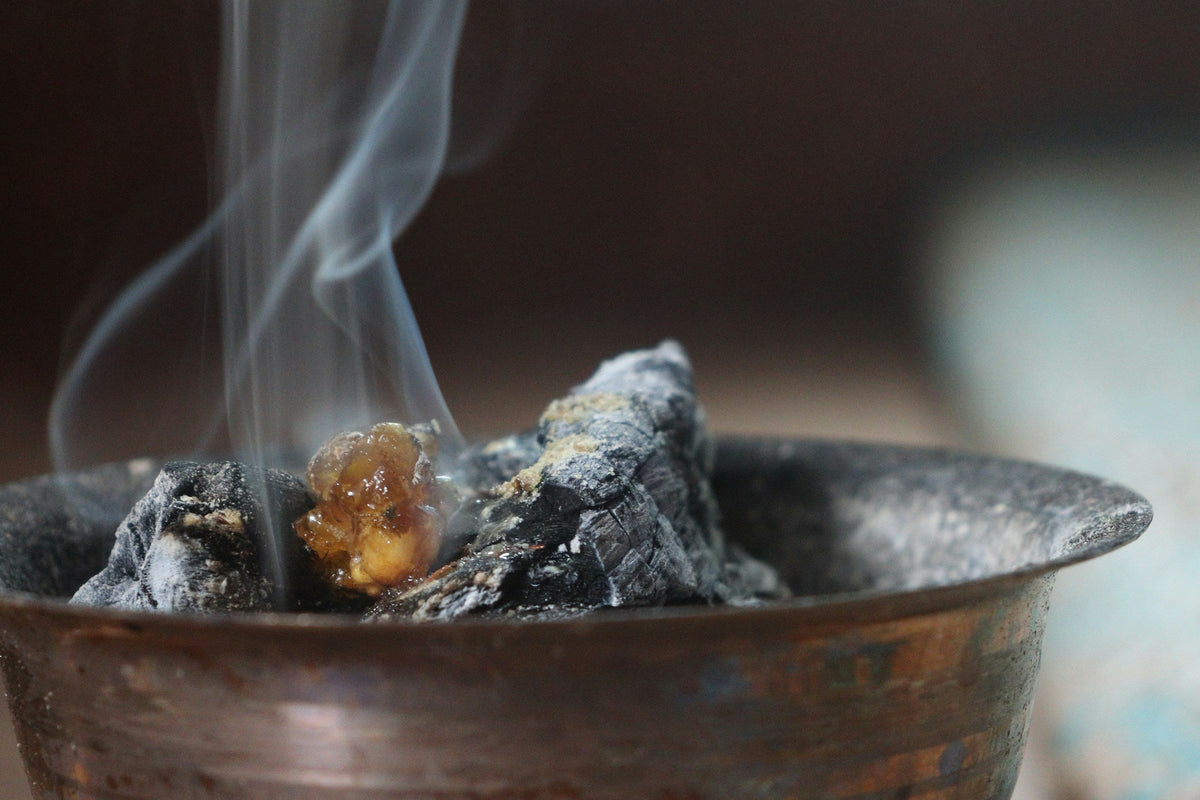
Pieces of carbonised wood [1], with nothing added to help them light, so a match is not enough. Hold a piece with tongs over a flame, outdoors, until part of it turns red; the glow then spreads through the rest once it is in the burner.
Pressed coconut-shell charcoal
Cubes or discs of coconut-shell charcoal powder pressed with a binder. Coconut shell is dense, so it makes high-grade charcoal [1]. The type and amount of binder change a briquette's ash, in shell-charcoal briquettes made as cooking fuel [3], so not everything sold under this name behaves alike.
Unless the box says it is quick-light, it needs a longer flame than a match, like natural charcoal.
| Type | Made from | How it is lit | What to watch for |
|---|---|---|---|
| Quick-light | Charcoal powder and a substance that helps it light, which varies in type | With a match or lighter | Smoke when first lit. It gave off more carbon monoxide than non-quick-light charcoal in the hookah test [2] |
| Natural | Carbonised wood [1] | Over a flame, outdoors | Takes longer to light |
| Pressed coconut shell | Shell charcoal powder and a binder | Over a flame, outdoors, unless labelled quick-light | Ash varies with the binder [3] |
How do you light bakhoor charcoal?
Light it and use it outdoors, in an open space such as a courtyard, and do not bring it inside while it is burning. The US Centers for Disease Control and Prevention (CDC) advise never burning charcoal indoors, and make no exception for any kind [6], and opening windows is no substitute. Hold it with tongs, then place it in the burner and leave it until all of it glows.
- Set the burner in an open space on a heat-resistant surface, away from curtains and fabrics.
- Hold the disc with metal tongs, not with your hand.
- Quick-light charcoal: bring the flame to its edge until it starts to spark, then put it in the burner.
- Natural and coconut charcoal: keep it over a flame until part of it turns red, then move it to the burner.
- Do not pour barbecue lighter fluid or anything else on it.
The steps that follow lighting are in the tools and steps section of our guide to choosing bakhoor for the home.
When should you put bakhoor on the charcoal?
When all of the charcoal is glowing and its first smoke has settled. If you put it on earlier, its scent mixes with the smoke of lighting, and in use this is more noticeable with quick-light charcoal.
Start with a small piece and add more if you need to. A daily limit on the amount is in the amount section of our guide to making bakhoor scent last.
Why does oud burn on very hot charcoal?
Because strong heat burns the wood of the piece itself, and the smoke of that burning overwhelms the scent of the oud. This is what we have seen in use; we have no measurement for it.
The scent of oud on the burner comes from heating: the vapour of heated oud contains small aromatic compounds that are not present in the wood, and one of their sources is a compound called agarotetrol that turns into them with heat [4], as explained in the section on burning oud in our oud guide.
To soften the heat on the piece, place it at the edge of the disc rather than the centre, and use a small disc in a small burner. If thick smoke with a burnt smell comes off it, lift it off.
How do you choose charcoal for oud?
The first thing to look at is how it lights: quick-light charcoal needs only a match or lighter, while natural and coconut charcoal need a longer flame.
Next comes ash, which varies in pressed briquettes with the binder [3]. Burning time can only be learned by trying, so buy one box before you buy in quantity. If the smell of lighting still comes through in the bakhoor after the whole disc is glowing, try another kind. A small disc suits a small burner and a short session.
Keep the box closed in a dry place, as described in the charcoal section of our bakhoor storage guide.
How to burn bakhoor without charcoal
With an electric burner, or with bakhoor that burns on its own, such as cones and incense sticks.
An electric burner has a surface heated by electricity; the bakhoor is placed on it and heats without flame or charcoal. Many have a heat switch, so start at a medium setting unless the maker says otherwise. The practical difference from charcoal is that its heat can be adjusted with a switch, while the heat of charcoal cannot be adjusted once it is lit. There is no charcoal in it, so no charcoal gas, but the bakhoor smoke remains, and long burning on electric burners has also been linked with respiratory symptoms [5].
Cones and incense sticks are lit with a flame and then burn on their own. Set them on a heat-resistant base and do not leave them unattended. The comparison between charcoal and electric burners is in our guide to types of bakhoor.
Charcoal and carbon monoxide
Burning charcoal gives off carbon monoxide, a colourless, odourless gas, whether the charcoal is red or grey [6]. Quick-light charcoal gave off more of it than non-quick-light charcoal in the hookah test [2], but that does not make natural charcoal safe indoors. What has been measured from bakhoor charcoal in rooms is in the charcoal burner section of our guide to making bakhoor scent last.
That is why we choose an electric burner for bakhoor indoors, in the majlis and on clothes. If you use charcoal, light it and use it outdoors, and do not bring it inside while it is burning, because the CDC advises never burning charcoal indoors, whatever its kind [6]; opening windows does not replace this. Fit a carbon monoxide detector near every sleeping area [6].
If headache, dizziness or nausea appears while charcoal is burning, go out into fresh air at once, putting it out on your way if you can do so without delay, seek medical advice as soon as possible, and do not go back in until you have. If there is difficulty breathing, sudden confusion, loss of consciousness, weakness, or chest or muscle pain, call an ambulance [7].
Read also
- Making Bakhoor Scent Last at Home: Amount, Ventilation and Safety
- Types of Bakhoor: A Guide to Oud, Frankincense, Maamoul and Mabsous
- Oud (Agarwood): A Reference Guide to Its Formation, Types, Oil and Trade
- How to Choose Bakhoor and Oud for Home and Occasions
- How to Store Bakhoor, Oud and Oud Oil: A Storage Guide
- Harms of Perfume and Bakhoor: What the Evidence Says on Allergy and Smoke
- How to Choose Bakhoor for a Mosque: Scent, Ventilation and Safety Tips
References
- Killmann W, Fink D. Coconut Palm Stem Processing: Technical Handbook. Eschborn: Deutsche Gesellschaft für Technische Zusammenarbeit (GTZ); 1996. Chapter 9: Energy from coconut wood, section 9.2 Charcoal. fao.org. Accessed 21 October 2026.
- Medford MA, Gasier HG, Hexdall E, Moffat AD, Freiberger JJ, Moon RE. Research report: Charcoal type used for hookah smoking influences CO production. Undersea and Hyperbaric Medicine. 2015;42(4):375–380. PMID 26403022. pubmed.ncbi.nlm.nih.gov. Accessed 21 October 2026.
- Yirijor J, Bere AAT. Production and characterization of coconut shell charcoal-based bio-briquettes as an alternative energy source for rural communities. Heliyon. 2024;10(16):e35717. doi:10.1016/j.heliyon.2024.e35717. Accessed 21 October 2026.
- Takamatsu S, Ito M. Agarotetrol: a source compound for low molecular weight aromatic compounds from agarwood heating. Journal of Natural Medicines. 2018;72(2):537–541. doi:10.1007/s11418-018-1185-y. PMID 29464509. Accessed 21 October 2026.
- Bu-Olayan AH, Thomas BV. Exposition of respiratory ailments from trace metals concentrations in incenses. Scientific Reports. 2021;11(1):10210. PMC8140077. Accessed 21 October 2026.
- Centers for Disease Control and Prevention (CDC). Carbon Monoxide Poisoning Basics. Last updated 12 January 2026. cdc.gov/carbon-monoxide/about. Accessed 21 October 2026.
- NHS. Carbon monoxide poisoning. Last reviewed 16 December 2025. nhs.uk. Accessed 21 October 2026.
Prepared and edited by: Sedr Al-Khaleej Perfumes team
Last reviewed: 21 October 2026
Was this article helpful?
Leave a comment
Comments are reviewed before they appear. Your email address won’t be shown.